Hey there! I’m a supplier of ducted fume hoods, and I often get asked about the difference between ducted fume hoods and fume extractors. So, I thought I’d write this blog to clear things up. Ducted Fume Hoods

Let’s start with the basics. Both ducted fume hoods and fume extractors are designed to protect you from harmful fumes, vapors, and dust in a workspace. But they work in different ways, and each has its own pros and cons.
How They Work
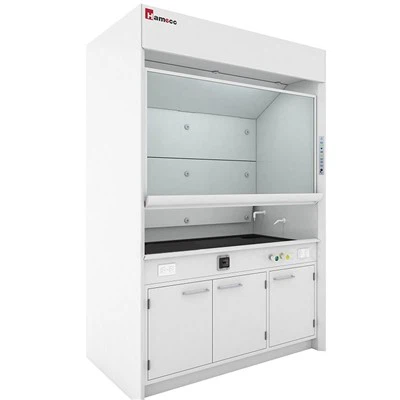
A ducted fume hood is like a big, fancy box that sits on your workbench or in a laboratory. It has a large opening at the front where you can put your experiments or work. Inside the hood, there’s a fan that sucks in the air along with any fumes or particles. The air then travels through a duct system, which is basically a long tube. This duct leads outside the building, so the dirty air gets expelled into the atmosphere.
On the other hand, a fume extractor is more like a portable device. It usually has a flexible arm that you can move around to the source of the fumes. The fan in the extractor pulls in the fumes, and instead of sending them outside, it passes the air through a filter. The filter traps the harmful particles, and then the clean air is released back into the room.
Performance
When it comes to performance, ducted fume hoods are the heavyweights. They can handle large volumes of fumes and are great for high – intensity operations. For example, if you’re working with a lot of chemicals in a big lab, a ducted fume hood can quickly remove the fumes before they build up. It creates a negative pressure inside the hood, which means that air is constantly being pulled into it, preventing the fumes from escaping into the room.
Fume extractors, while not as powerful as ducted fume hoods, are still very useful. They’re perfect for small – scale operations or for situations where you need to capture fumes right at the source. For instance, if you’re soldering a few circuit boards at your desk, a fume extractor can effectively remove the soldering fumes. But they have a limited capacity, and if you’re dealing with a large amount of fumes, they might not be able to keep up.
Installation and Maintenance
Installing a ducted fume hood is a bit of a pain. You need to have a proper duct system installed, which often involves making holes in your walls or ceiling. This can be expensive and time – consuming, especially if you’re retrofitting an existing space. Plus, you need to make sure that the duct is properly sealed to prevent any fumes from leaking back into the room.
Maintenance is also a big deal for ducted fume hoods. You need to regularly check the duct for blockages, clean the fan, and make sure that the airflow is consistent. And since the fumes are being expelled outside, you might need to comply with local environmental regulations regarding air emissions.
Fume extractors, on the other hand, are a breeze to install. You can just plug them in and start using them. They’re also easier to maintain. All you need to do is replace the filters regularly. The filters are usually easy to access and swap out, and they’re not too expensive.
Cost
Cost is another important factor. Ducted fume hoods are generally more expensive. You have to pay for the hood itself, the ductwork, and the installation. And then there are the ongoing maintenance costs. But if you need a high – performance solution for a large – scale operation, the investment is often worth it.
Fume extractors are more affordable. They’re cheaper to buy, and since they don’t require any complex installation, you save on those costs too. The filter replacement costs are also relatively low. So, if you’re on a tight budget or just need a simple solution for a small workspace, a fume extractor might be the way to go.
Safety
Both ducted fume hoods and fume extractors are designed to keep you safe, but they have different safety features. Ducted fume hoods provide a high level of protection because they remove the fumes completely from the workspace. They also have features like sashes (the glass doors in front of the hood) that can be adjusted to control the airflow and prevent accidental exposure to the fumes.
Fume extractors rely on filters to remove the harmful particles. As long as the filters are working properly, they can provide a good level of protection. But if the filters are not replaced on time, the extractor might not be as effective, and you could be at risk of inhaling the fumes.
When to Choose Each One
If you’re working in a large laboratory or industrial setting where you’re dealing with a lot of chemicals or high – volume fume – generating processes, a ducted fume hood is the best choice. It can handle the large amount of fumes and provide a high level of safety.
If you’re a hobbyist, a small – business owner, or you’re working on a project that generates only a small amount of fumes, a fume extractor is a great option. It’s portable, easy to use, and won’t break the bank.
Lab Tables As a supplier of ducted fume hoods, I know how important it is to choose the right equipment for your needs. If you’re still not sure which one is right for you, or if you’re interested in purchasing a ducted fume hood, feel free to reach out to me. We can have a chat about your specific requirements and see if our ducted fume hoods are a good fit for your workspace.
References
- "Laboratory Fume Hoods: Design, Performance, and Safety" by the American National Standards Institute.
- "Fume Extraction Systems: Principles and Applications" by various industry experts in the field of occupational health and safety.
HAMECC(Shanghai) Lab Solutions Co., Ltd.
We’re well-known as one of the leading ducted fume hoods manufacturers and suppliers in China, featured by quality products and good price. Please rest assured to buy customized ducted fume hoods made in China here from our factory.
Address: Building 1, No. 2222, Huancheng Road, Jiading District, Shanghai
E-mail: info@hamecc.com
WebSite: https://www.hamecc.com/
