Hey there, if you’ve ever dug into a broken phone, old laptop charger, or even the back of a TV, you’ve probably noticed a weird plastic-y, slightly chalky feel to some parts—think the thick case around a circuit board, or the plastic frame near the power plug. Most folks just write that off as “regular plastic,” but as someone who’s been in the flame retardants game for over a decade (my company supplies these exact materials, so I’ve talked through this a thousand times with clients), that stuff is why your electronics don’t go up in flames if you drop a charger or a wire frays. Today, let’s break this down without the boring textbook jargon, okay? No stuffy PhD terms that make your eyes glaze over—just real talk about how these chemicals keep your gadgets safe, and why they’re not the villain some people make them out to be. Flame Retardants

First off, let’s get one thing straight: electronics are fire hazards by design. Think about what they’re made of—plastic casings, copper wires that can spark, circuit boards packed with tiny, heat-sensitive parts, and even lithium-ion batteries that can go thermally rogue if something goes wrong. I’ve seen chargers that overheat in a junk drawer, old laptops that smoke when their batteries die, and even a server that shorted out once (don’t ask, it was a messy Monday) — all of these would be way worse if there wasn’t a fire stopper built right in. That’s where flame retardants come in. They’re not some fancy add-on; they’re a non-negotiable part of making electronics safe to use.
Now, how do they actually work? Let’s keep this simple, like explaining it to a friend who’s curious but doesn’t care about molecular formulas. Fire needs three things to start and keep going: fuel (that’s the plastic, wire insulation, or whatever’s burning), oxygen (the air around us), and heat (from a spark, overheating, etc.). Flame retardants target one of these three to shut the fire down, and most do it in a few clever ways.
One big method is the “cooling” trick. Some retardants, like aluminum trihydrate (ATH, everyone calls it ATH in the biz), break down when they get hot—think 200-300°C, which is exactly the temperature electronics hit when they’re overheating. When they break down, they release water vapor. Water vapor is a gas, and it takes a ton of heat to turn plastic into gas, right? So that water vapor sucks up all the extra heat the fire needs to grow, and suddenly, the plastic can’t get hot enough to keep burning. I remember when we first started supplying ATH to a small drone maker a few years back—they were having issues with their battery chargers overheating and melting the plastic case. Switched to our ATH-loaded compound, and their testing (they do these crazy hot-box tests, I swear) showed no burn-through at all, even when the charger was cranked way past its limit. That’s the win right there.
Another common move is the “smothering” act. Some retardants, like brominated or chlorinated ones (again, terms you’ll hear every day in this space), don’t break down into gas—they release a thin, non-flammable fog when heated. That fog mixes with the oxygen around the burning plastic, and basically pushes the oxygen away. Fire can’t exist without oxygen, so that tiny fog layer shuts it down faster than a blanket over a candle. The cool part here is that this happens right where the fire is starting, not just overall. So if a wire inside your laptop’s insulation sparks, the fog from the retardant will stop that tiny flame before it spreads to the circuit board. We supply a lot of these to cable manufacturers—their insulated wires go through miles of testing, and the retardant we provide means if a short happens, it won’t turn into a house fire. Easy peasy.
Wait, there’s also the “barrier” trick, right? Some retardants make the plastic char instead of melting when it gets hot. Char is that black, crusty stuff you see on a campfire marshmallow that’s burned too much—except here, it’s good. That crust forms a tight layer over the burning plastic, so oxygen can’t get in, and all the flammable gas from the plastic can’t get out to feed the fire. I worked with a customer who makes power tools—their plastic casings used to melt and drip when they caught fire, which was bad because the dripping plastic would start other fires. We switched them to a retardant that makes a char layer, and now when their casings are exposed to a flame, they just harden into that crust instead of dripping. No extra fire from melted plastic, problem solved.
Now, let’s address the elephant in the room, because I get asked this all the time: are flame retardants safe? I know you’ve seen the headlines about “toxic chemicals in plastics” and all that, and to be honest, it’s not a black-and-white answer. A few years back, some older brominated retardants got a bad rap because they leached out over time, but modern ones? Totally different. Most of the stuff we supply is regulated by agencies like UL, RoHS, and REACH—you can’t sell electronics in most places in the world if they don’t meet those standards. The new retardants are designed to stay locked into the plastic, not wash out or leach into your hands, and they only work when there’s a fire. They’re not toxic when you’re using your phone, they’re only toxic (well, slightly more so, but still manageable) when they’re breaking down in a fire, which is way better than the alternative of a fire burning your house down. I’ve had customers test the leach rates of our products, and they’re way below the legal limits—no weird chemicals getting on your food if you set your phone on the kitchen counter, promise.
Also, let’s talk about why you might not notice these retardants. They’re mixed right into the plastic when it’s being molded, so the plastic is just as sturdy, just as flexible, and looks exactly like regular plastic. You don’t have to hold a special “flame retardant” case—your phone case is probably already loaded with this stuff. The only time you’d notice is if you burn it on purpose, which no one is doing. That’s the beauty of it: it’s invisible protection, like a fire extinguisher built into every part of your gadget.
Now, for the supply side, a quick shoutout to what we do as a supplier. We don’t just sell a random chemical; we work with electronics manufacturers to find the right retardant for their specific product. A drone needs something that’s light, right? So we don’t give them a heavy, dense retardant—we give them a lightweight ATH compound that adds almost no weight but still passes all fire tests. A server needs something that can handle extreme heat, so we hook them up with a high-temperature brominated retardant that won’t break down even when the server is running 24/7. We also do testing with our clients—send samples, run small-scale flame tests, make sure it fits their budget, not just works. I’ve been doing this long enough that I can tell a manufacturer what they need just by hearing their product: “Oh, you make wireless earbuds? You need a low-VOC retardant so they don’t smell like chemicals when you open the box.” “You make a space heater? You need one that won’t melt and drip.” It’s all tailored, not one-size-fits-all.
Let’s wrap this up with a real example, because that’s what sticks. Last year, a customer of ours made a portable power bank. They were having issues with their testing: when they overcharged the bank, the plastic casing would catch fire. They tried three different retardants before calling us—two were too expensive, one made the casing brittle, another just didn’t work. We sent them a mix of a new ATH and a char-forming retardant, and within a week, they sent us their test results. The power bank was overcharged to twice its capacity, heated up to 180°C (way hotter than normal use), and the plastic casing just charred on the surface, no flame, no melt, no smoke. They went from losing thousands of dollars in faulty products to passing all UL and FCC tests, all because of the right flame retardant. That’s the impact we get to see every day, and it’s why this job doesn’t feel like just selling chemicals—it feels like keeping people safe.
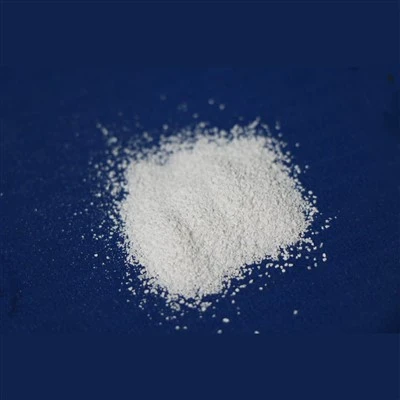
If you’re an electronics manufacturer, or even a product designer working on the next big gadget, and you’re worried about fire safety, or you’re dealing with issues like overheating, melting plastics, or failing flame tests—hit us up. We don’t do pushy sales pitches, we do honest, no-BS advice. Tell us what you’re making, what materials you’re using, what your budget is, and we’ll point you toward the right flame retardant, no fluff, no hidden fees.
Glycol Ethers References
- UL 94 Standard for Tests for Flammability of Plastic Materials for Parts in Devices and Appliances
- REACH Regulation (Registration, Evaluation, Authorization and Restriction of Chemicals)
- Flame Retardants for Electronics: Types, Properties, and Applications, Journal of Applied Polymer Science, 2022
- Aluminum Trihydrate (ATH) as a Flame Retardant for Thermoplastics, Plastics Engineering Magazine, 2021
- Thermal Stability of Brominated Flame Retardants in Electronic Components, Fire Safety Journal, 2020
Hebei Xinxinyuan Energy Co., Ltd.
Hebei Xinxinyuan Energy Co., Ltd. is one of the most professional flame retardants manufacturers and suppliers in China, featured by quality products and good price. Please rest assured to wholesale customized flame retardants made in China here from our factory.
Address: Zhongjie Industrial Park, Huanghua City, Cangzhou City, Hebei Province, China
E-mail: atl2066@qq.com
WebSite: https://www.xinxinyuanfr.com/
