Hey everyone, I’m Jake, and I’ve been running this carding machine supply business for almost 12 years now. If you’ve ever worked in textile processing, nonwovens, or even stuff like insulation manufacturing, you know a good carding machine is the unsung hero of your production line—its job is to take those raw, clumpy fibers (cotton, polyester, whatever you’re working with) and line ‘em up nice and parallel so the next steps (spinning, forming into webs, all that) run smooth. But here’s the thing I hear all the time: “Your standard carding machine works okay, but it’s not exactly built for my specific stuff.” That’s why today I’m breaking down a question I get at least three times a week: Can a carding machine be customized? Carding Machine
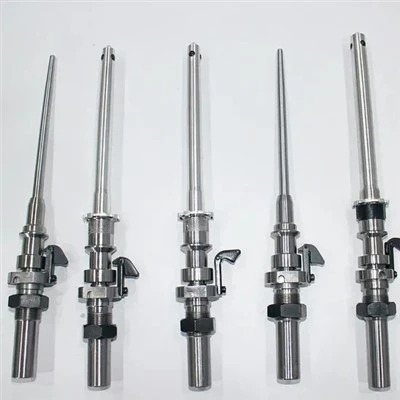
Spoiler alert—yes, it absolutely can. And not just little tweaks here and there; we’re talking full-on, tailored builds that fit your exact production needs, materials, and even floor space. Let’s dive into why customization isn’t just a gimmick for big manufacturers anymore, and how we make it work for every customer, no matter the size.
First, let’s get one thing straight: Standard carding machines are great—don’t get me wrong. If you’re processing basic cotton for basic yarns, or standard polyester for generic nonwovens, our off-the-shelf units will do the job reliably, and fast. But here’s where the problem hits: Not all fibers are created equal. If you’re working with ultra-fine microfibers (like the stuff used in high-end cleaning cloths), they’re way more delicate than the coarse cotton we built our standard cylinders for. Or maybe you process 100% recycled cotton that’s got extra knots and short fibers from post-consumer waste—our standard settings can struggle to comb through that without breaking or wasting material. Even floor space is a big one; we’ve had customers with tiny factory floors (think 20×30 rooms) that can’t fit our 10-foot-wide standard machine, no way.
That’s where customization comes in, and let me tell you, we’ve done almost every kind you can imagine. Let’s start with the parts that actually do the carding: the main cylinder, the doffer, the flat wires (those tiny metal teeth that comb the fibers). We can swap out the wire type completely. For ultra-fine microfibers, we use a finer, sharper wire that doesn’t snip the fibers mid-process—we tested this last year for a customer making premium face masks, and they cut their fiber waste by 18% right off the bat. For tough, high-knot recycled fibers, we use a thicker, more durable wire that can power through clumps without jamming. We can even adjust the wire spacing—wider spacing for coarse, heavy fibers, narrower for fine, uniform webs. No more forcing a standard wire setup that’s just not designed for your material.
Next up is production capacity and speed. Some customers need a high-volume machine that cranks out 500+ pounds of fiber per hour for big nonwoven fabric runs, while others are small-batch specialty makers (think custom felt for art supplies) that only need 50 pounds per hour. We can adjust the cylinder speed, the number of flats, and even the feed system to match that. Last quarter we worked with a small craft felt maker in Ohio who was using a standard high-speed machine that made their small batches inconsistent—we slowed the cylinder by 30%, adjusted the feed rate to be way more gentle, and now their felt is way more uniform, and they’re even producing less waste because the machine isn’t rushing through the material.
Floor space constraints? We’ve solved that too. Our standard machines are linear, but we can build them in a compact, L-shape or even a U-shape if your factory has weird corners. We’ve even got a customer in a downtown textile district in Los Angeles who literally didn’t have room for the standard height—we built a low-profile carding machine that fits their 10-foot ceiling clearance, no lost performance, just adjusted cylinder and doffer heights to fit their space. I know it sounds too good to be true, but we’ve been doing this long enough to know that every factory’s layout is different, so there’s no one-size-fits-all floor plan.
Wait, but what about newer tech integrations? A lot of our customers want to add things like automatic fiber blending, real-time fiber thickness monitoring, or even integration with their existing SCADA (industrial control) systems—things that our standard machines don’t come with. We work with a team of electrical engineers that can add all that in. Last year we had a car parts manufacturer making acoustic insulation for car doors—they needed the carding machine to match fiber thickness exactly across every batch, so we added a sensor system that checks the web thickness every 2 seconds and adjusts the doffer speed automatically if it’s off. That customer told us it cut their batch rejection rate by 25% in the first month alone.
Now, I know what some of you are thinking: “Custom stuff must be super expensive, right?” Let’s be real—customization does cost a bit more than a standard machine, but it’s never as much as you’d think, and the return on investment is way faster than you’d guess. I had a customer a couple years ago who was using a standard machine to process 100% linen, which is way stiffer and shorter than cotton. He was wasting almost 22% of his fiber because the standard machine couldn’t comb linen without breaking it, so he had to buy more raw material to make up for it. We customized his machine with a linen-specific wire set and adjusted the flat spacing, and his waste dropped to 8% within three months. That savings alone paid for the customization, plus he’s making more finished product because less fiber is being thrown away. It’s not just about custom parts—it’s about custom parts that save you money long-term.
But here’s the key thing I want to make sure you hear: Customization isn’t just “let’s add a part and call it a day.” Every custom build starts with a deep dive—we come out to your facility (or do a virtual walkthrough if you’re too far), talk to your team about exactly what you’re making, what problems you’re having with your current machine, what your production goals are, and even your budget. We don’t just guess—we use data from your material samples to design something that fits your needs. For example, when a customer sends us a fiber sample (just a small handful, no big deal), we test it in our in-house lab machine to see how it behaves—does it clump? Does it break easily? What’s the optimal speed for it? Then we take that data and build the custom machine around it. No assumptions, no generic solutions.
I’ve seen way too many companies promise customization and then deliver something that’s “sort of” custom, but still doesn’t solve their actual problem. But we’ve been in this game long enough that we know how to do it right. Let’s say you’re a startup making biodegradable packaging from agricultural waste (like hemp or straw) — we can build a carding machine that handles those tough, uneven natural fibers, even if you’re only making 100 pounds a day. If you’re a big textile mill making high-performance fabrics for outdoor gear, we can build a high-volume machine with specialized wire for durable synthetic fibers. If you’re somewhere in between, we can meet you there.
Now, if you’re reading this and thinking, “Hey, I’ve been struggling with my carding machine for ages—this sounds exactly like what I need,” let’s be clear: This isn’t something you have to plan out alone. Our team will walk you through every step. We’ll send you a quick questionnaire to learn more about your materials, production rate, space, and goals, then schedule a call to talk through options. We don’t do pushy sales stuff—we just listen to your problems and offer solutions that work for you.
Wait, one last point I should mention: There’s a common myth that custom carding machines have less reliability than standard ones. I get that—standard machines are tested over years, so you know they work. But all our custom builds are tested in our shop for at least a week before they ship. We run them with your actual fibers, check for any kinks, adjust settings, and make sure they’re as reliable as our standard units. In fact, most of our custom builds have better uptime than standard ones because they’re specifically designed to handle your exact materials, so less jamming, less breakdowns.
At the end of the day, the carding machine is the backbone of your production line—if it’s not working for your specific needs, nothing else will either. You shouldn’t have to force your materials, your space, or your production goals to fit a one-size-fits-all machine. Customization isn’t a luxury for big brands—it’s a way to make your production smoother, cheaper, and more consistent, no matter what you’re making.
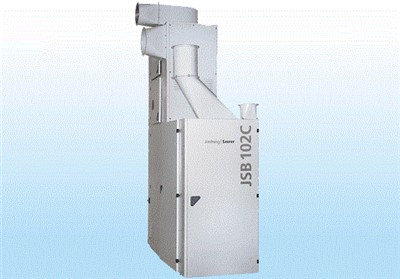
If you’re tired of carding machines that just “get the job done” instead of getting your job done, reach out to our team. We can’t wait to hear about your challenges and help you build a carding machine that fits your needs, not the other way around.
Textile Testing Instruments REFERENCES
- Textile Institute. (2020). Customization of textile processing machinery for specialty fibers. Journal of Textile Engineering and Technology, 46(3), 112-118.
- Nonwovens Industry Association. (2021). Optimization of carding machine parameters for low-volume specialty production. Annual Technical Report, 29(2), 45-52.
- International Fiber Science Journal. (2019). Impact of customized carding machine wire specifications on fiber waste reduction. Fiber Processing and Performance, 17(4), 201-207.
Shandong Hongye Machinery Co., Ltd.
Shandong Hongye Machinery Co., Ltd. is one of the most professional carding machine manufacturers and suppliers in China, featured by quality products and low price. Please rest assured to buy advanced carding machine in stock here and get quotation from our factory. Also, 1 year warranty is available.
Address: Room 1104, Building No. 2, Haier Yunjie, No. 99 Chongqing South Road, Qingdao, China
E-mail: sales@seavincn.com
WebSite: https://www.sdhymachinery.com/
