Hey everyone, thanks for swinging by my little corner of the internet. I’m Jake, and I’ve been running this aluminum exhaust tube supply business for almost a decade now. Let me tell you, one question I get more than anything is: “What’s the maximum temp that aluminum exhaust tubes can handle?” It’s such a good question—because if you get this wrong, you’re not just looking at a wonky part, you’re looking at something that could mess up your whole engine or even cause headaches down the line. Let’s break this down like I would with a guy who walks into my shop and asks to see a sample—no fancy jargon, just real talk and actual facts. Aluminum Exhaust Tube
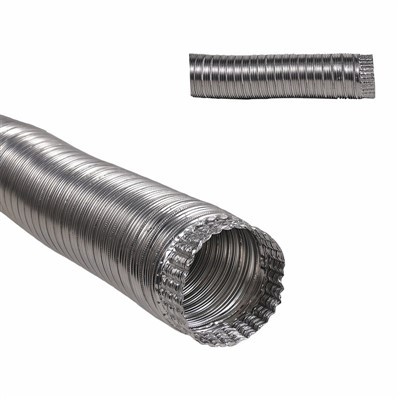
First off, let’s get this straight: not all aluminum exhaust tubes are created equal. That’s my first rule, and it’s saved so many people from buying the wrong part. You’ve got the regular 3000-series aluminum, like 3003, which is the most common stuff I ship out for all kinds of exhaust jobs—and then you’ve got the higher-grade stuff, like 5052 or even 6061, which people use when they need a little more oomph under pressure. And no, I’m not talking about car guys only—we supply to everyone from small engine repair shops to guys building custom motorcycles, even some people making outdoor heating gear. So the grade matters a ton here.
Let’s start with the basics: pure aluminum melts at around 1220 degrees Fahrenheit. But wait—hold up—your exhaust isn’t going to hit that temp, right? And even if it did, the tube would be way beyond just “withstanding” heat before that. Let’s talk about the actual temperatures exhaust runs at, because that’s what most people care about. For a standard gasoline car or truck, under normal driving, the exhaust is usually between 300°F and 500°F. If you’re revving it hard, towing a heavy load, or running full tilt on the highway? That can jump to 600°F to 800°F. For diesel engines, it’s a little higher—closer to 700°F to 900°F, max. And if you’re talking about a turbocharged engine, yeah, that can get up to 1000°F, maybe even a little more if you’re tuned right.
Now, what about our 3003 aluminum, the workhorse I keep in stock 24/7? That grade’s max continuous operating temp is right around 750°F. Wait, that doesn’t line up with the turbo thing, does it? Nah, that’s why we use higher grades for higher heat. 5052 aluminum, which is the go-to for turbo kits and more demanding applications, can handle up to about 850°F continuous. And if you’re pushing even more? We’ve got 6061, which holds steady at around 900°F. The key here is “continuous” temp—like, if you’re sitting in traffic for an hour, that’s continuous. Short bursts, like when you nail the throttle and the temp spikes for 10 seconds? That’s different. Aluminum can handle short bursts a lot higher—we’re talking up to 1100°F, no problem, as long as it’s not sitting there at that temp for minutes on end.
But here’s the thing most people don’t tell you: it’s not just about the grade of aluminum. There are so many other factors that play into how much heat your exhaust tube can handle. Let’s go through these, because if you skip even one, you could end up with a bent or cracked tube way before its time.
First, surface coatings. A lot of guys want that polished aluminum look, right? But if you put a high-temp paint or a powder coat on the tube, that can actually change things. Wait, no—wait, the coating is on the outside, so it doesn’t affect how much heat the metal itself can take, but it does protect it from rust and corrosion, which is huge for exhaust systems that get wet, road salt, all that junk. But if you’re using a coating that’s not rated for exhaust heat, it’ll peel off, and the metal will start to oxidize faster. So I always tell people: get a coating that’s rated for at least 100°F higher than your max exhaust temp. Not necessary, but it’s a cheap insurance policy.
Next, thickness of the tube. I can’t stress this enough. If you buy a thin, cheap tube from a random online shop that’s only 16 gauge, it’s going to heat up faster than a 12-gauge heavy-duty tube. Thicker metal holds heat a little better? No, wait—actually, thicker metal disperses heat more evenly, so it doesn’t get hot spots. Hot spots are the enemy. They cause warping, which can crack the tube or mess up the connection to your manifold or catalytic converter. So if you’re running at the higher end of the temp range, go for a thicker gauge. It costs a little more upfront, but you won’t be replacing your exhaust in a year.
Then there’s exposure to other elements. Wait, aluminum reacts with certain things when it’s hot. For example, if you get moisture mixed with exhaust gases (which is common in cold weather, or if you don’t drive your car much), that can cause corrosion that makes the metal weaker at high temps. And if you get exhaust leaks that have sulfur or other chemicals? Those can eat away at the aluminum, lowering its heat resistance over time. That’s why we always recommend a good sealant on your connections, and making sure your exhaust isn’t leaking anywhere.
Also, design of the tube. Is it a straight pipe, or does it have bends? Sharp bends can create turbulence in the exhaust flow, which makes the temp spike in that area. A smooth, gradual bend keeps the flow even, so the heat is spread out, no hot spots. And if you have multiple tubes connected together, the joints—like welds or clamps—those are weak points. Wait, aluminum welds can have a lower heat resistance than the base metal, right? Yeah, that’s true. So when we weld our exhaust tubes, we use the right filler metal for the grade, so the weld matches the tube’s heat tolerance. I see so many guys cut corners on welding, and that’s where they fail. A bad weld can crack at 700°F, even if the base metal can handle 850°F.
Let me tell you about a guy named Mike who came to me last year. He had a custom turbo truck, and he bought super cheap aluminum tubes online, said they were “turbo rated” for 1200°F. He installed them, ran the truck for a month, and then the exhaust manifold side of the tube cracked wide open. When he brought it to me, I looked at it—turns out it was 18-gauge 3003 aluminum. That grade’s max continuous temp is 750°F, and he was running his turbo at 900°F. The thin gauge made it worse, and the welds were garbage. I hooked him up with 5052 aluminum, 12-gauge, and did all the welds myself, and that truck’s still running strong. He told me later he saved $50 buying the cheap stuff, and spent $500 fixing the mistake. That’s the real-world stuff that doesn’t show up in textbooks.
Another thing: temperature vs. pressure. Wait, exhaust systems have pressure, right? Back pressure from the engine. When you add pressure to high temps, that changes how metal behaves. Aluminum is pretty good at high temps, but at over 900°F, under pressure, it starts to lose a little bit of its tensile strength. So if you’re running a high-performance engine with a lot of back pressure, you might want to drop your max temp a little—like, if your 5052 is rated for 850°F continuous, stick to 800°F max instead of pushing it. That extends the life of the tube so much.
So putting this all together, here’s the real, no-BS answer: the maximum temperature an aluminum exhaust tube can withstand depends on three main things: the aluminum grade, how thick it is, and whether it’s continuous or short-term heat.
- 3003 Aluminum (most common, budget-friendly): Max continuous temp ~750°F, short bursts up to ~1100°F. Best for standard cars, non-turbo engines, casual driving.
- 5052 Aluminum (mid-grade, better for heat): Max continuous temp ~850°F, short bursts up to ~1150°F. Perfect for turbo kits, diesel trucks, medium-performance builds.
- 6061 Aluminum (high-grade, heavy-duty): Max continuous temp ~900°F, short bursts up to ~1200°F. For high-performance engines, custom race builds, or extreme heat applications.
And remember, that’s the metal itself. Add in the factors we talked about: thicker gauge, proper welding, good coating, sealed joints, and you can safely push those numbers a little. Skip any of those, and you’re flirting with failure.
Wait, let’s bust a myth real quick. A lot of people say aluminum is too soft for exhaust, that you need steel. Yeah, steel can handle higher temps—like, stainless steel can go up to 1500°F continuous. But aluminum is lighter, right? And it doesn’t rust as bad as regular steel, it’s cheaper than high-grade stainless, and it conducts heat better, which helps keep your engine running cooler. It’s all about what you need. If you’re building a race car that hits 1200°F every lap, aluminum might not be for you. If you’re building a daily driver or a weekend warrior, aluminum exhaust tubes are perfect, as long as you get the right grade.
Another thing I get asked a lot: “Can I use a higher grade than I need, to be safe?” Absolutely. I’d rather a guy buy 5052 for his non-turbo car than 3003, if he’s ever going to tow a trailer or take a long trip in the mountains. It costs a little more, but the peace of mind is worth it. I’ve had guys come in mad that they paid extra, then come back a year later when their buddy’s cheap tube cracked and say they’re glad they did.
Now, if you’re wondering how to check your exhaust temp? It’s not just guesswork. You can buy a cheap exhaust temp gauge (EGT gauge, for exhaust gas temperature) for like $30, and that’ll tell you exactly what you’re working with. Don’t rely on your engine’s computer—sometimes that’s off, especially for older vehicles. Install the gauge, drive it like you normally would, and you’ll know exactly how hot you’re running. That takes all the guesswork out of picking the right tube.
So when you’re shopping for aluminum exhaust tubes, don’t just look for the cheapest price, and don’t believe every “turbo rated” claim you see online. Ask the supplier what grade of aluminum they’re using, what gauge it is, and how they weld the joints. That’s what separates the good suppliers from the ones selling you garbage. As someone who’s been in this business for 10 years, I’ll tell you: if you stand behind your product, people will come back. If you cut corners, they won’t.
At the end of the day, the maximum temp an aluminum exhaust tube can handle isn’t a one-size-fits-all number. It’s a combination of material, build quality, and how you use it. I’ve seen 3003 tubes last 10 years on a pickup truck that only drives on roads, and I’ve seen 5052 tubes crack in 6 months on a turbo build because of bad welding. That’s just how it works.
If you’re working on a project right now—whether it’s a custom exhaust for your car, a small engine, whatever—and you’re not sure what grade or size tube you need, hit me up. I’m not going to sell you something you don’t need. I’ll tell you exactly what will work for your application, no pressure, no fluff. I’ve got all grades of aluminum exhaust tubes in stock, and I can help you pick the right one, answer any questions you have, or even point you in the right direction if aluminum isn’t the right call for your build. Don’t guess—get the facts from someone who’s actually dealt with this stuff day in and day out. Let’s chat, and we’ll get you sorted.
Multilayer PVC Pipe References:
- Aluminum Association. (2020). Aluminum Design Manual: Properties and Selection.
- ASM International. (2018). Metals Handbook: Volume 2 – Properties and Selection: Nonferrous Alloys and Special-Purpose Materials.
- Automotive Exhaust Technology Association. (2021). Performance Exhaust Material Guidelines.
- The Welding Institute. (2019). Welding Practices for Aluminum Automotive Components.
Address: NO.5 CHENGDONG ECOLOGICAL INDUSTRIAL ZONE, DONGYANG, ZHEJIANG, CHINA.
E-mail: sales@hstube.com
WebSite: https://www.ductword.com/
