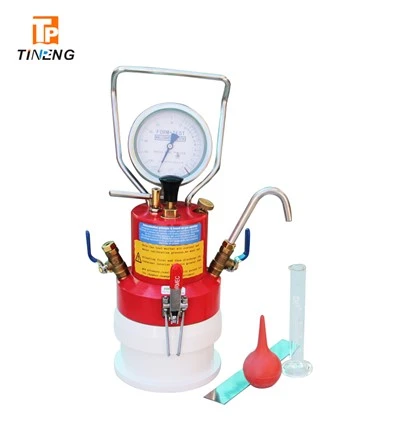
As a supplier of material testing equipment, I often encounter inquiries from clients about the differences between nondestructive and destructive material testing equipment. In this blog, I’ll delve into the distinct features, applications, and advantages of both types of equipment, aiming to provide a clear understanding to help you make informed decisions for your testing needs. Material Testing Equipment
Understanding Nondestructive Material Testing Equipment
Nondestructive material testing (NDT) equipment is designed to evaluate the properties of materials, components, and structures without causing damage to the test specimen. This is a crucial aspect, especially when dealing with valuable, critical, or hard – to – replace items.
One of the most common NDT methods is ultrasonic testing. Ultrasonic testing equipment uses high – frequency sound waves to detect internal flaws in materials. For example, in the aerospace industry, ultrasonic testing can detect minute cracks in aircraft engine components that could compromise safety. These cracks may not be visible on the surface, but the ultrasonic waves can penetrate the material and reflect back differently when they encounter a flaw.
Another popular NDT technique is magnetic particle testing. This method is mainly used for ferromagnetic materials. The equipment magnetizes the test piece, and if there is a surface or near – surface flaw, magnetic particles will be attracted to the area, making the flaw visible. It’s a quick and effective way to inspect welds in steel structures, such as bridges and buildings.
Radiographic testing is also a significant NDT method. X – ray or gamma – ray equipment is used to produce images of the internal structure of a material. This is analogous to a medical X – ray but for materials. It is widely used in the manufacturing of pressure vessels and pipes to ensure that there are no internal defects that could lead to failures under pressure.
The key advantage of NDT equipment is that it allows for the inspection of materials without altering or destroying them. This means that the tested components can still be used after testing, which is cost – effective and time – saving. Additionally, NDT can be used for in – service inspection, which is essential for ensuring the safety and reliability of structures and equipment over their lifespan.
Exploring Destructive Material Testing Equipment
In contrast, destructive material testing (DMT) equipment involves testing a material by subjecting it to forces or conditions that will ultimately cause it to fail. The goal of DMT is to obtain detailed information about the material’s mechanical properties under extreme conditions.
Tensile testing is one of the most fundamental DMT methods. Tensile testing machines apply a gradually increasing pulling force to a test specimen until it breaks. By measuring the force and the corresponding deformation, engineers can determine important mechanical properties such as yield strength, ultimate tensile strength, and elongation. For example, in the automotive industry, tensile testing is used to evaluate the quality of steel used in the production of car frames.
Compression testing is another common DMT method. Compression testing equipment applies a compressive force to a specimen, which is useful for materials such as concrete and bricks. By measuring the load at which the specimen fails, the compressive strength can be determined. This information is crucial for designing structures that can withstand the weight and pressure they will be subjected to.
Hardness testing is also a type of DMT. Hardness testing machines use different methods, such as the Brinell, Rockwell, or Vickers tests, to measure the resistance of a material to indentation. Hardness is an important property that can affect a material’s wear resistance, machinability, and overall performance.
The main advantage of DMT equipment is that it provides accurate and reliable data on a material’s mechanical properties. This data is essential for material selection, quality control, and design optimization. However, the major drawback is that the test specimen is destroyed during the testing process, which means that it cannot be reused.
Applications and Use Cases
Nondestructive testing equipment is used in a wide range of industries. In the oil and gas industry, NDT is used to inspect pipelines for corrosion, cracks, and other defects. This helps prevent leaks and ensure the safe and efficient operation of the pipeline network. In the power generation industry, NDT is used to inspect turbine blades, boilers, and other critical components to ensure their integrity and prevent catastrophic failures.
Destructive testing equipment is also indispensable in many industries. In the manufacturing sector, DMT is used to test the quality of raw materials and finished products. For example, in the plastics industry, DMT can be used to determine the mechanical properties of plastic polymers, which is important for product design and quality control. In the construction industry, DMT is used to test the strength of building materials such as concrete, wood, and steel to ensure that buildings and structures meet safety standards.
Choosing the Right Testing Equipment
When choosing between nondestructive and destructive material testing equipment, several factors need to be considered. Firstly, the nature of the material and the component being tested is crucial. If the material is valuable, irreplaceable, or in – service, nondestructive testing is usually the preferred option. On the other hand, if detailed mechanical property data is required for material selection or quality control, destructive testing may be necessary.
Secondly, the purpose of the testing also plays a significant role. If the goal is to detect flaws or defects without altering the component, NDT is the way to go. However, if the goal is to understand the material’s behavior under extreme conditions, DMT is more appropriate.
Finally, cost and time considerations are important. Nondestructive testing is generally less expensive and quicker than destructive testing, especially when large numbers of components need to be inspected. However, the cost of DMT may be justified when accurate mechanical property data is essential for a project.
Why Choose Our Material Testing Equipment
As a supplier of material testing equipment, we offer a comprehensive range of both nondestructive and destructive testing solutions. Our NDT equipment is state – of the – art, providing high – precision flaw detection and reliable inspection results. We understand the importance of non – invasive testing in industries where material integrity and component reuse are critical.
Our DMT equipment is designed to provide accurate and detailed mechanical property data. Whether you need to test the tensile strength of steel or the compressive strength of concrete, our machines are built to meet the highest standards of performance and reliability.
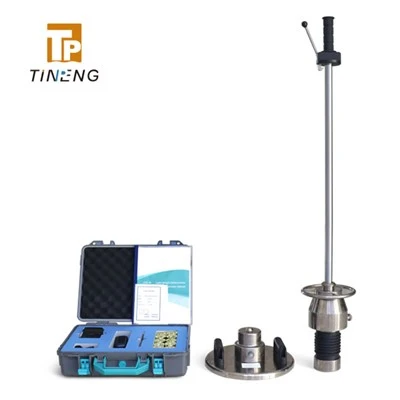
We also offer excellent after – sales service, including equipment installation, training, and maintenance. Our team of experts is always available to provide technical support and advice to ensure that you get the most out of your testing equipment.
Concrete Compression Testing Machine If you are in need of material testing equipment, whether it’s for a small – scale project or a large – scale industrial application, we’d be delighted to assist you. Contact us to discuss your specific requirements, and our sales team will work with you to find the best solution for your needs. Investing in the right testing equipment is an investment in the quality and safety of your products and structures. Let’s work together to ensure that your materials meet the highest standards.
References
- "Nondestructive Testing Handbook", Volume 1: Ultrasonic Testing, Edited by Robert H. Thompson and David E. Chimenti, American Society for Nondestructive Testing.
- "Materials Science and Engineering: An Introduction", by William D. Callister, Jr. and David G. Rethwisch, Wiley.
- "Destructive Testing Techniques for Evaluating the Performance of Materials", Journal of Testing and Evaluation, ASTM International.
Zhuozhou Tianpeng Imp. and Exp. Trade Co., Ltd.
Zhuozhou Tianpeng Imp. and Exp. Trade Co., Ltd. is one of the most professional material testing equipment manufacturers and suppliers in China, featured by quality products and good price. Please rest assured to buy advanced material testing equipment made in China here from our factory. Customized orders are welcome.
Address: Building C28, Hegu Technology Industrial Park, Development Zone, Zhuozhou, Hebei, China
E-mail: zhangdajing@testmould.com
WebSite: https://www.testmould.net/
