Hey everyone, let’s cut to the chase – I get asked this question like, every single day: “Can you actually put a self-contained fuel station indoors?” And yeah, I don’t blame ‘em. Think about all those tight spots we deal with: busy urban auto shops, underground parking garages for commercial fleets, even on-site fueling at big storage facilities where outdoor space is non-negotiable. For years, the default answer was a hard “no” – too dangerous, too sketchy, not worth the liability. But here’s the thing: as a self-contained fuel station supplier, I’ve watched this tech evolve so much that that old rule doesn’t hold water anymore. Let’s break this down like we’re grabbing a coffee and geeking out over specs, no jargon overload. Self-contained Fuel Station
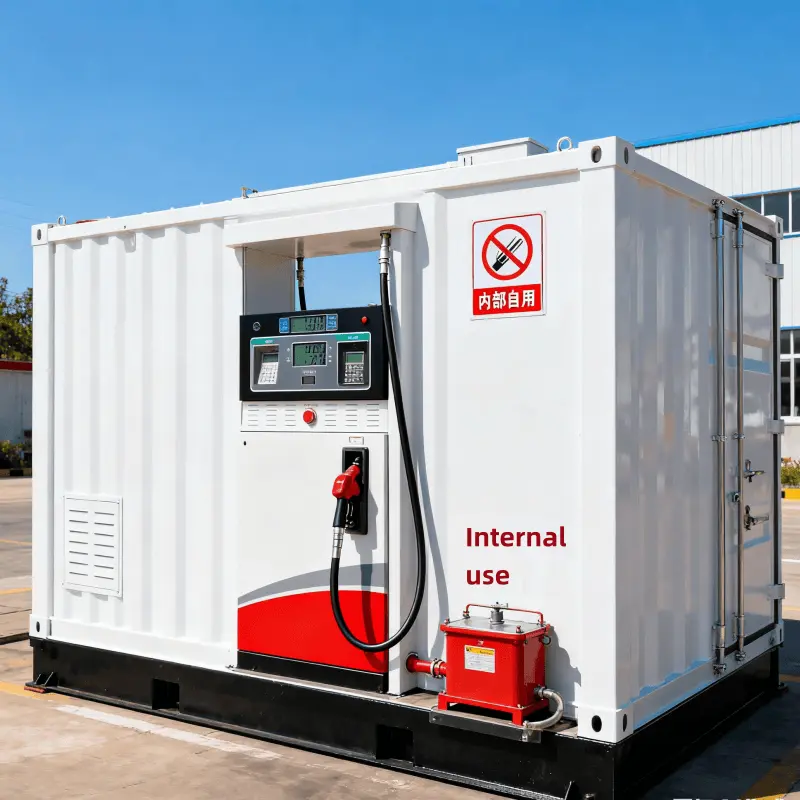
First, let’s make sure we’re on the same page about what a self-contained fuel station actually is, because a lot of folks mix this up with your basic outdoor pump you see off the highway. These aren’t the rickety old setups that leak gas like a sump pump and smell up the whole block. Our units – the ones we sell – are fully integrated, all-in-one systems that hold the fuel, the pump, the metering, and all the safety gear in a single, sealed, steel enclosure. No separate underground tanks, no hoses snaking across parking lots, just a self-contained box that does everything you need. So when people ask about putting one indoors, the real question isn’t “can a tank fit in a room” – it’s “can this whole sealed, self-contained system operate safely inside a building?” And the short answer is: absolutely, as long as you’re using a properly engineered unit, not a cheap knockoff you saw on Amazon at 2 a.m.
Let’s start with the biggest concern everyone has: fire and explosion risk. That’s the #1 reason indoor fueling was banned for decades, right? Back in the day, fuel tanks weren’t sealed worth a damn, static buildup was a disaster waiting to happen, and there was no way to stop a leak from turning into a gas cloud that could detonate over a whole floor. But modern self-contained units? They’re built like Fort Knox, basically. Every component is classified for Class I, Division 1 locations – that’s the industry code for areas where flammable gases could be present. What does that mean in plain English? Every wire, every switch, every moving part inside the unit is spark-proof. No exposed electrical connections, no standard circuit breakers that could arc if something goes wrong. They use sealed, static-dissipating hoses that don’t build up charge as you’re fueling, and they have built-in static ground clamps that automatically connect to the vehicle’s frame before the pump even turns on. No static spark = no explosion risk.
Then there’s leak detection, which is another huge one indoors. If you spill gas outside, it can evaporate or seep into the ground, but indoors, a leak turns into a puddle or a vapor in a confined space that’s way harder to clear. Our self-contained units have multiple layers of leak detection. First, the tank itself is double-walled – think of it like a nested coffee mug, with a gap between the inner fuel tank and the outer steel jacket. If any fuel seeps through the inner wall, that gap fills up with a non-flammable fluid, and a tiny sensor picks it up within seconds. There’s also a floor pan under the whole unit that can catch any residual spillage, and it has its own level sensor that’ll set off an alarm if it gets too full. And if all that fails, the unit has a vapor recovery system that pulls any escaped fuel vapor straight back into the tank instead of letting it drift around the room. I once had a client who had a tiny hose seal fail in their indoor unit – the sensor picked it up in 12 seconds, shut the pump off automatically, and the floor pan caught the tiny spill before it even made it to the concrete. No cleanup, no downtime, zero issues.
Wait, but what about ventilation? That’s another thing people argue about – you need to vent gasoline fumes, right? If you put a fuel unit in a closed room, fumes will build up and get dangerous. But here’s the trick: self-contained indoor units don’t need a whole separate HVAC system dedicated to venting them. The vapor recovery system I mentioned earlier does most of the work, pulling 99% of escaped vapors back into the tank. On top of that, they have built-in, low-vent fans that only kick on if the vapor concentration inside the unit hits a pre-set safe level – way below the lower explosive limit (that’s the magic number where gas can actually catch fire, by the way – it’s like 1.4% of air, and these fans keep it at 0.1% max, if that). You don’t need to drill a giant hole in your warehouse ceiling or anything; most units can be vented through a standard 4-inch PVC pipe, same as a dryer vent, and it only needs to go 10 feet above the roof or away from doorways so fumes don’t drift back into the building. I’ve installed units in a 1,000 sq ft auto shop in downtown Chicago that has zero dedicated fuel ventilation, just their existing HVAC running alongside the unit’s built-in fans, and they’ve had zero issues in three years of operation.
But hold on, it’s not just about the unit itself – you have to follow the space rules, too. You can’t plop a 5,000-gallon fuel tank in the middle of your lobby, obviously. Most indoor self-contained units for commercial use are between 500 and 2,000 gallons, so they’re compact – like, the size of a big shipping container, or even smaller for smaller operations. You need to set them in a dedicated fueling zone, not somewhere people are walking through. The zone should be at least 5 feet from any ignition sources – like furnaces, electrical panels, welding stations, anything that sparks. It should also have non-sparking floors, which is pretty standard for any commercial space anyway. And you need to have a fire extinguisher rated for Class B fires (that’s liquid fires, like gasoline) within arm’s reach, same as you would for any other flammable material. Most building inspectors I work with don’t even blink at this if the unit is properly installed, because the safety features are so robust now.
Wait, but what about accessibility? A lot of people think indoor fueling is only for big fleets, but that’s not true. Small auto repair shops, construction companies, even agriculture operations with indoor equipment bays all use these now. Let’s take an example: a tow company in Miami had a problem where their outdoor fuel pump was getting hit by hurricanes (don’t laugh, we’ve had three units damaged in storms there) and they needed something inside their secure, fenced yard building so their drivers didn’t have to go off-site every time a truck needed fuel. They installed a 1,000-gallon self-contained unit in a corner of their maintenance bay, and now their drivers fuel up the tow trucks right there after service. No more waiting in line at the gas station, no more risk of theft (we have a keypad access system on our units, so only authorized drivers can use them), and they saved like $10,000 a year in fuel costs because they buy in bulk. That’s a win-win, right?
Now, I’m not gonna sit here and tell you there are zero downsides, because that’s crap. Indoor fueling isn’t for everyone. If you’re a single gas station on a rural highway with tons of outdoor space, it doesn’t make sense – outdoor units are cheaper and easier for you. But if you’re crammed in a dense urban area, have a fleet of 10+ vehicles, or need secure fueling because theft is an issue, indoor self-contained units are game-changing. Another downside? You have to make sure your fuel is stored properly and that you do regular inspections, same as you would for any fuel storage. We recommend monthly checks of the leak sensors, quarterly calibration of the pumps, and annual testing of the vapor recovery system. That’s pretty minimal, though – way less maintenance than an outdoor pump that gets exposed to rain, snow, salt, and sun 24/7.
Wait, let’s talk about regulations, because that’s the part that trips people up the most. Every state and country has its own rules for fuel storage, and some are stricter than others. But here’s the good news: most of them now approve self-contained indoor units as long as they meet the National Fire Protection Association (NFPA) 30A standard – that’s the code for motor fuel dispensing facilities. We make sure every unit we sell is third-party tested to meet NFPA 30A, so when our clients go to their local fire marshal or building inspector, they just show the test certificate and it’s usually a go. I had one client in New York City who was worried because the building code was super strict, but his inspector just did a walkthrough, looked at the unit’s test data, and signed off in 20 minutes. No big fight, no red tape, as long as you do your homework and use a unit that’s certified.
Another thing people don’t think about: convenience and cost. Indoor fueling means your drivers don’t have to leave the property, which saves time. I had a construction company client in Houston that had 20 dump trucks and excavators on a job site with a tiny office building. They put a self-contained unit in a corner of the office’s storage bay, so their fuelers don’t have to drive 20 minutes to the nearest gas station every day. That saved them like 8 hours a day in driver time, which is huge when you’re on a tight deadline. And when you factor in the cost of not having to pay a third-party fuel vendor, plus less fuel theft (those keypad locks work really well – we had a client who cut fuel theft by 70% after installing our unit), the payback period is usually like 18 to 24 months. That’s way faster than a lot of other commercial investments.
Now, let’s address the elephant in the room: has anyone ever had a problem with an indoor self-contained unit? Yeah, but it’s almost always user error. I remember a few years back, a shop in Dallas installed a unit and decided to block the ventilation fan with a stack of old tires they were storing nearby. They didn’t know the fan was there, so when the vapor level got a little high, the fan couldn’t work, and the alarm went off. The fire marshal showed up, made them move the tires, and it never happened again. Another time, a driver tried to force a hose connection that was damaged, and the sensor picked up the misalignment and shut the pump off before any fuel even came out. Those aren’t flaws in the unit – that’s just people being careless, and the units are actually designed to stop you from making those mistakes if you use ‘em right.
So, wrapping this up (before I ramble too long, which I tend to do when talking about fuel tech), the answer to “can a self-contained fuel station be installed indoors?” is a resounding yes – but only if you do it right. You can’t grab a random unit from a discount supplier, you need one that’s certified for confined indoor spaces, you have to follow the space and safety rules, and you have to keep up with regular maintenance. If you do all that, it’s not just safe – it’s a way more efficient, secure, and cost-effective fueling solution for a ton of businesses that are sick of the limitations of outdoor fuel stations.
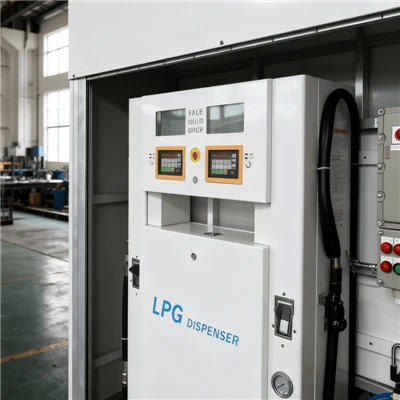
If you’re curious about whether an indoor self-contained unit would work for your operation, or you want to ask more about specs, certifications, or installation, hit us up to connect with our team. We’ll walk through your space, your fleet size, and your budget, no pressure, no sales pitch. Let’s find a solution that works for you.
Explosion Proof Gas Station References
- National Fire Protection Association (NFPA). (2021). NFPA 30A: Code for Motor Fuel Dispensing Facilities and Repair Garages. National Fire Protection Association.
- U.S. Environmental Protection Agency (EPA). (2022). Underground Storage Tank (UST) Program: Double-Walled Tank Requirements. U.S. EPA.
- Occupational Safety and Health Administration (OSHA). (2023). Class I, Division 1 Hazardous Locations: Electrical Safety Standards. OSHA.
- American Petroleum Institute (API). (2021). API 12R: Standard for Self-Contained Above-Ground Fuel Dispensing Systems. American Petroleum Institute.
Shandong Jingcai Industry and Trade Co., Ltd.
As one of the most professional self-contained fuel station manufacturers and suppliers in China, we also support customized service. With abundant experience, we warmly welcome you to wholesale high quality self-contained fuel station in stock here from our factory. Contact us for free sample.
Address: Caojiazhuang Village Industrial Park, Lingcheng Town, Qufu City, Jining City, Shandong Province.
E-mail: shandongjingcai888@gmail.com
WebSite: https://www.sdjingcaicn.com/
