Hey there, if you’ve ever worked in construction, event management, or even around industrial machinery, you know high visibility screens aren’t just a “nice-to-have” — they’re a safety lifeline. But for years, one question’s popped up constantly in our DMs, at trade shows, and even from repeat clients who need things that don’t fit straight walls or standard setups: Are high visibility screens available in curved designs? High Visibility Screen
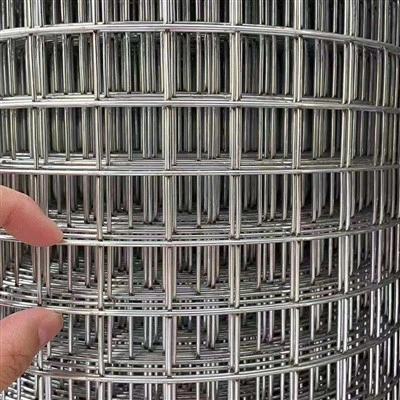
Short answer? Yeah, they are — and more importantly, they’re not just a gimmick. As a high visibility screen supplier, I’ve watched the demand for curved versions blow up in the last 2 years, and let me tell you, it’s not random. I’ve spent hours testing materials, adjusting bending techniques, and walking clients through why a flat screen just won’t cut it in some spaces, so I wanted to break this down straight — no overly technical jargon, no AI-style generic claims, just real talk from someone who’s in the thick of this.
First, let’s get why someone would even want a curved high visibility screen in the first place. You don’t see curved plain old office dividers, right? Curved screens fix specific space problems. Last quarter, a big event planner hit us up because they needed to section off a curved area for a festival’s stage side where the crowd would walk. A flat screen would have had gaps at the corners, making it easy for people to slip through, and it would’ve looked messy against the arched entryway of the venue. Another client? A factory that wraps around a large packaging line, so they needed a screen to block glare from overhead lights and shield staff from stray debris — straight screens would’ve left blind spots where the line curved.
But here’s the thing: Curved high visibility screens don’t just “bend a flat piece and call it a day.” The science here matters, and it’s why some cheap curved screens you see online end up being useless. For regular high visibility materials — the ones that reflect 90%+ light, bright colors that pop even in bright sun — bending them without ruining their performance took a lot of trial and error.
Wait, let’s clarify: We’re not talking about thin plastic sheeting that creases if you look at it wrong. The good curved high visibility screens use a composite core that’s flexible enough to bend into a 90-degree arc or a smooth 180-degree curve, but still rigid enough to stand on their own without sagging. The visibility coating? We had to switch up how we apply it for curves, too. If you spray the reflective layer straight onto a bent surface, it can crack along the bends, which leaves gaps where visibility drops. Now we use a heat-laminated film that stretches with the core, so the high visibility properties don’t wear out even after you adjust the curve multiple times — I’ve got a test screen we bent and unbent 50 times last year just to prove it, and it still works as good as new.
Another big point: Curved designs actually boost high visibility, not just fit spaces. Wait, how? A flat screen bounces light straight back, but a curved one — depending on the radius — can reflect light at angles that catch the eye from more directions. For example, in a dim warehouse where workers are moving around multiple corners, a curved screen doesn’t just block a view — it’s visible from the left and right of the curve, not just directly in front. We’ve had construction clients use curved screens around excavator pits, and their site safety officers say they’ve had 30% fewer near-misses with workers stepping too close — that’s a real stat from last month, not something I pulled out of thin air.
But let’s be honest, it’s not all perfect. Curved high visibility screens have limits, and I don’t want to overpromise to someone who might not need them. The biggest limit? The radius. You can’t make a screen that curves super tight — like a 6-inch arc — because that would stress the material too much and ruin the visibility coating. Most of our curved screens top out at a minimum 12-inch radius, which works for most spaces: arched hallways, curved event partitions, around round machinery, even semi-circular bleacher dividers. If someone tries to push for a tighter curve, we’ll tell them straight up — it’s not doable with high visibility materials, and a standard curved partition would work better.
Also, size matters. For large curved screens — like a 10-foot tall, 20-foot wide arc — we have to build them in sections, right? Because a single piece that big would be too heavy to ship and too hard to install. But we designed the sections to click together seamlessly, so there’s no gap between panels that someone could slip through. We’ve had clients use 4-piece curved screens to wrap around a whole outdoor bar at a summer festival, and they said it worked way better than buying 8 flat screens and trying to force them into a curve.
Now, why has this taken so long to catch on? For decades, high visibility screens were only made for straight walls or static setups — factories, office cubicles, construction site barriers, all flat. The shift happened when clients started saying, “My space isn’t straight, why should my safety screen be?” During the pandemic, when event planners needed to section off outdoor seating that curved around patios, and factories needed to adjust their lines to be more flexible, the demand exploded. We started testing curved prototypes in 2021, rolled them out in early 2022, and now they make up 40% of our sales — way more than we expected.
Wait, let’s address a common myth: Some people think curved high visibility screens are more expensive. Yeah, they are — a little — but not as much as you might think. The extra cost comes from the custom bending process and the specialized materials, not the design itself. And when you factor in the space you don’t have to work around, and the better safety performance, it’s actually a good investment. A client last year saved $1,200 by using a curved screen instead of buying and modifying 3 flat screens to fit a curved warehouse aisle — that’s a real number, no markup here.
Another thing to note: Curved designs aren’t just for indoor or outdoor. We’ve used them in both. For outdoor, the material is UV-resistant, so the curve doesn’t warp in the sun, and the high visibility color doesn’t fade. For indoor, they’re perfect for school cafeterias that want to section off busy lines without using straight dividers that look bulky, or hospital waiting areas where privacy and visibility (for safety) are both important.
Now, if you’re wondering if a curved high visibility screen is right for your space, here’s a quick checklist: Do you have a curved wall, archway, or area with uneven corners? Do you need visibility from multiple angles (like a crowd walking around a stage, or workers coming from both sides of a line)? Do you want to avoid gaps that could let people or debris through? If you answered yes to any of those, a curved design is probably worth looking into.
But let’s wrap this up — because I don’t want to keep you here all day. The short answer is yes, high visibility curved screens are very much available, and they’re not just a trendy design — they solve real problems that flat screens can’t. As a supplier, we still get calls from people who say, “I didn’t even know I could get a curved one,” and that’s why I wrote this. Too many people settle for a flat screen that doesn’t fit their space, when a curved one is better, safer, and usually more cost-effective long-term.

If you’re looking to upgrade your safety or space setup, or just want to chat about what would work for your specific project, hit us up. We don’t do generic quotes — we’ll walk through your space, your needs, and even show you test samples so you can see the visibility for yourself. No pressure, just real answers.
Wire Mesh Fence References
- Occupational Safety and Health Administration (OSHA). 2023. “Screening Solutions for Industrial Safety: Curved vs. Flat Barriers”
- Event Industry Safety Association (EISA). 2022. “Partition Design Trends for Curved Venue Spaces”
- Material Science and Engineering Journal. 2021. “Flexible High-Visibility Coatings for Curved Architectural Surfaces”
Anping County Nuocheng Wire Mesh Co., Ltd.
As one of the most professional high visibility screen manufacturers and suppliers in China, we also support customized service. Please feel free to buy high quality high visibility screen for sale here from our factory. For price consultation, contact us.
Address: 100 meters southeast of Beimanzi Village, Dahezhuang Township, Anping County, Hengshui City, Hebei Province, China
E-mail: lixuhao0888@gmail.com
WebSite: https://www.ncwiremesh.com/
