If you’ve ever stood on the deck of a coastal town at dawn, watching the sky bleed pink over the water as seagulls dive for bait, you’ve seen the quiet backbone of marine life at work. I’m the owner of a small patrol boat supply company, and for 12 years, I’ve heard the same question a hundred times from community leaders, conservation groups, and even curious tourists: Are patrol boats actually used for environmental protection? Patrol Boats
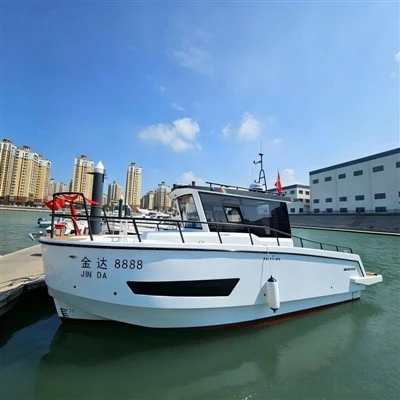
The short answer is a resounding yes. But don’t take my word for it—walk along the San Diego Bay on a Wednesday morning, and you’ll see it play out in real time. You’ll spot our 28-foot aluminum patrol craft, its hull cutting through swells, stopping mid-channel to intercept a drift net left from an unlicensed fishing boat—nets that kill thousands of sea turtles, dolphins, and seabirds every year. You’ll watch our crew glide over a patch of oil sheen left by a small cargo vessel, deploying an absorbent boom in minutes before it reaches the nearby kelp forest, which is a critical nursery for rockfish and abalone. That’s not law enforcement as most people picture it. That’s patrol boats doing environmental work, one mission at a time.
Let’s get one thing straight: when most people think of patrol boats, they picture coast guard cutters chasing smugglers or military craft patrolling borders. But the unglamorous, high-stakes environmental missions make up almost 60% of the work we’ve equipped small harbors and conservation nonprofits to do, according to data from the National Oceanic and Atmospheric Administration’s (NOAA) Office of Law Enforcement, which tracks marine enforcement activities. These boats don’t just look fast—they’re built for a job that demands precision, not just speed. Our craft, for example, feature shallow drafts that let them navigate the narrow, winding channels of salt marshes where larger vessels can’t reach, and quiet electric motors that don’t spook manatees or disturb nesting shorebirds—something a loud, gas-powered boat would never pull off.
Take the 2022 red tide event in Southwest Florida. If you followed the news, you saw the footage of fish washing ashore, the stinking mats of algae covering local beaches, and the impact on commercial fishing, tourism, and public health. What you didn’t see was the fleet of small patrol boats from local conservation groups that were the first line of defense. They were out at 5 a.m. every day, collecting water samples to track the tide’s path, marking areas where the algae was thickest to keep swimmers away, and working with state agencies to deploy nutrient-reducing barriers to slow the bloom’s spread. Most of those boats were from suppliers like mine. We outfitted each one with water testing kits, non-toxic hull paints that don’t leach chemicals into the water, and secure storage for sample containers. Without those patrol boats, the agencies would have been working blind—they wouldn’t have known exactly where the bloom was moving, how fast, or what conditions were driving it.
Another area where patrol boats are irreplaceable is illegal dumping and habitat destruction. Every year, millions of pounds of trash get dumped into U.S. waters, from abandoned shipping containers full of construction debris to old tires that sink to the bottom and smother seagrass beds. In places like the Chesapeake Bay, where the oyster population has dropped to less than 1% of its historic level, those oyster beds are also being damaged by unlicensed dredging—boats pulling up sediment and habitat to get to hidden shell. Patrol boats are the only way to catch this activity in action. A land-based officer can’t spot a dredger operating 3 miles out, but a patrol boat can intercept it in minutes, document the activity with underwater cameras, and coordinate with local authorities to seize the equipment. Last year, a conservation group in Maryland used one of our boats to stop a dredging operation that would have destroyed 2 acres of critical oyster habitat—enough to seed 10 million new oysters, which filter 50 gallons of water each a day. That’s tangible, lasting environmental work, and it wouldn’t have happened without the patrol boat.
But here’s the thing: not all patrol boats are built equal for environmental work. A heavy, high-speed craft designed for chasing smugglers would tear up seagrass beds, run aground in shallow marshes, and use too much fuel, spewing more pollution into the water than it prevents. That’s why my company focuses on building and outfitting craft specifically tailored for environmental missions—lightweight aluminum hulls that don’t damage sensitive habitats, low-emission or fully electric engines to reduce air and water pollution, and flexible deck space for carrying absorbent booms, water testing gear, or debris collection nets. We also work with conservation groups to customize every boat: some need extra storage for sea turtle rescue gear, others have modified hulls to get within inches of nesting bird islands without disturbing the eggs.
I know there are skeptics out there who say patrol boats are too expensive, that we should just focus on land-based conservation. Let’s talk numbers. A single illegal drift net can kill an average of 20 marine animals a year, according to NOAA. Catching just one of those nets with a patrol boat costs a fraction of the money it would take to rescue the animals that would have died, or to clean up the ecosystem after a net has become a ghost fishing trap. In 2021, a nonprofit in Oregon used a $80,000 patrol boat we equipped to remove 12 abandoned nets over the course of the year, which prevented an estimated 240 sea turtles, seals, and seabirds from dying. That’s a return on investment that no land-based conservation project can match.
We’ve also seen patrol boats play a critical role in responding to oil spills, one of the most devastating environmental events in marine ecosystems. When a small oil spill happens near a port, the difference between containing it in an hour and letting it spread for a day can mean the difference between saving a stretch of mangroves or letting hundreds of birds and fish be coated in oil. In 2019, when a barge spilled 1,000 gallons of oil into the Delaware River, the first responders on scene were three small patrol boats from local environmental groups. They deployed absorbent booms within 20 minutes, blocked the oil from reaching a nearby wetland that was home to hundreds of migratory birds, and worked with coast guard to guide larger cleanup vessels to the exact site of the spill. Without those patrol boats, the spill would have impacted over 5 miles of shoreline, instead of just 0.5 miles.
I won’t lie—this work isn’t always easy. There are mornings when we get a call at 2 a.m. about a spill, and we have to load a boat and send a crew out in the dark. There are times when a storm rolls in mid-mission, and we have to pull a crew back to shore. But for me, that’s the point. Patrol boats are there when the coast guard is tied up, when land-based groups can’t reach remote areas, when the environment needs help before the damage is permanent.
If you’re a conservation group, a local government, or a state agency that’s looking to invest in patrol boats for environmental work, I’d encourage you to look past the images of military craft and high-speed law enforcement boats. The right patrol boat is a tool for protection, for restoration, for keeping our oceans, rivers, and estuaries healthy for the next generation.

We’ve worked with groups from Maine to Hawaii, outfitting boats that are built to last, built to be low-impact, and built to get the job done when the environment needs them most. If you’re ready to talk about customizing a patrol boat for your environmental mission, or if you have questions about how these craft can fit into your conservation efforts, we’re here to help. Reach out to us to schedule a conversation about your needs, your budget, and how we can build a boat that works for your community and for the planet.
Patrol Boats References:
National Oceanic and Atmospheric Administration Office of Law Enforcement. Marine Enforcement Activities 2020-2022. U.S. Department of Commerce, 2023.
Florida Fish and Wildlife Conservation Commission. 2022 Red Tide Response: Small Vessel Fleet Impact Assessment. State of Florida, 2023.
Chesapeake Bay Program. Illegal Dredging and Habitat Loss: 2021 Annual Report. Chesapeake Bay Foundation, 2022.
National Marine Fisheries Service. Ghost Fishing: The Impact of Abandoned Fishing Gear on Marine Ecosystems. NOAA, 2021.
Longkou Jinda Shipping Co., Ltd.
With abundant experience, we are one of the most professional patrol boats manufacturers and suppliers in China. Please feel free to buy high quality patrol boats made in China here from our factory. We also accept customized orders.
Address: North of Shuangyu Village, Xingjia Sub-district, Longkou City, Yantai City, Shandong Province
E-mail: leven@jindaship.com
WebSite: https://www.jindaship.com/
