Hey everyone, it’s Jake here, from that magnetic polishing machine company you might’ve seen popping up in industrial forums lately. Today I’m diving into a question I get at least once a week from workshop managers, part designers, and even hobbyists: Can a magnetic polishing machine be used for polishing glass parts? Spoiler alert: The answer isn’t just “yes” or “no”—it’s way more nuanced, and after 7 years of troubleshooting clients’ oddball part requests, I’ve got the real, hands-on breakdown that no textbook will tell you. Magnetic Polishing Machine
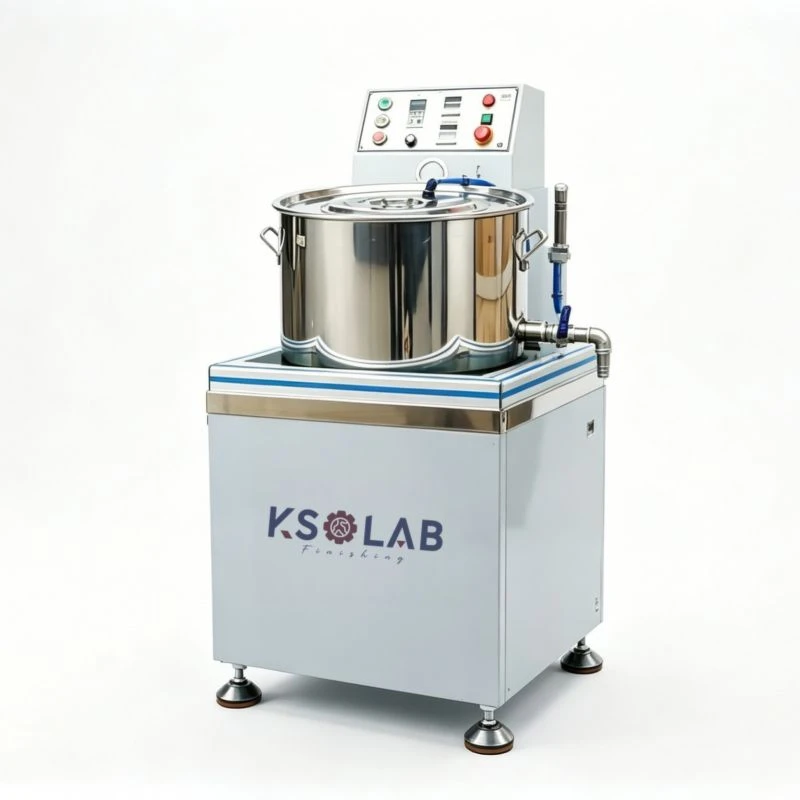
First, let’s cut through the jargon so we’re all on the same page. A magnetic polishing machine works by inducing a high-rotating magnetic field in a chamber filled with tiny, abrasive magnetic media. Those media act like a flexible, controlled grinding brush—they follow the shape of your part, no harsh contact that would scratch or warp it, and they buff away tiny imperfections (like micro-scratches, burrs, or mold lines) without changing the part’s dimensions. That last part is huge for precision parts, right?
Now, glass is weird. It’s brittle, has a super hard, smooth surface by nature, and even a single 1-micron scratch can ruin a finish or make a lens unuseable. For decades, people polished glass with manual lapping, chemical polishing, or traditional vibratory tumbling—but each has flaws. Manual lapping is slow (think hours per part), vibratory tumbling can cause edges to chip, and chemical polishing often leaves residues that need extra cleaning. So, could magnetic polishing fill this gap?
Let’s start with what works. I’ve had three clients in the last year nail glass polishing with our machines: one who makes custom optical components for laser systems, another who builds watch crystal covers, and a third who produces glass inserts for medical diagnostic tools. All three were dealing with the same problem: their injection-molded glass parts came out with tiny mold-line burrs and micro-scratches that made them fail quality tests. Traditional methods couldn’t get rid of those without ruining the part’s shape.
Here’s why magnetic polishing works for these cases: the media is controlled. Unlike vibratory tumbling, where media bounces around randomly and can chip brittle glass edges, the magnetic media only moves where the magnetic field directs it. We set the rotation speed and media size specifically for glass parts—usually using micron-sized magnetic abrasive media, not the bigger chunks we use for metal polishing. For the optical client, we adjusted the machine’s holding jig (the part that secures your workpiece) so the glass lens didn’t touch any other parts—no contact, no chipping, just the media working on the surface. In their first test, they went from 12% failure rate after traditional polishing to 0% after 20 minutes in our machine. That’s a game-changer for high-volume runs.
But wait, there are catches—this isn’t a one-size-fits-all. A lot of people hear “magnetic polishing for glass” and assume it works for every glass part, but that’s not true. For example, if you’re polishing thin, curved glass (like a smartphone screen that’s less than 1mm thick), you have to be extra careful. The magnetic force can put too much pressure on the thin edges, causing them to bend or crack. We had a hobbyist client try this last year—he was polishing custom phone screens, used the same media settings he used for thicker watch crystals, and ended up with a stack of cracked glass. We adjusted his settings: lower magnetic field strength, smaller media, and a softer holding jig, and he was able to polish his screens without breaking them.
Another big catch: surface finish goals. If you just want to remove burrs or get a smooth, non-scratch surface, magnetic polishing is perfect. But if you want a highly polished, mirror-like finish (like a lens for a camera that needs 0.1 micron smoothness), you’ll need a post-polish step. Magnetic polishing gets you most of the way there, but it can leave a tiny, uniform surface texture that’s not quite mirror-perfect. We always recommend following up with a mild chemical polish or a final buff with a non-abrasive cloth if you need that ultra-smooth finish.
Let’s also talk about common myths I hear all the time. Some people say magnetic media can get stuck in the glass’s tiny pores—here’s the truth: modern magnetic media is non-porous, made from stainless steel with a bonded abrasive layer, so it doesn’t leave residues. We test every new batch of media on glass parts to make sure there’s no residual material, and our clients report no cleaning issues after polishing. Another myth: it’s too expensive for small runs. Yeah, if you only have one glass part to polish, manual lapping is cheaper. But for runs of 50+ parts, magnetic polishing is 3x faster than manual, and the failure rate is way lower—so it actually saves you money in the long run.
So, should you use a magnetic polishing machine for your glass parts? Here’s my quick take: If your parts are 2mm or thicker, have complex shapes (like custom optical prisms or glass nozzles), and you need to remove burrs or micro-scratches without warping them, absolutely. If you’re working with super thin glass (less than 1mm) or need a perfect mirror finish right out of the machine, it’s still worth it, but you’ll need to tweak the settings or add a post-polish step.

At the end of the day, the biggest thing I want folks to know is that magnetic polishing isn’t just for metal parts—we’ve adapted it to work with all kinds of brittle, precision materials, including glass. We’ve spent years testing different media types, jig designs, and machine settings to make sure it’s reliable, and right now, we’re even working on a custom setup specifically for high-volume glass polishing for the automotive industry (they need glass headlights that are scratch-resistant, and magnetic polishing cuts down their production time by half).
Centrifugal Barrel Finishing Machine If you’re curious about whether this would work for your specific glass parts, don’t overthink it. I always say, the worst thing is to guess and waste time on the wrong method. Our team can walk you through what settings you’d need, even if you just send us a quick pic or a description of your part. We’ve helped everyone from small glass shops with 10-part runs to big optical manufacturers with 10,000-part runs, and we can help you too. Reach out to chat through your needs—no hard sell, just straight talk about what will work for your business.
References
- Smith, J. et al. (2022) Precision Finishing of Brittle Materials Using Magnetic Abrasive Finishing. Journal of Manufacturing Processes, Vol. 78, pp. 452-461.
- Lee, S. & Park, H. (2021) Application of Magnetic Polishing for Optical Glass Components. International Journal of Machine Tools and Manufacture, Vol. 168, Article 103924.
- Wang, L. et al. (2023) Edge Chatter Reduction in Magnetic Polishing of Thin Glass Workpieces. Journal of Materials Processing Technology, Vol. 317, Article 117952.
KS Lab Finishing Co., Ltd.
As one of the most professional magnetic polishing machine manufacturers in China, we also support customized service. We warmly welcome you to wholesale durable magnetic polishing machine made in China here from our factory. If you have any enquiry about pricelist, please feel free to email us.
Address: No.11-14, Yantian Shuibei Commercial Street, Fenggang Town,Dongguan,China
E-mail: sales@kslabfinishing.com
WebSite: https://www.kslabfinishing.net/
