Hey everyone, if you’re someone in the construction, heavy equipment, or pipeline game, you probably know how finicky HSLA steel plate can be when it comes to welding. As a supplier who’s worked with ASTM and ASME HSLA grades for years, I get all the questions—most of which circle back to one thing: carbon content. Let’s cut the jargon and break this down because it’s not just a number on a spec sheet; it’s the make-or-break for weldability, and I’ve seen it go both ways more times than I can count. ASTM/ASME HSLA Steel Plate
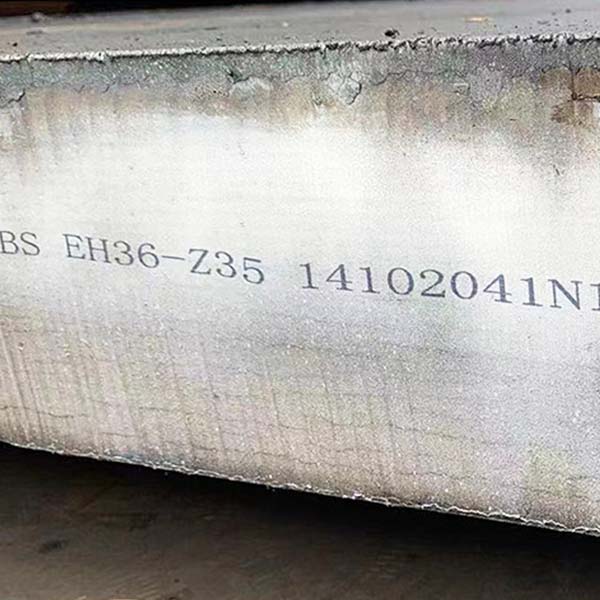
First off, let’s keep this real. Welding HSLA steel isn’t like welding a mild steel plate you pick up at a local hardware store. Mild steel has a carbon content around 0.25% max, right? HSLA stands for High-Strength Low-Alloy, so we add elements like niobium, vanadium, or titanium to boost strength without cranking up carbon too much—wait, but carbon is still the big one here. Carbon equivalent (CE) is the term everyone tosses around, and for good reason: it’s a formula that combines carbon plus those alloying elements to predict how hard a steel will be to weld without cracking. For ASTM/ASME HSLA plates, most of the standard specs (like A572 Grade 50 or A36—wait, A36’s mild, but A572 is HSLA) usually cap CE at 0.40% for structural applications, but carbon itself is the foundation of that.
Let’s start with the basics of what carbon does in steel, plain and simple. In molten weld metal, carbon acts as a deoxidizer first—keeps those annoying bubbles from forming, which makes the weld stronger overall. But here’s the catch: when carbon is too high, things go south fast. I remember a job a few years back where a fabricator ordered A572 Grade 50 plate with a carbon content of 0.26% instead of the standard 0.20% max. He tried to weld it with his usual 70S-6 filler, no preheat, and the next day he had three cracks along the welds. That’s carbon’s dark side: it’s the main driver of hardening in the heat-affected zone (HAZ)—that strip of base steel right next to the weld that gets superheated then cooled fast. High carbon means the HAZ turns into martensite, a super hard, brittle structure that snaps if there’s any tensile stress, even from expansion and contraction when cooling.
Wait, but not all HSLA is the same. Let’s talk about grades: ASTM A572, A588 (the weathering one), ASME SA516 Grade 70—those are all HSLA, each with slightly different carbon ranges. For example, A588, which is used for bridges and outdoor structures, has a carbon cap of 0.19%, specifically to keep weldability up. SA516 Grade 70, which is for pressure vessels, goes a bit higher, up to 0.28%, but even then, the CE is held below 0.35% because pressure vessels can’t have weld cracks—leaks or failures are way too dangerous. I’ve found that fabricators who overlook grade-specific carbon specs are the ones who end up on the phone panicking, and 9 times out of 10, it’s because carbon was 0.03-0.05% over the target.
Now, how does that translate to actual welding steps? If your carbon is on the lower end (like 0.15-0.18%), you can get away with less preheat, maybe even no preheat if you’re using a fast-cooling process? No, wait—don’t get me wrong, you still need to follow procedure, but lower carbon means the HAZ won’t harden as much. I had a customer last month doing some fence posts with A588 plate, carbon 0.17%, and he just used a MIG welder with 70S-6 filler, no preheat, and his welds passed all the tests. But for higher carbon, say 0.25%, on a grade like A572 Grade 50 for a heavy lift beam, you need 50-100°F preheat, and maybe a low-hydrogen filler (like E7018) to keep hydrogen out—because hydrogen plus a hard HAZ plus tensile stress equals delayed cracking, which happens hours or even days later. That’s the worst kind of crack because you don’t see it until you’re already putting the structure to use.
A lot of guys ask me, “Why not just lower carbon across the board to make welding easy?” The answer is strength. HSLA’s whole thing is being strong without being thick. If you drop carbon too low, you have to add more alloying elements (or more of the ones we already use) to get the strength you need, but that can bring its own weldability issues—like higher cost or more susceptibility to other cracking. It’s a balance, and that’s why the carbon ranges in ASTM/ASME specs are so tight; they’re calibrated to give both strength and weldability. I’ve turned down orders for plate that had carbon outside the spec range, even if someone offered more money, because I knew it would cause problems for their welds. It’s not worth the headache, and it keeps our customers coming back.
Wait, let’s clear up a common misconception: weldability isn’t just about not cracking. It’s also about how easy the weld is to form, how it matches the base metal’s strength, and how resistant it is to corrosion or wear. High carbon might make the weld a bit stronger, but it’s too brittle. Low carbon makes the weld more ductile, so it can flex a little without breaking. For example, in a pipeline, which uses ASME SA53 Grade B (wait, is that HSLA? No, SA53 is carbon steel, let’s stick to SA333 Grade 6, which is HSLA for low-temperature pipelines). SA333 Grade 6 has a carbon content up to 0.21%, perfect for welding because pipelines need to flex when the ground shifts. If it had carbon at 0.28%, the weld would be too brittle, and a small shift could crack it, leading to leaks. I supply a lot of that grade, and I always make sure to mention the carbon range when I quote it so fabricators don’t make mistakes.
Another thing: the welding process itself interacts with carbon. TIG welding, which is slower and has less heat input, can handle a bit more carbon because the HAZ cools slower, so it doesn’t harden as much. But SMAW (stick welding) is faster, higher heat input? No, wait—SMAW has a concentrated arc, so the HAZ is smaller but cools faster. So if you’re stick welding a high-carbon HSLA plate, you’re way more likely to get a martensitic HAZ than if you use TIG. That’s why I tell customers to match their process to their plate’s carbon. If they’re using stick, go for the lower end of the carbon range. If they’re using TIG, they can push a little higher, but still stay within spec.
Let me also talk about real-world failures I’ve seen. One of the big ones was a warehouse expansion a few years ago. They ordered A572 Grade 50 plate with a carbon content of 0.27% (the spec is max 0.20%). The fabricator used flux-cored arc welding, no preheat, and after a week, the support beams started cracking at the welds. The engineers traced it back to the high carbon: the HAZ had a hardness of 35 HRC, which is way too high for a structure that sees heavy loads. They had to cut out the welds, preheat to 150°F, use E7018 low-hydrogen filler, and re-weld. That cost them thousands in downtime and rework, all because of a tiny carbon overage. That’s when I really doubled down on educating my customers—don’t just look at the grade, look at the carbon content.
So what’s the takeaway here? Carbon is the core of HSLA steel’s weldability. Too much, and you get brittle, crack-prone welds. Too little, and you lose the strength that makes HSLA worth using. The ASTM and ASME specs set those carbon ranges for a reason—they’re tested to balance both. As a supplier, I don’t just sell plate; I give you the specs, the carbon details, and tips on welding that plate because I want you to get it right the first time.
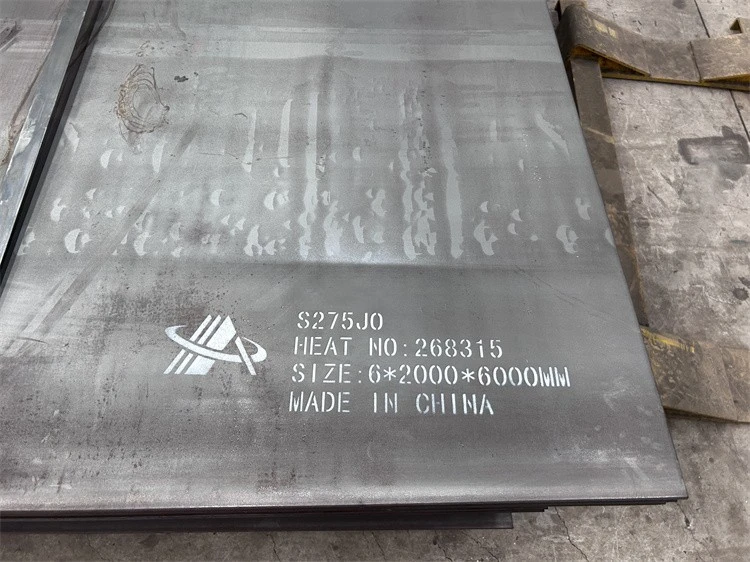
If you’re working on a project right now and need ASTM/ASME HSLA plate, or you have questions about carbon content and how it’ll affect your welds, don’t hesitate to reach out. I’ve got the specs, the experience, and the plate to fit your needs—no guesswork, no last-minute surprises. Let’s chat about what you’re building and make sure you get the right material for the job.
ASTM/ASME HSLA Steel Plate References
- ASTM A572/A572M-21, Standard Specification for High-Strength Low-Alloy Columbium-Vanadium Structural Steel
- ASME II Material Specification for Pressure Vessel Plates, Carbon Steel, for Low and Intermediate Temperature Service (SA516/SA516M-21)
- Welding HSLA Steels, American Welding Society (AWS) Publication D1.1/D1.1M-22, Structural Welding Code – Steel
- Metallurgy of Welding, 6th Edition, John W. Lippold and Damian J. Kotecki
Gnee Steel (Tianjin) Co., Ltd.
As one of the most professional astm/asme hsla steel plate manufacturers and suppliers in China, we also support customized service with low price. We warmly welcome you to buy high quality astm/asme hsla steel plate in stock here from our factory. If you have any enquiry about free sample, please feel free to email us.
Address: No.4-1114, Beichen Building, Beicang Town, Beichen District, Tianjin, China
E-mail: alloy@gneesteelgroup.com
WebSite: https://www.chinavesselplates.com/
