If you’ve ever stood beneath a stormy sky, watching lightning slice through the clouds, you know how raw and powerful that force of nature is. As a supplier of lightning protection towers, I’ve spent more than 15 years talking to electric utility teams, airport maintenance crews, and industrial plant managers who’ve learned the hard way what happens when lightning protection fails. A single strike to an unprotected power substation can knock out service for hundreds of thousands of people; a direct hit on an airport’s navigation tower can ground flights for days. Most of my customers don’t just need a single lightning protection tower—they need a coordinated system of devices, all working together to keep their assets safe. That’s why I want to pull back the curtain on how these towers interact with other critical lightning protection tools, because getting that mix right is what turns a partial solution into reliable protection. Lightning Protection Tower
Let’s start with the basics, because many people assume a tall tower is all you need. A lightning protection tower’s main job is to create what’s called a “lightning shielding zone” around a property. The science here, from the rolling sphere method that’s been the standard for over 80 years, is simple: lightning tends to strike the highest point in a given area. A properly engineered tower, sized for the height of the assets you’re protecting, draws strikes to itself, rather than letting them hit a building, transformer, or piece of equipment below. But that’s only the first step. Lightning doesn’t just hit the highest point—it’s a massive electrical current, and when it hits that tower, it needs a safe path to the ground. That’s where other devices come in, and that’s where the magic of a coordinated system happens.
Take surge arresters, for example. These are small, but they’re non-negotiable for electrical systems. A lightning strike that hits a tower sends a current rushing through the tower’s conductive base and down a grounding system to the earth. But even with that path, a portion of that current can backflow into electrical lines running through the protected area, or induce a spike in voltage that fries sensitive electronics. That’s where surge arresters step in. Let’s say a utility substation has a 120-foot lightning protection tower on its edge. When lightning hits the tower, 90% of the current goes down the tower’s grounding system, but a small fraction tries to jump onto the substation’s power lines. The surge arresters, installed every few hundred feet on those lines, act like a pressure relief valve: they let the harmless voltage pass through, but they immediately divert any surge above a safe threshold into the ground before it reaches transformers or control rooms. I’ve seen projects where someone skipped surge arresters to cut costs, only to have a single storm take out three years’ worth of circuit breaker inventory. The tower caught the strike, but the surge blew up everything it was supposed to protect.
Next up: grounding systems, which are the quiet backbone of any lightning setup. A lightning protection tower can’t do its job if it’s not connected to the ground properly. The tower’s base is attached to a grid of conductive rods, usually copper or galvanized steel, buried deep in the earth. But that grid doesn’t exist in a vacuum—it works with every other grounding device on-site. For example, a warehouse protected by a tower will have its own grounding rods for the building’s wiring and plumbing. If those rods are too far from the tower’s grounding grid, when a strike hits, the two ground systems can create a voltage difference between the building and the tower. That difference can create a spark, called a side flash, that jumps between the building’s metal roof and the tower, even if the building is inside the tower’s shielding zone. Our team works closely with customers to make sure the tower’s grounding grid is merged with all other grounding systems on the property—from data centers to storage tanks—so there’s no gap in that path. We recently finished a project for a chemical plant where the previous setup had two separate ground grids, one for the tower and one for the process equipment. A test strike simulation showed a side flash risk of 12 feet, which was right next to a tank holding flammable materials. By merging the grids and adjusting the tower’s design slightly, we cut that side flash risk to less than a foot. The plant’s safety team still references that test in all their annual audits.
Then there’s air terminals, which are the little rods or plates you see on top of buildings, often mistaken for the actual lightning strike point. Wait a second—you might be thinking, the tower is the strike point, right? Yes, but for smaller assets that are well within the tower’s shielding zone, air terminals act as a backup, just in case a strike deviates. Let’s say a factory has a main 100-foot lightning protection tower, and a smaller 40-foot exhaust stack on its roof. The stack is clearly inside the tower’s shielding zone, but if the tower ever had a flaw in its conductive surface, or if lightning was unusually erratic that storm, the stack could become a secondary strike point. That’s why installing an air terminal on top of the stack ties it into the same grounding system as the main tower. It’s a redundancy layer. I like to compare it to a sports team: the tower is your quarterback, leading the charge to draw the strike, but air terminals are the wide receivers and linebackers, making sure no stray lightning gets through to score a hit on your assets. We always recommend air terminals for any elevated structure within 50 feet of a lightning protection tower’s edge, even if it seems like it’s well covered. It’s a low-cost add-on that eliminates a lot of unknowns.
Another critical device here is lightning counters. You might wonder why you’d want a device that counts how many lightning strikes are hitting your tower. The answer is simple: it’s for maintenance and performance. A lightning protection tower isn’t a set-it-and-forget-it piece of equipment. Every strike it absorbs creates a tiny amount of wear on its conductive connections, its grounding rods, even the tower’s metal surface. A lightning counter tracks how many strikes the tower has taken, so you can schedule inspections before a small issue becomes a big problem. But here’s the interaction part: the data from the lightning counter doesn’t just live on a shelf. It integrates with data from surge arresters, which track how many surges they’ve diverted, and grounding resistance meters, which measure how well your ground system is working. A few years ago, we did a project for a local airport that had a 80-foot lightning protection tower for their terminal. The lightning counter showed that the tower had absorbed 12 strikes in a single storm season, which seemed like a lot, but the surge arresters showed almost no surges diverted that season. That didn’t make sense—until we checked the grounding system. The resistance had spiked due to corroded rods, so instead of the current going smoothly to the ground, it was leaking out the terminal’s wiring. The airport’s maintenance team would have never caught that issue without combining data from the tower’s counter, the arresters, and the grounding meters. That’s the kind of coordinated data that turns individual devices into a smart system.
Let’s talk about a common mistake I see all the time: treating lightning protection as a one-size-fits-all job. A lightning protection tower that works for a 10-acre residential subdivision will fail miserably for a 50-acre industrial park. The interactions between devices change based on the size and layout of your property. For example, on a large site like a solar farm, you might not just have one lightning protection tower—you might have multiple, spaced evenly to cover all the solar panels. Those towers need to be connected to a common grounding system, and each needs its own surge arresters along the wiring between panels. If you have two towers 200 feet apart on a solar farm, and you skip the surge arresters between them, a strike on one tower can send a surge through the panel wiring to the other tower, even though both are supposed to be protected. I worked with a solar developer in Arizona a few years back who did exactly that—saved a few thousand dollars on surge arresters, and lost $120,000 in solar inverters when a summer monsoon storm hit. They reached out to us after that, and we reworked their system with additional towers and properly sized arresters between each section. Now their uptime for lightning-related issues is zero, and they credit that to getting the tower-device interactions right.
One of the most important, and most overlooked, interactions is between lightning protection towers and electromagnetic shielding for sensitive electronics. A hospital’s MRI machine, a data center’s server banks—these are assets that are vulnerable not just to direct lightning strikes, but to the electromagnetic pulse (EMP) that a strike creates. When a lightning bolt hits a tower, it generates a powerful EMP that can induce a voltage in nearby metal objects, even if they’re not connected to the tower. So if you have a data center 100 feet from your lightning protection tower, just the EMP from a strike could take out your servers, even if they’re inside a building. That’s where electromagnetic shielding comes in—metal panels on the data center walls and roof, connected to the same grounding system as the tower. The key here is that the shielding has to be bonded to the tower’s ground, not the building’s own ground, to redirect the EMP away from the electronics. We often work with data center engineers to make sure the tower’s grounding system is large enough to handle both the direct strike current and the EMP deflection, so the shielding does its job without overloading.
I know it’s tempting to buy individual components from different suppliers to save a buck, but that’s where problems happen. A surge arrester from one company might not be rated to handle the current that your lightning protection tower’s grounding system can push, or an air terminal might not be conductive enough to work with your tower’s design. For the last 15 years, our team has specialized in engineering entire lightning protection systems, not just selling towers. When you partner with us, we come to your site, measure the height of your assets, map your property, and calculate exactly how many towers you need, where to place them, which surge arresters to use, how to size your grounding system, and even what kind of lightning counter will integrate with your maintenance software. We’ve seen time and again that when clients try to pick and choose parts from different vendors, the interaction between devices breaks down. For example, a few years ago, a small industrial park bought a cheap tower from a supplier, surge arresters from another, and tried to install them themselves. The tower was rated for 100,000 amps of strike current, but the surge arresters they bought were only rated for 50,000 amps. When lightning hit, the arresters blew, and the surge traveled through the wiring to the park’s main office, taking out their HVAC and computer systems. That cost them over $80,000 in repairs, just because they didn’t account for how the tower and arresters need to work in sync.
At the end of the day, lightning protection isn’t about a single tower standing alone—it’s about a network of devices, each doing its job, all talking to each other to keep your assets safe. The lightning protection tower is the leader, drawing the strike, but it can’t do its job without properly sized surge arresters to stop surges, merged grounding systems to eliminate side flashes, air terminals to catch stray strikes, lightning counters and meters to track performance, and shielding to protect sensitive electronics from EMP. Every piece has to be engineered to work with the others, not just installed side by side.
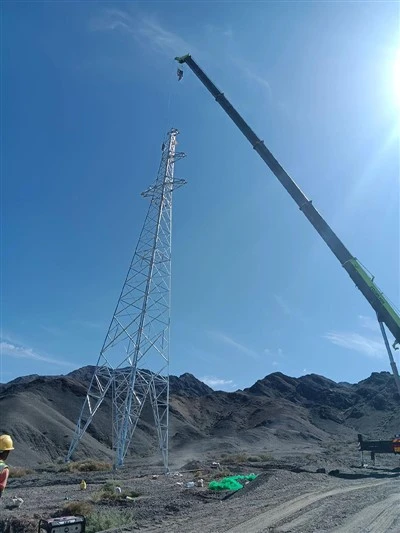
If you’re planning a new construction, upgrading an existing system, or just reviewing your lightning protection to make sure it’s up to code, we’re here to help. Our team has worked with sites ranging from small retail centers to large power utilities, and we’ll take the time to walk through your specific needs, explain how our lightning protection towers will interact with your other devices, and give you a system that’s not just compliant, but reliable for years to come. Don’t wait until the next storm to find out your system has gaps—reach out, and let’s make sure your protection is as solid as the assets you’re guarding.
Communication Tower References
- U.S. Department of Commerce, National Institute of Standards and Technology. Lightning Protection for Buildings and Structures: A Handbook for Design, Installation, and Maintenance. 2018.
- International Electrotechnical Commission (IEC). IEC 62305: Protection Against Lightning, Parts 1-4. 2010.
- Field, Paul R. Lightning Protection in Industrial and Commercial Facilities. Wiley-IEEE Press, 2012.
- Moore, C.B., et al. “Lightning Strike Points and Shielding Effectiveness in Tall Structures.” Journal of Geophysical Research: Atmospheres, vol. 115, no. D2, 2010, pp. 1-12.
- Main, J.A. “Grounding and Bonding for Lightning Protection Systems.” IEEE Transactions on Industry Applications, vol. 47, no. 3, 2011, pp. 1234-1241.
Hunan Zhubang Hongsheng Construction Technology Co., Ltd.
As one of the most professional lightning protection tower manufacturers and suppliers in China, we’re featured by quality products and good price. Welcome to buy high-grade lightning protection tower made in China here and get quotation from our factory. Customized orders are welcome.
Address: Lutang Village, Yong’an Town, Liuyang City, Changsha City, Hunan Province, Hunan Zhubang Hongsheng Construction Technology Co., Ltd.
E-mail: 19898838989@163.com
WebSite: https://www.chinaenerto.com/
