Hey there, if you’re here because you’re deep in the weeds trying to nail down the fuel tank capacity of Jiefang tractor trucks, I get it. As someone who’s been supplying Jiefang heavy haulers to fleets, owner-operators, and small transport companies for the better part of 8 years, this is one of the most common questions I get hit with—way more often than “what’s the warranty on the PTO” or “can this pull a 40-ton lowboy.” And honestly, it makes total sense. The tank size isn’t just a random spec; it’s make-or-break for route planning, reducing downtime, and keeping fuel costs from eating into your margins. Jiefang Tractor Truck
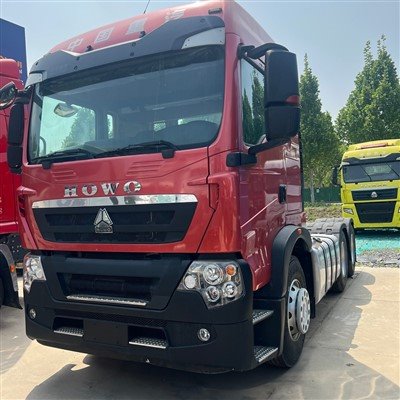
First off, let’s cut through the noise. Jiefang doesn’t put a one-size-fits-all tank on their tractor trucks. That’s probably why you’re Googling this—you saw two different numbers on two random forums and got confused. The tank capacity depends on two big things: what model you’re running, and what spec you ordered it with. Let’s start with the most popular models I sell, because that’s where 90% of my customers are.
Take the Jiefang J6P, hands down the workhorse of our lineup. This bad boy’s been a staple for long-haul freight across Asia, and now it’s blowing up in parts of Africa and Latin America too. For the standard spec J6P 6×4 tractor, the factory default fuel tank is a single 400-liter steel tank. But wait—most people don’t stop there, right? Long-haul drivers hate stopping for fuel every 500 km, so almost everyone adds an auxiliary tank. The common upgrade here is a second 400-liter steel tank, bringing total capacity to 800 liters. But if you’re running really remote routes—think cross-country loads with no fuel stops for 1,000+ km—we’ve also got customers who go with a 600-liter main tank paired with a 600-liter auxiliary, hitting a full 1,200 liters. That’s enough to get from, say, Guangzhou to Urumqi without stopping, minus a little buffer.
Then there’s the Jiefang J7, the newer, more tech-heavy model that replaced the J6P as their flagship a couple years back. I’ll be honest, the J7 is a bit finicky in terms of tank specs, because it’s built for both long-haul and regional distribution. The standard J7 4×2 tractor comes with a smaller tank by design—wait, no, not smaller, just tailored for shorter runs. It’s a 350-liter aluminum tank, which is lighter than steel, so it boosts fuel efficiency a tiny bit. But if you’re running the J7 on long-haul, you can swap in a 550-liter aluminum main tank and add a 450-liter auxiliary, bringing total to 1,000 liters. Aluminum’s a big sell here because fleet managers love saving weight—every 100 kg you cut off the truck means an extra 100 kg of cargo, which adds up to more profit per load.
Don’t sleep on the medium-duty Jiefang J6L either, that’s the workhorse for city and regional haul. The J6L is often used for last-mile delivery or short runs between warehouses, so its standard tank is 200 liters. But I’ve got a lot of local operators adding a 250-liter auxiliary tank for longer runs outside the city, pushing total to 450 liters. It’s not made for cross-country, but for guys moving freight between adjacent cities, that’s perfect.
Now, let’s clear up a common myth. A lot of forum guys will tell you “Jiefang’s tanks are always steel, aluminum is aftermarket.” Nope, that’s not true. For the J7 and some newer J6P variants, Jiefang offers aluminum tanks straight from the factory, no aftermarket welding needed. Aluminum is great for corrosion resistance, too—if you’re running in areas with lots of rain or salty roads (like coastal routes), aluminum tanks last way longer than steel ones, which is a big plus for resale value.
Wait, I should also mention the fuel type, because that ties into tank capacity too. Jiefang tractors run on diesel, obviously, but there are variants for natural gas (NG) and liquefied natural gas (LNG). Those have totally different tanks—they’re pressure vessels, not regular fuel tanks. But 99% of the customers I supply are diesel-only, so if you’re looking at gas variants, you’ll need to check the specific model’s LNG tank capacity, which is usually way smaller by volume equivalent, but that’s a whole other blog post.
Here’s the thing that most people don’t realize: the factory specs are just a starting point. When I deliver a new Jiefang tractor, I always ask customers how they plan to use it, because I can adjust the tank setup before delivery. If you’re a fleet with 20 trucks running cross-country, I’ll usually push the 1,000 or 1,200 liter tank setup because it reduces fuel stops by 20% or more. If you’re an owner-operator doing local runs, the 400-liter single tank is enough, and you save money on the auxiliary tank.
I’ve had customers come to me after buying a Jiefang from another supplier, confused because their tank was way smaller than they expected. Sometimes that’s because the supplier skipped the auxiliary tank to cut costs, or they sold them a regional model that doesn’t come with extra tanks. That’s why it’s so important to talk to someone who knows the specs, not just a guy who’s moving metal.
Let me also give a quick example of how this works in the real world. A friend of mine runs a small fleet of 5 J6P tractors doing long-haul between Nairobi and Mombasa, a 500 km route with two fuel stops. Last year he bought the 800-liter tank setup, and now he only stops once a way, not twice. That saved him like 2 hours per trip, which means he can do one more trip per week, adding up to thousands of dollars in extra revenue. That’s the difference a proper tank size makes, right there.
Now, if you’re shopping around, don’t just take the number off the spec sheet. Ask the supplier what the tank is made of, whether it’s factory-installed or aftermarket, and if they can adjust the setup to match your routes. I’ve seen guys buy a J6P with a 400-liter tank and then spend $1,500 on an aftermarket auxiliary tank, which is more expensive and riskier than ordering it upfront from the factory.
At the end of the day, the fuel tank capacity of Jiefang tractors isn’t a fixed number—it’s tailored to how you use the truck. Whether you’re running short regional routes, cross-country hauls, or anything in between, there’s a spec that fits. If you’re trying to figure out what’s right for your operation, or if you want to chat more about Jiefang tractor specs, tank options, or pricing, hit me up. I’ve spent years helping customers get exactly what they need, not just a one-size-fits-all truck that’s going to leave them stranded or losing money.

Don’t settle for vague numbers or generic forum advice. Talk to someone who’s on the ground supplying Jiefang trucks every day, who knows the ins and outs of each model and spec. Let’s work together to get a Jiefang tractor that fits your routes, your budget, and your bottom line.
Excavator References:
China National Heavy Duty Truck Group Co., Ltd. Jiefang Tractor Truck Product Catalog, 2023
Jiefang Official Service Manual for J6P, J7, and J6L Models, 2022
Heavy Transport Vehicle Fuel Efficiency and Route Planning Report, Global Freight Association, 2023
Jining Yaochi Automobile Trading Co., Ltd.
With abundant experience, we are one of the most professional jiefang tractor truck manufacturers in China. Please feel free to buy cheap jiefang tractor truck made in China here from our factory. Quality products and reasonable price are available.
Address: Liangshan Industrial Park, Jining City, Shandong Province, China
E-mail: Yzhiying23@gmail.com
WebSite: https://www.yaochitruck.com/
