If you’ve walked through a busy retail fulfillment center, a medical supply warehouse, or even a large e-commerce distribution hub, you’ve likely seen them: order picker operators moving along aisles, scanning barcodes, and filling customer orders with precision. For years, I’ve run a supplier specializing in well-trained, reliable order picker operators for warehouses across the Midwest, and I can tell you this role isn’t just “picking boxes off shelves”—it’s a skilled position that requires certified training to keep teams safe, meet tight delivery schedules, and avoid costly mistakes. Whether you’re a new job seeker exploring warehouse roles or a worker looking to upskill, becoming a certified order picker operator is a clear path to stable, in-demand work. Let me break down exactly how to get there, based on what I’ve seen work for hundreds of our team members over the years. Order Pickers

First, let’s clear up what certification means for order picker operators. It’s not just a piece of paper—it’s proof you’ve mastered the safety protocols and operational skills needed to run order picking equipment, which ranges from pallet jacks and order picker forklifts to lift trucks that reach 30+ feet high. Uncertified workers operating this equipment aren’t just risking their own safety; they’re putting their teammates, inventory worth thousands of dollars, and the entire warehouse’s daily operations in danger. A few years back, I had a new hire who skipped certification and tried to drive a sit-down forklift to pick items—he knocked over a pallet of medical supplies that ended up costing our client $12,000 in lost product and delayed surgeries. That incident drove home why certification isn’t optional: it’s non-negotiable for both new operators and the companies that rely on them.
Now, let’s walk through the steps to get certified, starting with the basics you need before you even sign up for training. Most certification programs set a few entry requirements, and they’re non-negotiable for a reason. First, you need to be at least 18 years old—you’re operating heavy machinery, so maturity and responsibility are key. You also need a valid, government-issued ID (like a driver’s license or state ID) to verify your identity, and you should be in good physical shape: order picker work requires lifting up to 50 pounds regularly, standing for 8+ hours a day, and climbing ladders or lift platforms to reach high shelves. I always tell aspiring operators to be honest about physical limitations—if you have chronic knee pain, for example, a stand-up order picker might not be the best fit right now, and that’s okay; there are still valuable roles in order picking that don’t require heavy lift operation. You’ll also need to pass a basic background check, which most warehouses and training providers require to ensure you can work in a fast-paced, team-focused environment.
Next, choose a reputable training program. Not all order picker certification is created equal, and this is where many new workers go wrong. Some online programs advertise “certification in 2 hours” with no hands-on practice, but that’s not enough for real-world warehouse work. The Occupational Safety and Health Administration (OSHA) sets the standards for order picker operator training in the U.S., so any program worth its salt will follow OSHA’s guidelines, which split training into two parts: classroom learning and hands-on practical training.
Here’s what I recommend for finding a good program. First, check if the program is accredited by a recognized organization like the National Commission for the Certification of Crane Operators (NCCCO) or the Warehousing Education and Research Council (WERC)—these credentials ensure the training meets industry standards. Then, ask about the hands-on component: a legitimate program will require you to practice operating equipment in a controlled environment (not just a simulation) under the supervision of a certified instructor. For example, when our company works with training partners, we require every student to complete at least 10 hours of hands-on time with different types of order picker equipment, because simulations don’t teach you how to navigate a narrow aisle with a pallet jack loaded with heavy boxes, or how to react if a shelf shifts unexpectedly.
Avoid programs that cut corners: I once had a job applicant show me a “certificate” from an online course that didn’t mention OSHA compliance, and when I asked his previous employer about his skills, they said he couldn’t safely move a pallet without hitting a wall. That’s a waste of time and money, so do your research: read reviews from past students, ask if the program offers job placement support (many good programs partner with warehouses to connect graduates to roles), and confirm that your certification is accepted by the warehouses you want to work for.
Once you’ve enrolled in a quality program, what will you actually learn? OSHA’s required curriculum covers both safety and operational skills, and it’s designed to prepare you for every scenario you’ll face on the job. In the classroom, you’ll cover things like how to inspect equipment before each shift (checking brakes, forks, and load capacity), how to safely load and unload inventory, how to navigate warehouse aisles without running into pedestrians or other equipment, and what to do in an emergency—like if your lift truck stalls 20 feet up or a pallet falls. You’ll also learn about OSHA’s rules for load limits, which are designed to prevent forklift tip-overs; I’ve seen too many operators overload a pallet just to save a trip, and that’s a surefire way to get hurt or damage goods.
The hands-on part of training is where you’ll build the skills employers actually look for. You’ll practice starting and stopping different types of order pickers, maneuvering in tight spaces, lifting and lowering loads, and communicating with teammates—something many new workers overlook, but warehouse operations rely on constant, clear communication (you have to call out when you’re moving, confirm load counts with pickers on the floor, and report any equipment issues immediately). During our company’s training, we also practice order picking-specific tasks: like using a barcode scanner to confirm items, checking lot numbers for perishable goods, and organizing picks by delivery route to reduce errors. That’s the kind of experience that makes you stand out to hiring managers, because they don’t want to train you from scratch—they want someone who can hit the ground running.
After you complete the training, you’ll take two exams: a written test that covers classroom material, and a practical skills test where an instructor will watch you operate equipment and complete tasks safely. Pass both, and you’ll get your certification, which is valid for 3 years. Wait—3 years? That’s right, OSHA requires recertification every 3 years, or if you’re involved in a serious incident (like a near-miss or an equipment accident), or if you operate a different type of order picker than you were originally certified for. For example, if you’re certified for a low-level order picker but want to work with a high-reach lift that goes 35 feet up, you’ll need additional training to get certified for that specific equipment, which makes sense—operating a lift that high is a very different skill than picking items 6 feet off the ground.
Now, what comes after certification? This is where your certification turns into a job, and where our company comes in. As an order picker operator supplier, we work with warehouses across the country to connect certified operators to roles that match their skills and goals. Once you’re certified, you can start applying directly to warehouses, but there are a few things you can do to make your resume stand out. First, highlight any specialized training you have: if you’re certified for high-reach order pickers, or if you’ve completed additional training on inventory management systems, mention that. Many warehouses are looking for operators who can also learn their warehouse management systems (WMS), so even basic experience with barcode scanners or inventory software is a big plus.
I also tell new operators to consider starting as a temporary worker first. Many of our full-time team members started on temporary contracts, and that’s a great way to learn a specific warehouse’s processes, build relationships with managers, and prove yourself. Temporary roles often come with flexible hours and opportunities for overtime, and many warehouses hire temporary workers full-time after 90 days if they’re reliable. For example, one of our top operators, Mia, started with us as a temporary order picker in 2021. She completed her certification, showed up on time every day, and only made two small errors in two years, and now she’s a lead order picker supervisor for our largest client. That’s the kind of growth that’s possible once you’re certified and show you care about the work.
But here’s the thing: even after you get certified, you need to keep learning. The warehouse industry is always changing—new technology like robotic pickers, automated storage systems, and new inventory software are becoming standard, and the best order picker operators adapt. We offer ongoing training for our team members to learn new skills, like how to operate automated guided vehicles (AGVs) or use new WMS tools, because operators who can do more are the ones who get better pay and more stable roles. I’ve also seen that operators who prioritize safety and attention to detail are the most successful—customers rely on order pickers to get their products right, and a single mistake (like picking the wrong size shirt for a customer) can lead to a lost sale or a negative review. That’s why we always prioritize operators who take their certification seriously and follow safety rules, even when no one is watching.
Now, let’s talk about common mistakes people make when they’re getting certified. First, don’t skip the hands-on training to save time or money. I’ve had workers come to us with online certificates, and more often than not, they’re unprepared for the real thing. Second, don’t forget to confirm that your certification is OSHA-compliant. Some programs offer “certificates” that aren’t recognized by warehouses, so ask directly: is this program OSHA-approved? Third, don’t think certification is a one-time task. Recertifying every 3 years isn’t a hassle—it’s a way to refresh your skills, learn new safety protocols, and stay eligible for the best roles. And fourth, don’t underestimate the soft skills: communication, reliability, and attention to detail are just as important as operating the equipment, and many of our most successful operators got their jobs because managers noticed they helped a teammate move a heavy pallet, or they double-checked a pick to make sure it was correct.
If you’re thinking about becoming a certified order picker operator, let me be clear: this is a career with long-term potential, not just a temporary job. The Bureau of Labor Statistics projects that jobs for material moving workers (which includes order picker operators) will grow 4% through 2032, faster than the average for all occupations, as e-commerce continues to boom and warehouses need more workers to fulfill online orders. Pay varies depending on location and experience, but entry-level certified operators in the U.S. make an average of $16 to $20 an hour, and lead operators or those with specialized skills can make $25 or more an hour, with benefits like health insurance and retirement plans.
At our company, we’re always looking for certified order picker operators who want to build a career in warehousing. If you’ve completed your certification and are ready to join a team that values safety, growth, and reliability, reach out to our procurement team to discuss open roles and partnership opportunities. Whether you’re a new operator looking for your first role or an experienced picker looking to advance, we can connect you to the right opportunities to grow.
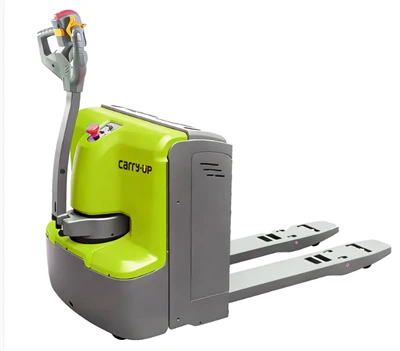
It’s important to remember that becoming a certified order picker operator isn’t just about getting a job—it’s about joining a critical industry that keeps products moving to people’s homes and businesses every single day. The work is physically demanding, but it’s rewarding, and certification is the key to turning that work into a stable, in-demand career. For anyone ready to put in the effort to train safely and master the skills, there’s no better time to start.
Manual Stackers References
- Occupational Safety and Health Administration (OSHA). "Requirements for Forklift and Order Picker Operator Training and Certification."
- Warehousing Education and Research Council (WERC). "2023 Warehouse Workforce Trends Report."
- U.S. Bureau of Labor Statistics. "Occupational Outlook Handbook: Material Moving Workers."
Hangzhou Carry Equipment Co., Ltd.
Hangzhou Carry Equipment Co., Ltd. is one of the most professional order pickers manufacturers and suppliers in China, also supports customized service. Please feel free to buy advanced order pickers for sale here and get quotation from our factory. For price consultation, contact us.
Address: No.360 Tongxiang Rd., Yinzhou Economic Development Zone, Yinzhou Dist., Ningbo, China
E-mail: Sales@carryupmhe.com
WebSite: https://www.carrymhe.com/
