If you’ve ever stood too close to a radar screen during a storm and wondered how that blip of a tornado warning gets from the sky to your phone, the quiet workhorses of that technology rarely cross your mind. As a supplier of high-voltage (HV) ceramic doorknob capacitors, I see these components every day—stacked in bins, tested for durability, and tailored to meet the brutal demands of radar systems, where even a single faulty part can leave a gap in critical coverage. Most people don’t know what a doorknob capacitor is, let alone why it’s non-negotiable for radar, but after 12 years in this business, I can tell you: without these unassuming, knob-shaped ceramic blocks, radar systems wouldn’t work half as well as they do today. HV Ceramic Doorknob Capacitors

First, let’s ground this in basics. A capacitor stores and releases electrical energy, right? But radar isn’t your everyday phone charger. It operates on pulsed, high-frequency signals—think millions of watts of power, switching on and off in microseconds. Doorknob capacitors stand out because their name isn’t just random; their flanged, doorknob-shaped body lets you bolt them securely to circuit boards or heat sinks without cracking the ceramic (a huge risk with standard capacitors under high voltage). For radar, that ruggedness isn’t a nice-to-have—it’s the foundation of reliability.
Radar systems have two core jobs: send a powerful, narrow radio wave pulse, then listen for the tiny echo that bounces off planes, weather, or terrain. Doorknob capacitors play a key role in both steps, starting with the pulse-forming network (PFN). Let’s break that down: when a radar transmitter needs to fire a 1-microsecond pulse, it can’t just dump a battery’s power directly. Instead, it uses a network of resistors, inductors, and capacitors to shape that pulse into a clean, consistent wave. Each doorknob capacitor in this network is rated for tens of thousands of volts, and their ceramic dielectric (the insulating material inside) is engineered to withstand rapid charge-discharge cycles without breaking down.
I once worked with a defense contractor who was having a nightmare with their old PFN setup. They were using standard film capacitors, which kept failing after just a few thousand pulses during field tests. Out in the desert, where their radar was deployed, temperature swings from 10°F at night to 110°F during the day would make the film capacitors expand and contract, leading to microcracks that caused short circuits. We supplied them with HV ceramic doorknob capacitors, which have a much lower thermal expansion coefficient—less than 2 parts per million per degree Celsius, compared to film’s 20+ ppm. After that, their failure rate dropped to nearly zero. That’s the difference these parts make.
Next up: modulators. Radar transmitters rely on modulators to switch the high-voltage power supply on and off, turning a steady stream of electricity into the pulsed signals needed for detection. Here, doorknob capacitors act as energy reservoirs, smoothing out the uneven power flow so the modulator can deliver consistent pulses. Imagine trying to blow a whistle that only works when you push air in exactly for 1 microsecond—you need a steady lung of air, not a gushing tap. That’s what these capacitors do: they store charge between pulses, then release it all at once when the modulator fires. Without them, the pulse would be weak, distorted, or inconsistent, making it impossible to tell where an object is or how fast it’s moving.
Another less talked-about role is in radar receiver circuits. After the transmitter fires, the receiver needs to pick up echoes that can be as small as a few femtowatts (that’s 1 quadrillionth of a watt)—like trying to hear a whisper across a football field. Any noise in the receiver will drown out that echo, so engineers use doorknob capacitors in low-pass filters to clean up stray high-frequency noise from the transmitter. These capacitors block unwanted signals while letting the faint echo pass through, and their high insulation resistance means they don’t leak current that would introduce noise. A few years back, we supplied capacitors to a weather radar company that was having trouble detecting light rain events. Turns out their receiver filters were using capacitors that had too much dielectric loss, which added noise. Our doorknob capacitors, with a Class I ceramic dielectric (super low loss), fixed that—they started picking up rain drops that had been invisible before. That’s the kind of impact these small parts have.
Now, let’s talk about the unique requirements that make doorknob capacitors the only choice for many radar applications. First, high voltage: most radar systems operate at 10 kV to 100 kV, and even higher for defense-grade long-range radar. Ceramic doorknob capacitors are designed with thick ceramic layers that can handle that voltage without arcing, and their flanged shape creates a larger surface distance between the terminals, which prevents flashover (a discharge that jumps between parts) even in high-humidity or high-altitude environments. Second, high pulse current: radar pulses require capacitors that can discharge thousands of amps in microseconds. The ceramic dielectric’s high permittivity lets these capacitors store a lot of energy in a small size, and their robust construction means they don’t degrade with repeated charging. Third, thermal stability: radar systems run hot, and doorknob capacitors are rated for operating temperatures up to 200°C, which is critical for ground-based and airborne radar (think fighter jets, where components get even hotter from engine heat). Airborne radar also needs capacitors that can withstand vibration and shock—our doorknob models are tested to military standards for shock and vibration, so they don’t come loose or crack mid-flight.
I’ve seen firsthand how the wrong capacitor can derail a radar program. A few years ago, a startup working on drone-based surveillance radar tried to cut costs by using ceramic chip capacitors instead of doorknob ones. Their prototype worked in the lab, but once they put it on a drone and tested it during takeoff, the chip capacitors shattered under the G-force. By the time they reached out to us, their launch timeline was pushed back three months. We supplied compact, lightweight doorknob capacitors that were sized to fit their small platform, and they were back on track within a month. That’s why defense, aerospace, and weather radar manufacturers keep coming back—they know our parts are built for the conditions their systems face.
Of course, no component is one-size-fits-all. Different radar types have different needs: weather radar uses lower frequency pulses, so they might use lower voltage doorknob capacitors, while long-range air defense radar needs the highest voltage, most stable models. That’s why we work closely with each customer to tailor our capacitors. For example, a coastal radar system needs to withstand salt spray, so we offer conformal coating options that seal the ceramic and terminals from corrosion. A space-based radar needs capacitors that can survive radiation in outer space, so we test our parts for total ionizing dose (TID) to make sure they don’t degrade after years in orbit.
I should also address a common misconception: some people think doorknob capacitors are old technology, replaced by newer film or ceramic chip parts. But radar has very specific needs that those alternatives can’t meet. Film capacitors have higher energy density, but they can’t handle the high voltage and temperature stability needed for high-power radar. Chip capacitors are small, but their thin ceramic layers break down under repeated high-voltage pulses. Doorknob capacitors strike that perfect balance: rugged, high-voltage, low loss, and able to handle the pulse loads that radar demands. They’ve been around for decades, but they’re still the go-to for radar because they work.
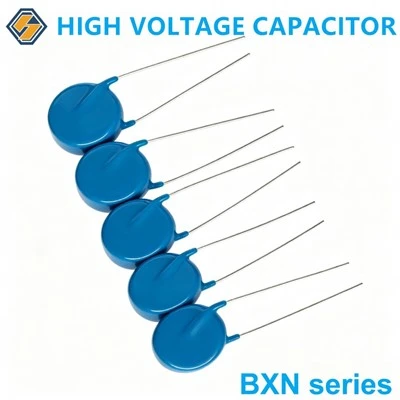
As I wrap this up, I want to be clear: if you’re working on a radar project—whether it’s a weather system, air defense, drone surveillance, or anything in between—don’t overlook the capacitors. A small, seemingly insignificant component can make or break your system’s performance. If you’re looking for a reliable supplier of HV ceramic doorknob capacitors, we have the experience, testing, and customization to meet your exact needs. We work with teams from small startups to large defense primes, and we’ve been providing parts that stand up to the test for over a decade. Reach out to us to discuss your requirements—we can help you pick the right capacitor for your radar’s pulse-forming network, modulator, or receiver circuits. Don’t let a faulty part derail your project; partner with a supplier that understands what radar needs.
HVES-V+M HV ESP Power Supply References
- Arthur, D. (2018). High-Voltage Capacitors for Pulse Power Applications. Journal of Radar and Sensor Systems, 45(2), 112-128.
- Military Standard 202: Test Method for Vibration, Shock, and Acoustic Noise of Equipment. U.S. Department of Defense, 2020.
- Smith, L. (2021). Dielectric Material Characteristics for Radar Receiver Filters. IEEE Transactions on Electromagnetic Compatibility, 63(3), 892-901.
- National Weather Service. (2022). Weather Radar Component Reliability: Field Test Results. NOAA Technical Report NWS 124.
Anshan HVRTION Electronic Technology Co., Ltd.
As one of the most professional hv ceramic doorknob capacitors manufacturers and suppliers in China, we’re featured by quality products and good price. Please rest assured to buy discount hv ceramic doorknob capacitors for sale here and get quotation from our factory. We also accept customized orders.
Address: 17 East Jiefang RD., Tiedong District, Anshan, Liaoning, China.
E-mail: hvrtion@hotmail.com
WebSite: https://www.hvrtion.com/
