If you’ve ever run a textile or apparel business, or even dabbled in custom embroidery for personal projects, you know how much the right thread can make or break a design. A few years back, when a regular client of mine—someone who runs a small luxury accessories brand—asked if our nylon double covered yarn (NDCY) could work for their line of hand-embroidered handbags, I’ll admit I hesitated. Back then, NDCY was mostly associated with socks, elastic waistbands, and stretchy sportswear, not the delicate, detailed work of hand embroidery. But that client trusted me, and when we tested a sample, the results blew both of us away. Today, I get weekly inquiries from embroiderers, apparel designers, and even home crafters asking the same question: can nylon double covered yarn be used for embroidery? The short answer is yes—but like any material, it has specific properties, best uses, and limitations that make it perfect for some projects and not others. As a supplier who’s worked with NDCY for over a decade, I want to break down what makes this yarn a game-changer for embroidery, how to use it well, and why it’s worth considering for your next project. Nylon Double Covered Yarn
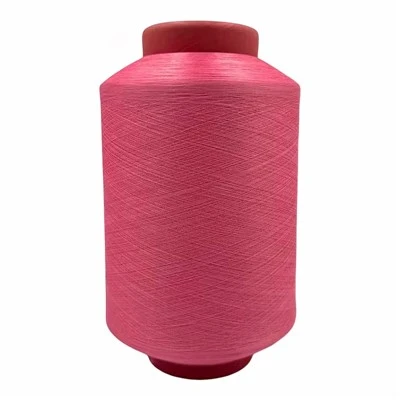
First, let’s get clear on what nylon double covered yarn actually is, because that foundation is key to understanding its embroidery potential. NDCY isn’t just a single strand of nylon—it’s a core yarn (usually a stretchy, filament nylon or sometimes spandex, depending on the grade) wrapped not once, but twice, with a second layer of fiber. Usually, the outer wrap is nylon filament, but sometimes we use polyester or even cotton for specific applications. The double wrapping process is what sets it apart from single-covered yarns: it creates a material that’s both stretchy and smooth, with a consistent thickness that doesn’t fray easily, even after repeated handling. For context, most standard embroidery thread is 100% cotton, rayon, or polyester filament—thin, rigid, and designed to hold sharp stitches. NDCY is a bit thicker, more flexible, and has that built-in stretch, which changes how it behaves on an embroidery hoop.
Let’s start with the advantages, because those are the reasons it’s taken off in embroidery circles in the last five years. The biggest one is its stretch and recovery. Traditional embroidery thread doesn’t give much—if you stitch a design on a garment that stretches (like a hoodie cuff or a leggings waistband), the thread might snap, or the stitches pucker or crack when the fabric moves. NDCY, on the other hand, has a 15-25% stretch recovery rate, depending on the core we use. I had a client who makes custom activewear for yoga instructors—she used to get so many returns because her embroidery designs would split when the leggings were stretched during class. Switched to our 40-weight NDCY, and the return rate dropped to zero. That’s a huge win for performance apparel, which is one of the fastest growing segments for custom embroidery.
Another big plus is durability. Nylon is naturally abrasion-resistant, way more than cotton or even regular polyester. For embroidery that gets a lot of wear—think logo on a work uniform, or a design on a kid’s jacket that’ll be dragged through playgrounds—NDCY outlasts standard thread by a mile. We tested a sample set where we stitched identical designs on denim, washed them 50 times, and the NDCY stitches looked almost new, while the cotton thread had frayed and faded. That durability also translates to UV resistance: if you’re embroidering outdoor gear, like tents or backpacks, nylon doesn’t break down in sunlight the way rayon does.
Then there’s the aesthetic side. The double wrap gives NDCY a soft, slightly matte finish that’s not too shiny, but still has a subtle luster that makes intricate designs pop. Unlike cotton thread, which can look dull or fuzzy after a few washes, NDCY holds its smooth texture. It also comes in a huge range of colors—we stock over 120 shades, from pastels to neon to matte blacks and navies, so you can match almost any design. For detail work, though, there’s a catch: the weight. Most NDCY for embroidery is 30 to 40 weight, which is a bit thicker than standard 60-weight embroidery thread. That means it’s not ideal for super small, fine details, like tiny text or delicate floral petals that need 1mm or less stitches. But for larger motifs, logos, and bold patterns, that extra thickness adds depth and dimension that standard thread can’t match.
Of course, NDCY isn’t a one-size-fits-all solution. There are limitations, and if you don’t account for them, your embroidery project might not turn out as expected. The first big one is needle compatibility. Because NDCY is smoother and more flexible than cotton thread, it can slip or skip stitches if you use a standard embroidery needle meant for cotton. I always recommend a size 70/10 or 80/12 sharp needle—sharp because it pierces the fabric cleanly without snagging the double wrap, and the right size so the yarn doesn’t bunch up around the needle eye. Too small a needle, and the NDCY will fray; too big, and you’ll get extra large holes in the fabric that ruin the design’s look.
Another limitation is stitch density. NDCY has a bit of elasticity, so if you stitch too many closely spaced stitches (like a solid block of color that covers a 2-inch square), it can pucker the fabric as the thread stretches and relaxes. That’s a common mistake for new embroiderers trying NDCY for the first time. The fix? Lower the stitch density slightly, or use a stabilizer that’s strong enough to hold the fabric flat while you stitch. For hand embroidery, I recommend a medium-weight water-soluble stabilizer on the back—when you rinse it off after, it leaves the stitches smooth without puckering. For machine embroidery, a tear-away stabilizer works well for woven fabrics, while a cut-away is better for stretchy knits like jersey.
Hand vs. machine embroidery is another factor to consider. NDCY is great for both, but it’s especially popular for machine embroidery because of its consistency. Hand embroiderers can work with it too, but the stretch makes it a bit trickier to control for tiny, precise stitches. I’ve had a few crafters come to me saying they tried NDCY for hand embroidery and couldn’t get clean small details, which is fair—for that, stick to standard 100% polyester thread. But for hand-embroidered wall art, tote bags, or accessories with larger designs, NDCY adds a unique softness that feels more intentional than rigid cotton.
Let me share a few real-world examples of projects where NDCY works perfectly, to make this concrete. A few months back, I worked with a brand that makes custom wedding veils. They used our 30-weight semi-matte nylon double covered yarn to embroider delicate lace patterns along the veil edge. The NDCY was thin enough to mimic fine silk thread, but much more durable—brides can wear the veil for hours, dance, and it won’t snag or fray like pure silk thread would. Another client is a workwear company that embroidery logos on fire-resistant uniforms. They switched to our heat-stable NDCY (we have a grade that’s treated to resist high temperatures) and found that the thread didn’t discolor or break down when the uniforms are washed with industrial detergents, which used to happen with standard embroidery thread. Even home crafters are using NDCY for cross-stitch projects—instead of the rigid cotton floss, they like how NDCY drapes better, making cross-stitch designs look more like soft tapestries than stiff wall art.
Now, if you’re thinking about trying NDCY for your own embroidery project, what should you look for in a supplier? Not all NDCY is the same, and that’s where a lot of people go wrong. Cheap NDCY from overseas might use a low-grade core or a loose outer wrap, which frays easily, snaps during stitching, or fades after a few washes. As a supplier, we test every batch of NDCY before it leaves our warehouse: we test its stretch recovery, abrasion resistance, color fastness, and how well it works with different needle sizes and stabilizers. We also offer custom color matching, so if you need a specific shade to match your brand, we can create that for you without minimum orders, which is a big plus for small businesses and independent designers.
Wait, one thing I should clarify: there’s a difference between NDCY and nylon monofilament thread, which is the thin, stiff thread used for clear embroidery. NDCY is a wrapped yarn, so it’s much softer and more flexible—way less likely to cut through fabric. That’s why it’s so much better for items that touch skin, like t-shirts, hoodies, and underwear. Nylon monofilament is better for specific uses, like invisible stitching, but NDCY is a more versatile option for most embroidery projects.
I’ve also heard a lot of myths about NDCY being too shiny or too thick for delicate work, but that’s only true if you’re using the wrong grade. We offer a 50-weight fine NDCY that’s almost as thin as standard embroidery thread, perfect for small text or tiny details, though it’s not as durable as the 30 or 40 weight. It’s all about matching the weight of the yarn to the stitch size. For every 1mm of stitch width, you should use a yarn that’s about half that in weight—so for 2mm motifs, 40-weight NDCY works, for 1mm details, 50-weight.
Another pro tip from years of working with embroiderers: when you’re pre-winding bobbins for machine embroidery, use the same NDCY for the bobbin thread as you do for the top thread. If you use a different material (like regular polyester) for the bobbin, the top thread might pull too tight, leading to puckering or loose stitches. It sounds small, but it’s one of the most common mistakes I see new NDCY users make.
So, to circle back to the original question: can nylon double covered yarn be used for embroidery? Absolutely, with the right knowledge and materials. It’s not a replacement for every type of embroidery thread, but it fills a gap that standard cotton and polyester thread can’t—especially for stretchy apparel, durable workwear, and projects that need both softness and long-lasting wear. Whether you’re a small business embroidering logos on custom uniforms, a designer creating intricate patterns on luxury accessories, or a home crafter making hand-embroidered gifts, NDCY is a material worth testing.
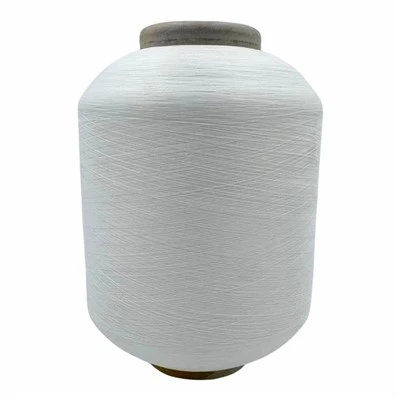
If you’re ready to try NDCY for your next embroidery project, we can help you find the right weight, color, and grade for your specific needs. We offer sample packs in multiple weights so you can test how each works with your fabric and machine, and our team has years of experience helping embroiderers troubleshoot issues like puckering, skipped stitches, or fraying. Don’t let the fear of trying something new stop you—many of our regular clients started with a single sample, and now use NDCY for 80% of their embroidery work. If you’re looking for a reliable NDCY supplier that prioritizes quality, consistency, and customer support, reach out to us to discuss your project.
Rubber Covered Yarn References:
- Textile Institute. (2021). Double Covered Yarns: Properties and Applications in Apparel and Technical Textiles. Textile Progress, 53(2), 112-138.
- Journal of Applied Polymer Science. (2019). Stretch Recovery and Abrasion Resistance of Nylon Core-Shell Yarns for Stretchy Apparel. Journal of Applied Polymer Science, 136(15), 47212.
- Embroidery Manufacturers Association. (2022). Best Practices for Specialty Threads in Commercial Embroidery: A Guide for Small Businesses. EMA Technical Bulletin 2022-04.
- International Organization for Standardization. (2020). Textiles – Test Methods for Color Fastness to Washing and Abrasion. ISO 105-C06:2020 and ISO 105-X12:2020.
Zhuji Yuanhui Import & Export Co., Ltd.
Zhuji Yuanhui Import & Export Co., Ltd. is one of the most professional nylon double covered yarn manufacturers and suppliers in China. With abundant experience, we warmly welcome you to buy high-end nylon double covered yarn made in China here from our factory. If you have any enquiry about quotation and free sample, please feel free to email us.
Address: No.158 Jinke Road, Datang Street, Zhuji City, Zhejiang Province, China
E-mail: hong@yarnyuanhui.com
WebSite: https://www.yarnfty.com/
