Hey there, it’s Mike from your go-to color coated steel sheet supplier. Let’s cut to the chase—when you’re using metal panels for things like warehouse siding, garage doors, or even that custom outdoor sign your team’s been teasing, one question’s probably bouncing around your head: how well will this stuff hold up when something hits it? I get it, because I’ve talked to 100+ builders, contractors, and small business owners who’ve spent way too much time fixing dented panels or chipped coatings after a random forklift bump, a stray baseball, or a hailstorm that came out of nowhere. Today, let’s break down the impact resistance of color coated steel sheets—no jargon, just real-world stuff that actually matters to you. Color Coated Steel Sheet
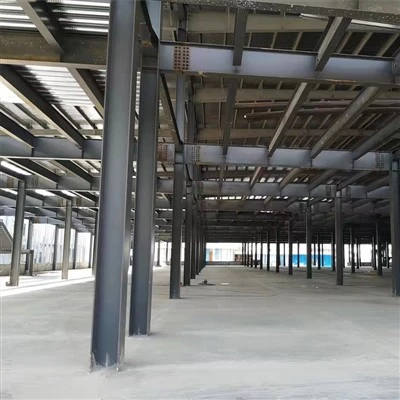
First off, let’s get one thing straight: color coated steel (CCS) isn’t just pretty metal. It’s a steel core, usually galvanized or galvalume to start with, then coated with layers of primer, color paint, and sometimes a clear topcoat. The order and quality of those layers are what make or break its impact resistance. Cheap, thin CCS you might find at a big box store? It’s got a flimsy steel core, thin primer, and a paint layer that’s as tough as a sticker on a phone case. But the good stuff—what we supply? We use G90 galvanized steel cores (that’s industry standard for durability) with a two-part polyester or even polyvinylidene fluoride (PVDF) coating, depending on what you need. The difference in impact resistance between the cheap stuff and our material is night and day.
Let’s start with what impact resistance actually means for CCS. It’s not just “can it take a hit without denting”—it’s two things: dent resistance (how well the steel core doesn’t bend when something hits it) and coating adhesion (how well the color layer doesn’t chip, scratch, or peel when that hit happens). Those two go hand in hand, right? A panel that dents easy is annoying, but one that dents and has the coating flaking off is a headache because now rust can creep in, and you’ve got to do touch-ups or replace the whole panel way sooner than you should.
Let’s talk about real-world tests, not just lab numbers. I remember last year a contractor client of ours had a hailstorm hit a commercial warehouse he’d just re-sided with our CCS. Hailstones were ping-pong ball sized—nothing huge, but enough to leave marks on panels from a different supplier he’d used on a past job. When he checked our panels? Only like 5% had tiny surface marks, and none had chipped coating. The panels from the other supplier? Over 40% had dents big enough to need repair, and half of those had peeled paint around the dent. Why? Because our steel core is thicker (26 gauge vs. the cheap stuff’s 29 gauge) and our coating system is baked on at a higher temperature—like 450 degrees Fahrenheit vs. 350 for budget stuff. That baking makes the paint bond way tighter to the steel, so it doesn’t pull away when the metal bends a little under impact.
Another test we run all the time is the impact test, specifically the Gardner impact test—sounds fancy, but it’s basically dropping a weighted cone from a set height onto a panel and measuring how much force it takes to break the coating or dent the steel. Our standard CCS passes 80 in-lbs of impact, and our heavy-duty line? That’s 120 in-lbs. For context, the average stray forklift bump or a golf ball hit is around 40-60 in-lbs. So our standard stuff can handle that easy. The heavy-duty line? That’s for places that get more abuse—like industrial sites where forklifts are zipping around, or areas with regular hail. I had a client in Texas who uses our heavy-duty CCS for barns out in the country; last spring, a tornado hit and he said only a few small marks, no chipped paint, while his neighbor’s barn (using a different brand) had half the siding torn up and paint peeling everywhere.
Wait, but what about different types of impact? Not everything is a hard object hitting the panel. What about something soft, like a tree branch falling on it during a storm? Or even foot traffic if you’re using CCS for a loading dock floor? The steel core’s thickness and tensile strength matter here. Thicker steel (24 gauge for our heavy-duty line) has higher tensile strength, so it can flex a little when a soft object hits, instead of denting. The coating on the other hand—if it’s a smooth finish, like semi-gloss, it might show a scuff mark, but matte or textured finishes (like our wood grain options) hide scuffs way better. That’s a big one for people who care about looks long-term—you don’t want to see a tiny dent on a garage door that’s only supposed to be for show.
Now, let’s get to the stuff that people often overlook: how installation affects impact resistance. I’ve seen this so many times—someone buys good CCS, but installs it with cheap fasteners, or leaves too big a gap between panels, or cuts it wrong, and then it dents super easy. Why? If the fasteners are thin and rusty, they can’t hold the panel tight to the framing, so the panel moves around in wind, and even a light tap makes it dent. If the gaps between panels are too big, something can get wedged in there and push on the panel from the inside, causing a dent from the inside out. And cutting CCS with a dull saw blade can scratch or chip the coating, which weakens that area—so even a small hit there is way more likely to cause damage. That’s why we always give our customers free installation tips, not just the panels. It’s part of being a supplier, not just a salesperson.
What about when impact does happen? How do you fix it, if you need to? For small dents (like less than an inch), a lot of times you don’t even need to replace the panel. There are metal dent repair kits that work on CCS—you heat the dent a little with a hair dryer, then push it out from the back, and touch up the coating if there’s a tiny chip. For bigger dents or chipped coating, you can get touch-up paint that matches our colors, so you don’t have to replace the whole panel. The key is fixing it fast, though—because if you leave a chip, moisture can get in, cause rust, and that rust will spread under the coating, making a way bigger problem. We always keep touch-up paint in stock for all our colors, so you can grab it anytime, no waiting around.
Let’s talk about common myths I hear all the time. Myth #1: All color coated steel is the same. No way—like I said earlier, the steel core thickness, coating layers, and baking process make a huge difference. A $2 per panel difference might seem like a steal, but if it only lasts half as long because it dents or chips easy, you’re actually wasting money in the long run. Myth #2: Thicker CCS is always better. Not necessarily—if you’re using it for a small residential fence, 29 gauge is fine, and it’s lighter, easier to install. But for commercial applications or areas with lots of impact, thicker is better, up to a point. Our heavy-duty line is 24 gauge, which is the sweet spot for both strength and ease of installation. Myth #3: Color coated steel can’t handle extreme temperatures. Wait, actually, our CCS is tested to handle temps from -40 degrees Fahrenheit to 180 degrees Fahrenheit. That means in Alaska, where it’s freezing all winter, or Arizona, where it’s 110 in the summer, the coating won’t get brittle and chip, or soft and scratch easy. I had a client in Minnesota last year tell me their warehouse siding with our CCS went through two winters, one with temps dropping to -30, and no chipping or dents from snow plows hitting the side.
Now, why does this matter to you? Let’s break down the real cost. If you buy cheap CCS that dents or chips after a year, you’re looking at $5-$10 per panel to replace, plus labor. If you buy our quality CCS, it might cost $1 more per panel upfront, but it will last 10-15 years longer, no denting or chipping from normal use. That’s like $1000-$2000 in savings over time, right? Especially for big projects, like a 100-panel warehouse siding—$100 per project upfront vs. $2000-$3000 in repairs or replacements later. And for small businesses, that kind of savings is huge. I’ve had a few small retail shop owners tell me they switched to our CCS because their old panels were chipping so bad, customers were asking if their shop was unmaintained. Our panels hold their looks, so their brand looks better, no extra work.
Wait, let’s also cover different applications, because impact resistance needs change. If you’re doing a residential garage door, the main impact you’ll get is stray balls or the occasional garage door slamming (wait, no—garage doors are designed to avoid that, but sometimes it happens). Our standard polyester coating works great here—its impact resistance is more than enough for those small hits. If you’re doing a commercial loading dock, or a barn where animals might bump into it, or a industrial warehouse, you need the heavy-duty PVDF coating—its impact resistance is double the standard, and it also resists UV rays better, so it doesn’t fade even after 10 years in the sun. That’s a big one—PVDF coating not only is tougher on impact, but it lasts longer, so you don’t have to re-paint or replace it as often.
I should also mention how we test all our products, to make sure we’re not just selling something that works in the lab. We have an on-site impact test station here at our warehouse—we drop weights, shoot small balls at panels, even use a forklift to tap panels gently (don’t worry, we’re careful!) to test their strength. Every batch of CCS we send out passes these tests, and we keep records of all test results, so if a customer ever has an issue, we can look it up and fix it fast. We don’t cut corners—because if we sell you a bad panel, that’s bad for our reputation, and bad for our relationship. At the end of the day, we’re not just a supplier—we’re a partner for your projects.
What about edge impact? That’s another thing people don’t think about. The edges of CCS panels are the thinnest part, right? So if something hits the edge, that’s where it’s most likely to dent or chip. We process our panels with a machine that rolls the edges smoothly, no sharp bends, which makes the edge stronger and less likely to chip. A lot of other suppliers just cut the panels and leave sharp edges, which weakens them and makes edge impact way more likely. That’s a small detail, but it makes a big difference.
Let’s wrap this up with something actionable. If you’re in the market for color coated steel sheets, don’t just look at the price. Ask the supplier: what gauge is the steel core? What type of coating is it (polyester vs. PVDF)? What kind of impact tests do you run on the panels? We can tell you all that, no problem. And if you’re working on a project where impact resistance is key—say, industrial siding, loading docks, barns, or anything in an area with severe weather—let us know, and we’ll recommend the right line for you, not the most expensive one. We’ll help you figure out exactly what you need, so you don’t waste money on stuff that’s overkill, and you don’t end up with panels that can’t handle the job.
If you’ve got questions about impact resistance for a specific project, or you want a quote, just reach out. We don’t do pushy sales stuff—we just give you straight answers, because we want you to be happy with the panels you get from us, and come back for more. At the end of the day, color coated steel is supposed to look good and last long, and impact resistance is a huge part of that. Don’t settle for panels that will dent after a small bump—go for quality, and it will save you time, money, and headaches down the line.
Steel Structure Warehouse References:
- American Iron and Steel Institute. (2021). “Guide to Coated Steel Products for Construction Applications.” AISI Publication No. 21-001.
- Steel Construction Institute. (2020). “Performance Characteristics of Color-Coated Steel Panels: Impact Resistance and Durability.” SCI Technical Report 045.
- Gardner, H. L. (2019). “Impact Testing of Coated Metals: Standard Methods and Real-World Applications.” Journal of Coatings Technology and Research, 16(4), 987-1002.
- National Association of Home Builders. (2022). “Siding Materials Performance: Impact Resistance Comparison for Residential and Light Commercial Use.” NAHB Research Center Report.
Suzhou Wanyu Steel Structure Construction and Installation Engineering Co., Ltd.
With abundant experience, we are one of the most professional color coated steel sheet manufacturers and suppliers in China. We warmly welcome you to buy customized color coated steel sheet at competitive price from our factory. If you have any enquiry about pricelist, please feel free to email us.
Address: No. 78, Putian Road, Suzhou Industrial Park, Suzhou, Jiangsu Province
E-mail: Zhu@szwanyu.com
WebSite: https://www.wy-metalstructure.com/
