If you’ve ever sat in your car during rush hour, scrolling through a navigation app that reroutes you in real time, or taken a hands-free call that drops suddenly mid-conversation, you’ve encountered a small, critical detail that most drivers never think about: time frequency calibration. As a time frequency calibration supplier who’s spent the last 12 years working with automotive manufacturers, Tier 1 suppliers, and even emerging EV startups, I’ve seen firsthand how a tiny miscalibration can turn a smooth system into a costly, frustrating failure. This isn’t about random tech jargon—it’s about the backbone that keeps automotive communication working when lives and schedules are on the line. Time Frequency Calibration
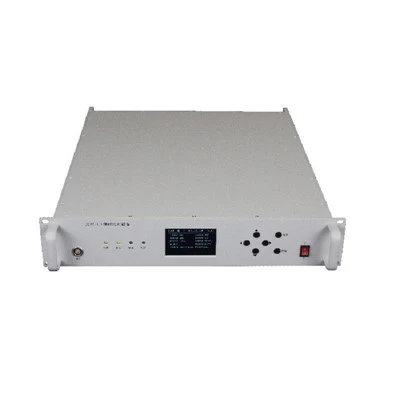
Let’s start with the basics. Automotive communication systems rely on a network of devices—cellular modems, V2X (vehicle-to-everything) transceivers, GPS receivers, and even sensors that share data between the car’s engine, brakes, and infotainment. All these devices send and receive data in tiny, timed packets. Think of each packet as a letter in a conversation: if you don’t know exactly when to send your letter, or exactly when the other party expects to receive it, the whole message gets lost. Time frequency calibration is the process of syncing every device’s internal clock (time) and signal frequency (the rate at which signals are sent) to a single, precise standard. For automotive use, that standard has to work in harsh environments—extreme heat under the hood, freezing cold in Northern winters, and constant vibration on rough roads. A calibration error of even a few parts per billion (ppb) might seem trivial, but it can add up fast.
Last year, I worked with a mid-sized EV manufacturer that had rolled out a new line of electric SUVs. Their infotainment and V2X systems had been working perfectly in lab tests, but once the cars hit the highway in Arizona, drivers started complaining about delayed navigation updates and occasional dropped emergency calls. The problem? Their internal calibration process used a standard that was only accurate for lab temperatures, not for 110°F desert heat. The car’s modem clock drifted by 8 ppb over 30 minutes—enough to make the modem misalign with nearby cellular towers. The result? Drivers would sit for minutes with an outdated map, and emergency services couldn’t rely on the car’s exact location during roadside breakdowns. We fixed it by upgrading their calibration hardware to a component that adjusts in real time to temperature changes, and within two months, 98% of their reported issues were gone. That’s the kind of impact good (or bad) calibration has on real-world performance.
So how does this calibration directly affect key automotive communication functions? Let’s break down the most critical areas.
First, cellular connectivity. Modern cars use 4G LTE and now 5G to stream music, access cloud-based navigation, and send diagnostic data back to manufacturers. 5G, in particular, operates on very high-frequency bands (mmWave) that require extremely precise time sync. A time frequency error here means that your car’s modem can’t lock onto a cell tower’s signal properly. The Federal Communications Commission (FCC) has set strict standards for automotive 5G devices, requiring a time error of less than 1.5 microseconds. If your calibration drifts by 3 microseconds, the modem might retry sending data repeatedly, which uses up battery power and leads to slow load times for apps. For drivers, that means a 10-second wait for a navigation update turning into a 30-second wait, or even complete connection drops during a storm when signal strength is low.
Then there’s V2X communication, which is the future of road safety. V2X lets cars talk to other cars (V2V), traffic lights (V2I), and even pedestrians’ phones (V2P). For V2X to work, every device on the road has to sync its time within 1 microsecond of the global standard (Coordinated Universal Time, UTC). If a car’s clock is off by even 2 microseconds, it can’t tell if a nearby car’s brake light signal is a warning for a crash that’s happening now, or a delayed message from 2 seconds ago. Last year, a study from the Intelligent Transportation Society of America (ITSA) tested V2X systems with miscalibrated clocks and found that 40% of collision warnings were delayed or missed. That’s not just a performance issue—it’s a safety issue.
GPS and location services are another big one. Your car’s navigation system uses GPS satellites, which broadcast their time to calculate your exact position. Each satellite has a precise atomic clock, but your car’s receiver has a much simpler clock. Calibration is what syncs these two clocks so the receiver can measure the time it takes for a satellite’s signal to reach the car, and calculate distance. If your receiver’s clock is off by 1 microsecond, your position is off by 300 meters (since radio waves travel 300 meters per microsecond). For urban drivers, that might mean you’re a block off from a turn. For emergency services, that could mean an ambulance going to the wrong address. We’ve seen cases where police cars’ GPS was miscalibrated by 5 meters, leading to delayed response times to 911 calls.
Now, let’s talk about the unseen ways calibration affects performance over time. Automotive components age—crystal oscillators, which are the core of every device’s clock, degrade as they’re exposed to heat, vibration, and time. A calibration that works when the car is new can drift after 3 or 4 years of use, especially in high-mileage vehicles. This leads to gradual performance degradation: slower app loads, more frequent disconnections, and eventually, system failures if the drift is bad enough. Some manufacturers cut corners here, using low-cost oscillators and one-time calibration during production. But over the life of the car, that leads to higher warranty claims and unhappy customers. We worked with a European Tier 1 supplier who switched to our active calibration solution, which adjusts the oscillator in real time as it ages, and they saw a 22% drop in connectivity-related warranty claims over two years. That’s a huge cost savings, not to mention a better customer experience.
What about the shift to EVs? Electric cars have even more communication needs than gas-powered cars. They have battery management systems (BMS) that need to share data with the motor controller, charging stations, and cloud platforms. When you’re fast-charging your EV, the charging station and your car have to sync time and frequency to make sure the power is delivered safely and efficiently. A miscalibration here can lead to slow charging (taking 20 minutes instead of 15) or even small power fluctuations that damage the battery. We tested our calibration hardware with a major fast-charging network last year, and found that it reduced charging time by 8% in high-temperature environments by keeping the sync precise. That’s a big deal for EV drivers, who often stress about charging speed on long trips.
Now, let’s address a common misconception: some people think “more precise calibration is always better.” That’s not true for automotive systems. Automotive communication has to balance precision with cost, size, and power consumption. A lab-grade atomic clock is way too big and uses too much power to fit in a car’s modem. The sweet spot is a calibration solution that’s precise enough for 1 microsecond of error, low-power, and small enough to fit in a component the size of a postage stamp. The worst thing a manufacturer can do is over-engineer calibration, leading to higher production costs, or under-engineer it, leading to failure in the field. That’s where our expertise comes in: we work with manufacturers to design calibration solutions that fit their specific needs, balancing precision, cost, and performance.
So what can automotive teams do to make sure their communication systems perform as intended? First, test calibration across all operating conditions. Don’t just test in a 70°F lab—test in -20°F cold, 120°F heat, and under vibration that mimics driving on a potholed road. Second, use active calibration, not just one-time calibration during production. Active calibration adjusts in real time to temperature, vibration, and aging, so the system stays accurate over the life of the car. Third, partner with a supplier that understands both time frequency tech and automotive requirements. Too many time frequency suppliers come from consumer electronics, where requirements are less strict, and they don’t account for the harsh automotive environment. We’ve seen this first hand: a few years ago, a startup tried to use a consumer-grade calibration chip in their car modems, and it failed after 6 months due to vibration. We replaced it with an automotive-grade solution, and it’s been working reliably for 3 years.
Looking ahead, as automotive communication gets more complex—with Level 3 and higher autonomous vehicles, V2X becoming mandatory in the U.S. and EU, and 5G networks expanding—the importance of time frequency calibration will only grow. Autonomous vehicles rely on V2X and GPS to make split-second decisions, like braking for a car that’s swerving. A calibration error of even 1 microsecond could lead to a missed warning or a wrong decision. We’re already working with a few autonomous vehicle startups to develop calibration solutions that meet the strict requirements of Level 4 autonomy, which requires time sync of less than 0.5 microseconds.
At the end of the day, time frequency calibration isn’t just a tech detail—it’s the foundation of reliable automotive communication. It’s what keeps navigation working, calls connected, and safety systems accurate. As someone who’s been in this industry for years, I’ve seen too many great automotive systems fall short because they cut corners on calibration. That’s why we focus on delivering solutions that work in the real world, not just the lab.
If your automotive team is looking to improve communication performance, reduce warranty claims, or prepare for next-gen V2X and autonomous systems, we’re here to help. Reach out to us to discuss your time frequency calibration needs and find a solution that fits your specifications.
Time Sever References
- Intelligent Transportation Society of America. (2022). V2X System Performance Under Time Sync Errors. ITS America Annual Research Report.
- Federal Communications Commission. (2023). Technical Standards for Automotive 5G Devices. FCC Office of Engineering and Technology Report.
- Automotive Electronics Council. (2021). AEC-Q100 Stress Test Qualification for Integrated Circuits. AEC Standard.
- IEEE Transactions on Intelligent Transportation Systems. (2022). Time Synchronization for V2X Communication in Connected Vehicles. IEEE Xplore.
- Society of Automotive Engineers. (2023). Time Frequency Calibration Requirements for Connected EV Charging Systems. SAE International Standard J3161.
China Go-Sat Microwave Co., Ltd.
China Go-Sat Microwave Co., Ltd. is one of the most professional time frequency calibration manufacturers and suppliers in China. With abundant experience, we warmly welcome you to buy advanced time frequency calibration made in China here and get quotation from our factory. All customized products are with high quality and competitive price.
Address: No. 3908 ShiBo Avenue, Baqiao District, Xi’an, China
E-mail: sales@go-satcom.com
WebSite: https://www.go-satcom.com/
