Hey folks! If you’ve ever worked in power generation (whether at a plant, a maintenance shop, or even just tinkering with industrial machinery for a side project), you know every component in that gear has to pull its weight. One part I get asked about all the time from power generation teams is our textile braid hydraulic hoses—specifically, “Can this stuff actually hold up in power gen equipment?” Spoiler: The answer isn’t a flat yes or no, and it’s way more nuanced than you’d think. Let’s break it down like we’re shooting the breeze over a coffee, no stuffy industry jargon that makes you zone out. Textile Braid Hydraulic Hose
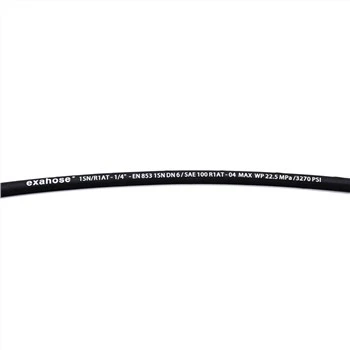
First, let’s get on the same page about what textile braid hydraulic hoses are, because a lot of people mix these up with other hose types. Unlike those big, bulky steel-braid hoses you see on construction cranes or heavy farm equipment, our textile braid lines use woven high-strength fibers (think polyester, nylon, or aramid, the same stuff in bulletproof vests, pretty wild) as the reinforcement layer instead of metal. That makes them lighter, way more flexible, and way easier to route through tight spaces—perfect for spots where you can’t swing a steel hose without knocking over a gauge or a pipe.
Now, power generation equipment runs a ton of different systems, right? There’s turbine hydraulics for controlling blades and valves, fuel handling systems that move diesel or natural gas, cooling circuit pumps, even the smaller auxiliary systems that move parts around the plant. Each of these has totally different demands—pressure, temperature, fluid type, space constraints. So when someone asks if our hoses work here, it depends on which system we’re talking about.
Let’s start with the systems where textile braid hoses actually excel. I’ve got a client at a natural gas power plant that’s been using our lines for 3 years now on their turbine control valves, and they haven’t had a single leak or failure. Why? Those control systems don’t run at super high pressures—usually around 300 to 1,500 PSI, which is right in our textile braid sweet spot. Steel-braid hoses are overkill here; they’re heavy, hard to bend around the narrow spaces between turbine casings, and when you’re working 100 feet up on a turbine deck, every extra pound makes your tool belt feel like an anchor. Our hoses cut the weight by almost 70% compared to steel-braid, so the maintenance team gets the job done faster and with less fatigue.
Another win: cooling water auxiliary pumps. Power plants rely on huge cooling systems to keep turbines from melting down, and the hoses for the smaller pump drives (not the massive main pipes) need to handle regular flexing from the pump’s motor vibration. Textile braid hoses hold up way better to cyclic flex than steel braid—metal gets fatigued over time, cracks, and leaks, especially when you’re bending it thousands of times a day. I’ve seen stats that textile braid can handle twice as many flex cycles as equivalent steel-braid lines, which means less downtime for the plant. Downtime in power gen is money, y’all—one day offline at a mid-sized plant can cost $100k+, so avoiding that is huge.
But wait, we can’t gloss over the limits, because that’s where people get in trouble. If someone tries to use our textile braid hoses for high-pressure fuel injection lines in a coal-fired plant, that’s a recipe for disaster. Those lines run at 5,000 PSI or more, way above our max rating of around 3,000 PSI for standard textile braid (we do make high-temp and high-pressure versions, but even those top out at around 4,500 PSI, and that’s with specialized aramid braid). Also, textile fibers don’t play nice with super high temperatures—like, over 250°F for standard polyester braid, and even aramid starts to weaken around 350°F. If you’re dealing with lines that run near exhaust stacks or boiler vents where temps hit 400°F+, textile braid will soften, stretch, and fail way before you want it to. That’s a non-starter, no matter how good our hoses are.
Also, fluid compatibility is a big one. Power gen plants use all kinds of hydraulic fluids—mineral oil-based, synthetic, even some specialty bio-based fluids now. Most textile braid hoses are compatible with standard mineral and synthetic fluids, but if you’re using a really harsh chemical fluid for a specific application, you’ve got to check. I once had a customer try our hoses with a high-acid cleaning fluid they used for their condenser, and the fluid ate through the hose’s inner liner in 2 weeks. Oops, that’s a bad call—always match the hose’s liner material to the fluid, not just the braid.
So why are power gen teams even considering textile braid hoses in the first place? It’s not just about being trendy. Let’s talk cost, because that’s a big factor for plant managers. Textile braid hoses are cheaper than steel-braid lines—like, 20-30% less per foot, sometimes more. Installation is faster too, because you don’t need heavy tools to bend and fit them; you can cut them with a utility knife (obviously, use the right blade) and crimp the fittings on site with basic tools, not a huge industrial crimper. That cuts labor costs, which are 40-50% of total installation expenses for hoses. Over the life of a plant, that adds up to tens of thousands of dollars saved.
Another angle: vibration dampening. Power gen equipment vibrates nonstop—turbines, generators, pumps, all of it. Textile braid hoses are more flexible than steel, so they absorb vibration way better. That means less stress on fittings and connections, which translates to fewer leaks and less wear on other parts. I’ve had customers tell me they used to replace steel-braid hoses every 18 months because of fitting leaks, and with our textile braid lines, those same connections are still tight after 3 years. That’s a win-win.
Now, let’s address a common misconception: “Textile braid hoses aren’t durable enough for industrial use.” Nah, that’s old info. Modern textile fibers are next-level—aramid fibers (Kevlar, for example) have a tensile strength higher than steel, and we use treated polyester that’s resistant to UV, moisture, and abrasion, so it doesn’t fray even when rubbing against metal pipes or concrete floors. We test every batch of our hoses to burst pressure, usually 4x the rated working pressure, so if a spike in pressure hits the line, it holds. We also test for low-temperature performance, too—so if you’re working in a plant in the North where winter temps drop below freezing, the hose won’t get brittle and crack.
Wait, but what about safety? Power gen is a regulated industry, so everyone’s worried about OSHA and EPA compliance. Our textile braid hoses are made with food-grade? No, wait, not food-grade, but they’re compliant with OSHA’s standards for hydraulic hoses in industrial settings, and they meet SAE J517 specs for braided hoses, which is the industry standard. They don’t leach harmful chemicals into fluids, and if they do fail, they don’t spray metal shrapnel like steel-braid hoses do—they just leak fluid slowly, which is way easier to contain and respond to. That’s a big safety plus for maintenance teams, who don’t want to get hit with a flying steel fitting at 10 feet away.
So putting it all together: Textile braid hydraulic hoses are definitely usable in power generation equipment, but only for the right systems. They shine in low-to-medium pressure, flexible applications where weight and ease of installation matter, and where temperatures stay below 350°F. If you’re running turbine control lines, auxiliary pump drives, cooling circuit lines, or even some smaller fuel transfer lines in a natural gas or combined-cycle plant, these hoses will work great. But for high-pressure fuel injection, boiler feed lines, or lines near hot exhaust, you’ll still need steel-braid or thermoplastic hoses.
I’ve had a lot of people reach out lately because power gen teams are looking for ways to cut costs without sacrificing reliability. Our textile braid lines check that box—they’re not a one-size-fits-all solution, but when paired with the right system, they’re solid. And let’s be real, no one wants to be the person who has to fix a hose at 2 a.m. during a winter storm when the plant is running flat out. Our hoses reduce the chance of that happening.
If you’re in power generation and you’ve been testing different hoses, or you’re dealing with frequent leaks and downtime in your auxiliary systems, hit us up to chat. We can help you figure out if textile braid hoses are a fit for your specific setup—no hard sells, just straight talk about what works and what doesn’t. We’ll even send a sample if you want to test it out in your shop for a couple of weeks.

Oh, and one last tip: Always make sure you’re working with a supplier who knows power gen equipment inside out. A random hose from a hardware store won’t cut it, but a specialized textile braid hose supplier who can match your application to the right product will save you a ton of headaches.
Steam Hose References:
- Society of Automotive Engineers (SAE) International. (2022). Standard J517: Hydraulic Hose Specifications.
- National Fire Protection Association (NFPA). (2021). Standard 70: National Electrical Code, Chapter 9 (Hazardous Locations).
- Hydraulic Institute. (2023). “Flex Fatigue Performance of Braided Hydraulic Hoses” – Technical Report HI-23-04.
- American Society of Mechanical Engineers (ASME). (2022). Boiler and Pressure Vessel Code, Section VIII (Pressure Vessels and Piping).
- Textile Industry Research Association (TIRA). (2022). “High-Strength Fiber Performance for Industrial Hydraulic Reinforcement” – Journal of Industrial Textiles.
Hebei Qianli Rubber Products Co., Ltd.
As one of the most professional textile braid hydraulic hose manufacturers and suppliers in China, we have world-leading production equipment and strong manufacturing capabilities. Please feel free to buy bulk durable textile braid hydraulic hose made in China here from our factory.
Address: West industrial Zone, Jing County, Hengshui City, Hebei Province, China.
E-mail: manager@hebeiqianli.com
WebSite: https://www.qianlirubber.com/
