If you’ve ever spent time on a factory floor, you’ve probably seen the whir of a CNC gear hobbing machine – those big, metal workhorses that shape gears for everything from car transmissions to wind turbines. As a supplier of these machines, I get asked this question all the time: “Can your CNC gear hobber actually handle mass production?” It’s not a crazy question, either. A lot of people still associate gear hobbing with old, clunky machines that are slow, error-prone, and only good for small batches of custom parts. But let me tell you – that’s the old way of doing things. Today’s CNC gear hobbing machines are built specifically for mass production, and the proof is in how factories use them every single day. CNC Gear Hobbing Machine
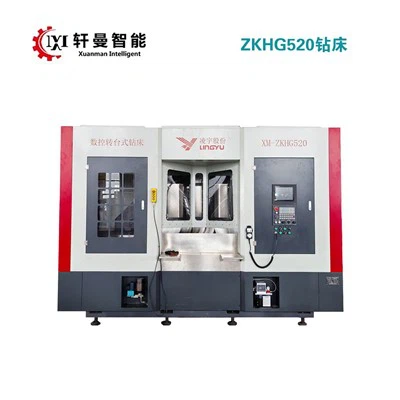
First, let’s break down what “mass production” actually means here. We’re talking about thousands, even tens of thousands, of identical gears rolling off a production line month after month. You can’t waste time retooling every time a new gear design comes around, and you can’t afford messy, inconsistent cuts that lead to bad parts. That’s where CNC hobbing shines way more than manual or semi-automated hobbing. Manual gear hobbing requires an operator to adjust settings, align the hob (the cutting tool), and monitor each part – that’s slow, and even a skilled operator will make a mistake once in a while. CNC machines? They run off a digital program. You input the gear’s specs – number of teeth, pitch diameter, pressure angle, all that stuff – once, and the machine does the rest, consistently, every single time.
I’ve seen this firsthand with a client who makes gears for electric vehicle (EV) motor systems. They used to use manual hobbing for their smaller batches, but when their EV orders blew up, they needed 50,000 identical gears a month. They bought two of our mid-range CNC gear hobs, and within three months, their production time per gear dropped from 12 minutes to 2 minutes. No more waiting for operators to set up each run, no more scrapping 2-3 parts per batch because of alignment errors. Now they’re hitting their mass production targets without breaking a sweat. That’s the kind of result that makes suppliers like us excited, and it’s exactly why CNC hobbing is now the go-to for mass gear manufacturing.
But wait, you might be thinking: “What about changeovers? If I need to switch to a different gear design for a new product, will that kill my mass production momentum?” Good question – and modern CNC machines solve that too. Back in the day, changing a gear hob required swapping out physical tooling, adjusting belts, and calibrating the machine for hours. Now, most of our CNC hobs let you save 50+ gear programs right on the machine’s touchscreen. Switching from a 20-tooth gear to a 30-tooth? You just pull up the new program, mount the correct hob (which takes 10 seconds with our quick-change tooling kits), and hit “run.” No downtime, no lost production. For a factory running 24/7, that’s a game-changer. I worked with another client who makes agricultural equipment gears – they go through 15+ different gear designs a year, all in mass production for different models. With our CNC hobs, their changeover time went from 4 hours per run to 20 minutes. They can switch between designs in the middle of a production shift without missing a beat.
Another big factor for mass production is throughput – how many parts a machine can make in an hour. CNC gear hobbing machines are built with faster spindles, more rigid workholding, and better cooling systems than older models. Let’s talk about spindles: the hob spins fast to cut through metal, and if the spindle is flimsy, you get rough cuts, tool wear, and broken parts. Our machines use high-torque, high-speed spindles that can run 1,500 RPM for steel gears and up to 3,000 RPM for aluminum – that cuts cycle time way down. And workholding? Those are the fixtures that hold the gear blank in place while it’s being cut. Our CNC hobs use hydraulic workholding that clamps the part tight in seconds, instead of manual vises that take time to adjust. For mass production, every second saved adds up to thousands of extra parts a month.
Don’t let me forget about accuracy, either. In mass production, even a tiny error in a gear – like a tooth that’s 0.001 inches off – can cause noise, wear, or even part failure down the line. CNC machines have positional accuracy within 0.0005 inches, which is way better than human hands can manage. We’ve tested our machines with gear inspection tools, and over a run of 10,000 parts, less than 0.1% are rejected for geometry errors. Compare that to manual hobbing, where you might see 2-5% rejects on a good day. For factories that run thin margins, that lower reject rate translates directly to more profit. It’s simple: if you’re making 50,000 gears a month, a 2% reject rate means 1,000 bad parts – that’s 1,000 wasted hours of labor and material. CNC hobbing cuts that waste down to almost nothing.
But here’s the thing – it’s not just the machine itself. A lot of new factory owners think they can just buy a CNC gear hob and plug it into their existing line, but there’s a little more to it. You need to set up the machine right, train your operators, and integrate it with your quality control process. That’s where we come in as suppliers. We don’t just sell a machine and walk away. Our team helps you program the right gear specs, works with your floor managers to set up the machine in your production line, and even offers on-site training for your operators. I’ve had clients call us panicking because their first mass production run was off by a few thousandths, and we’ll send a tech out within 48 hours to calibrate the machine and get them back on track. For mass production, support isn’t a nice-to-have – it’s required, and that’s why a good supplier matters way more than buying a no-name machine online.
Wait, but what about cost? Some small factory owners look at a CNC gear hob and think, “That’s way too expensive for mass production.” Let’s do the math. Let’s say you’re making 10,000 gears a month with manual hobbing. You pay an operator $25 an hour, it takes 10 minutes per gear, so that’s 1,667 hours a month, plus material waste, plus scrapped parts. With a CNC machine, the operator only needs to load the blank and unload the finished part – that’s 2 minutes per gear, so 333 hours a month, and almost no waste. Even if the CNC machine costs $50,000, you’ll pay that off in 18-24 months with the labor and material savings. For mass production, that ROI is unbeatable. I just worked with a small gear shop that switched from manual to two of our CNC machines, and they had their investment back in 21 months. Now they’re taking on bigger contracts because their production capacity doubled.
There are, of course, cases where CNC gear hobbing isn’t the right fit. If you’re making 10 or 20 custom gears a month, a CNC machine might be overkill – the program setup alone isn’t worth it. But for anything over 1,000 parts a month, CNC hobbing is the best option. Even low-volume mass production (like 1,000-5,000 parts) will see huge benefits from consistency and speed. I see factories all the time that start small with custom gears, then grow into mass production, and the first thing they add is a CNC gear hob. It’s not just a machine – it’s a growth tool.
Another thing I love about CNC gear hobbing for mass production is how flexible it is. The same machine that’s making gears for lawn mowers one month can make gears for medical devices the next, just by changing the program and the hob. A lot of mass production lines are tied to one product, but if you’re a contract gear shop that works with multiple clients, that flexibility lets you take on more work without buying a bunch of different machines. That’s a big deal for small to mid-sized factories that don’t have the budget to fill their floor with specialized equipment.
Now, I know what some of the skeptics are thinking: “CNC machines break down all the time, and if you’re running 24/7 in mass production, that’s a disaster.” Yeah, that’s a real concern – but modern CNC hobs are built to run nonstop. We use high-quality components from brands like Siemens and Fanuc for our controls, and our machines have a mean time between failures (MTBF) of over 10,000 hours. That means you can run your machine for a year, 24/7, before you’ll likely have a major breakdown. And if something does go wrong, we have a 24/7 support line for our clients – no waiting for business hours to get help. I’ve had a client in Texas call me at 2 a.m. because their machine stopped mid-run, and our tech walked them through fixing a sensor issue in 15 minutes. For mass production, downtime costs money, and we take that seriously.

At the end of the day, the answer to “Can a CNC gear hobbing machine be used for mass production?” is a resounding yes. It’s not just possible – it’s the standard now for anyone making gears in large quantities. The consistency, speed, accuracy, and flexibility of these machines make them way better than manual or even semi-automated options for mass runs. But you don’t have to take my word for it. If you’re a factory owner looking to step up your gear production, or you’re planning to launch a new product that needs thousands of identical gears, hit us up to chat. We can walk you through machine options, run numbers, and make sure you have the support to make your mass production goals a reality. No sales pitch, no pressure – just straight talk about what works.
CNC Turning Machine References:
- Bolton, W. (2018). Gear Technology: Design, Manufacturing, and Performance. Industrial Press Inc.
- ISO 1328-1:2013. Cylindrical Gears – ISO System of Gear Quality – Part 1: Definitions and Allowable Values for Deviations of Gear Teeth. International Organization for Standardization.
- American Gear Manufacturers Association (AGMA) 2001-D02. Gear Hobbing: Principles, Practices, and Equipment. AGMA.
Jiangsu Xuanman Intelligent Equipment Co., Ltd.
We’re well-known as one of the leading CNC gear hobbing machine manufacturers in China, featured by quality products and low price. Please rest assured to buy discount CNC gear hobbing machine made in China here from our factory. We also accept customized orders.
Address: No. 1-1, Weier Road, Jieji Equipment Manufacturing Industrial Park, Sihong County, Suqian City, Jiangsu Province, China
E-mail: jsxmzn@163.com
WebSite: https://www.xm-cnc.com/
