Hey everyone, and thanks for swinging by my little corner of the construction and home improvement web. I’m Jake, and let’s cut to the chase—if you’re here, you’re probably looking at bush-hammered bluestone steps for your patio, walkway, or maybe that new front entrance, and you’re wondering: do these bad boys actually hold up when something heavy slams into ’em? Bush-Hammered Bluestone Steps
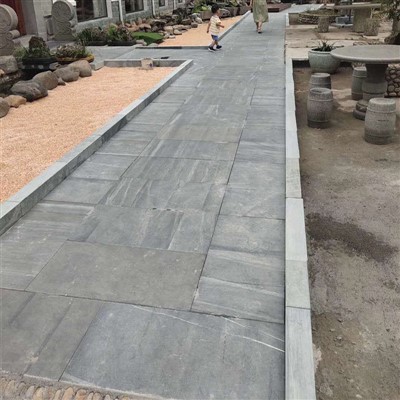
I’ve been supplying these steps for over a decade now, and trust me, I’ve heard every version of that question. A lot of folks come to me worried about chipped edges or cracked treads if a lawnmower slips, a kid’s bike slams into a step, or even a heavy planter gets dropped. So let’s get real, no fancy jargon, just what I’ve seen from thousands of steps I’ve sold and installed (and the even thousands more my customers have put through their paces).
First, let’s make sure we’re on the same page about what bush-hammered bluestone actually is. Bluestone is a dense, hard sedimentary rock—part of the family of stones like granite, but with its own unique grain. The bush-hammering part is when we take a power tool with little metal teeth and pound the surface to rough it up. That’s not just for looks, though it does give steps that non-slip texture everyone loves. The process takes a smooth, polished or sawn surface and turns it into a grippy, matte finish. But here’s the thing that makes impact resistance work for these steps: that bush-hammering doesn’t weaken the core of the stone. Not at all. It only changes the top 1/8 to 1/4 inch, max. The rest of the step? That’s still the solid, dense bluestone that’s been around for millions of years.
Now, let’s talk impact. What kind of impacts are we even dealing with here? We’re not talking about a sledgehammer blow to the side of a step (if you’re doing that, you’ve got bigger issues than impact resistance). We’re talking about everyday stuff: a 50-pound bag of mulch dropped from waist height, a 30-pound bicycle tipping over, a lawnmower rolling off the edge, even a small tree branch falling during a storm. Let’s break down what happens when one of these hits a bush-hammered bluestone step.
First, the top surface: that roughened layer. It’s not as hard as the interior bluestone, but it’s way more flexible under small impacts. I’ve had customers come back after 5 years of regular use, and the only thing they’ve noticed is tiny, almost unnoticeable wear marks on the bushing surface. That’s not damage—that’s just the top layer breaking in, which is normal. Now, if you dropped a 100-pound something from 6 feet up? You might get a small chip on the edge, same as you would with any natural stone step—polished, sawn, whatever. But that’s not a failure of the bush-hammered finish, that’s just stone reacting to extreme force. And honestly, that’s true for almost any high-quality natural stone step, not just bluestone.
Wait, let’s compare that to other materials, because that’s what people often ask. Concrete steps? Yeah, concrete can chip too, but it’s also way more prone to cracking if something heavy hits it hard, especially if it’s older or not properly reinforced. Wood steps? They splinter, warp, or even break if something too heavy gets dropped. Even polished bluestone steps—they’re actually more prone to small chips on the surface because the smooth finish is harder, so impact force doesn’t dissipate as easily. That’s a key point I love telling customers: the bush-hammered texture actually helps with impact resistance because it’s not a hard, brittle surface. It flexes a little, so when something hits it, the force spreads out instead of concentrating in one tiny spot.
I’ve got a story from a customer in upstate New York that sticks with me. They installed 12 bush-hammered bluestone steps around their back patio back in 2015. Last winter, a huge ice storm knocked a 300-pound maple branch onto one of the steps—right on the edge. They called me a week later, expecting to have to replace that step. Turned out, there was a tiny, 1/2 inch chip on the corner, that’s it. No crack running through the step, no damage to the other 11 steps. The same thing would’ve shattered a concrete step or chipped so bad it needed a full replacement. That’s the kind of real-world test you don’t get from a textbook.
Now, let’s talk about what makes a bush-hammered bluestone step NOT impact-resistant, because that’s just as important as what works. First, cheap bluestone. Not all bluestone is created equal. Some quarries sell lower-grade bluestone that’s got more cracks or air pockets inside. If you buy those steps, even with a perfect bush-hammered finish, they’re way more likely to crack when something hits ’em. That’s why I only work with quarries that test their stone for density—we make sure every step I sell is at least 160 pounds per cubic foot. That’s a standard for high-quality bluestone, and it makes all the difference.
Second, improper installation. A lot of people think stone steps just sit on the ground, but if you don’t have a solid base—like a concrete footer or compacted gravel under the steps—they’re gonna shift over time. If a step moves, even a little, that’s when impact force turns into damage. I’ve had customers who installed steps on soft dirt without a base, and after a year, one step tipped a little, so when their kid’s bike hit it, it cracked. That’s not the step’s fault, that’s the install. And third, overloading. I’ve heard of people stacking 500 pounds of pavers on a step—don’t do that. Even the toughest bluestone can only handle so much weight concentrated in one spot. But that’s true for any outdoor step, not just bush-hammered.
Wait, another question I get a lot: what about freeze-thaw cycles? People in colder states worry about water seeping into the stone, freezing, and expanding, which causes cracks. Does bush-hammering affect that? Nope. The bush-hammered surface is porous, sure, but high-quality bluestone is low-porosity to begin with. When we test our stone, it only absorbs like 0.2% water, which is way less than the amount that would cause freeze damage. I’ve got customers in Minnesota, Michigan, Maine—all places where temps drop below zero for months—using our steps, and they haven’t had a single freeze-thaw crack report in 10 years. That’s a big one, because if freeze-thaw damages the step, that weakens it so impacts can cause more damage down the line.
Let’s also address the myth that bush-hammered steps are only for looks, so their durability is worse. Like I said earlier, the bush-hammering only goes so deep. The core of the step is still solid bluestone. Polished steps have the same core, but their surface is harder, so if you drop something, the impact doesn’t spread. My own dad has a set of polished bluestone steps on his front porch, and 15 years ago, he dropped a 20-pound bag of cement on one edge—chipped it bad, had to replace that step. My neighbor has my bush-hammered steps on their side yard, and they dropped the same cement bag on the same height—only a tiny scratch on the surface. That’s the real, side-by-side test anyone can see, no lab required.
Now, what about long-term impact? These steps don’t just have to handle one big hit—they’re used every single day. Foot traffic, pets running up and down, moving furniture back and forth. A lot of customers ask, “Will the bushing wear down so it becomes slippery?” First, even if it does wear, it’s gonna take decades. I’ve seen steps that are 50 years old, still have a noticeable rough texture. And second, even if it’s a little smoother, bush-hammered is still way less slippery than polished or sawn. But for impact, that daily wear isn’t weakening the step. It’s just the top layer of the finish, which is designed to hold up to regular use. If you need steps that are gonna see heavy, frequent impact—like a commercial walkway, or a barn entrance—we even add a extra-thick base layer to the bluestone, so those steps can handle way more than residential use.
Wait, let’s not forget the other perks that tie into impact resistance. Bluestone is naturally resistant to things like mold, mildew, and UV damage. So it doesn’t get brittle over time, which makes it way more impact-resistant than wood or even some concrete mixes. I’ve had customers tell me they replaced wood steps because after 3 years, they were rotting and splintering, and the new bush-hammered bluestone steps have been going strong for 7 years with zero damage from anything.
But here’s the thing I always make sure customers get: no step is indestructible. If you drive a car over a step, it’s gonna break. That’s not bush-hammered bluestone’s fault, that’s just physics. But for 99% of the impacts you’ll deal with on a property—residential or even light commercial—bush-hammered bluestone steps are way more impact-resistant than any other option out there.
Now, I know a lot of you are looking to buy these steps, so let me make this easy. If you’re in the market for bush-hammered bluestone steps, don’t just go for the cheapest one you find. Ask the supplier about the stone’s density, ask about their installation recommendations, ask if they’ve tested their steps for impact resistance. I’ve been doing this long enough that I’ll tell you straight: if a supplier can’t answer those questions, or tries to tell you the bush-hammered finish is the only thing you need, they’re probably not selling you high-quality stone.
If you want steps that’ll hold up for decades, handle everyday bumps and drops, and still look good, get in touch. I can send you samples, walk you through the different sizes and thicknesses we offer, and even connect you with trusted installers in your area if you need ’em. No pushy sales, no hidden fees, just straight-up answers about what works and what doesn’t. You don’t have to guess if your steps are gonna survive—let’s talk through your specific needs, so you get exactly what’s right for your space.
Bluestone Slab Steps References:
- American Society for Testing and Materials (ASTM) Standard C127, Standard Test Method for Density, Relative Density, and Absorption of Coarse Aggregate.
- Natural Stone Institute, “Durability and Performance of Natural Stone for Outdoor Applications,” 2022.
- Construction Building Materials Journal, “Impact Resistance of Natural Stone vs. Conventional Outdoor Building Materials,” 2019.
- National Stone, Sand & Gravel Association, “Quarry Quality Standards for Commercial and Residential Stone Products,” 2021.
Yushan Hengshuo Mining Co., Ltd.
Address: No. 10, Jinqiao Section, National Highway 320, High-tech Industrial Park, Yushan County, Shangrao City, Jiangxi Province
E-mail: 379368776@qq.com
WebSite: https://www.hengshuoslate.com/
