If you’ve ever been under a vehicle when it’s hoisted up on a lift, you’ve probably glanced at control arms without giving them much thought. They’re those long, sturdy metal bars that connect your wheels to the chassis, quietly keeping everything aligned and absorbing the constant bumps of daily driving. But as a control arm supplier who’s worked with garages, fleet managers, and even DIY mechanics for over a decade, one question comes up more than any other: “How often do I need to replace these things?” It’s not a simple answer, and it’s not one-size-fits-all—so let’s break it down the way I do when I’m walking a new customer through our catalog or troubleshooting a first-time install. Control Arm
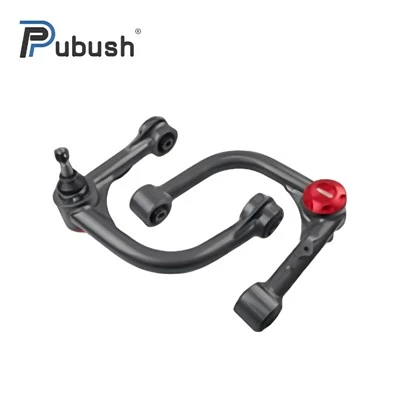
First, let’s get clear on what a control arm actually does, because that context makes the “when to replace” part make so much more sense. On most cars, trucks, and SUVs, you have two control arms per wheel: upper and lower. They pivot on bushings and ball joints to let the wheels move up and down over bumps, while also keeping them pointed straight ahead during turns and acceleration. Over time, those parts take a beating. The bushings get dry-rotted from heat, oil, and road salt. The ball joints can wear out, develop play, or even seize up. Even the control arm itself can develop cracks if you’ve hit a pothole hard, curbed a wheel, or carry heavy loads regularly. All of that wear doesn’t just affect alignment—it affects safety, too. A worn control arm can lead to uneven tire wear, loose steering, or even a wheel shifting unexpectedly at high speeds. That’s why paying attention to replacement timelines isn’t just about maintenance—it’s about keeping yourself and others on the road safe.
Now, the short, generic answer you’ll find in some service manuals is around 100,000 miles. But I’ve seen control arms that need replacement at 40,000 miles, and I’ve seen ones that still work fine at 150,000. That gap all comes down to how you drive and what you drive. Let’s talk about the factors that speed up wear, because that’s what really dictates how often you should check and replace.
Fleet vehicles are a big one for us. We supply control arms to delivery companies, construction fleets, and utility trucks that log 150,000 miles a year, almost all on rough pavement, potholed back roads, or off-hauling heavy equipment. For those, 60,000 miles is often the right interval. I had a client last year who ran a fleet of pickup trucks for a landscaping company—they’d go over curbs every day loading mulch and tree branches, and their lower control arms were worn out in 55,000 miles. We ended up sending them our heavy-duty line of control arms, which have thicker bushings and reinforced brackets, and since then their replacement interval has stretched to 85,000 miles. That’s the thing: factory control arms are designed for average daily driving, not for the hard work a fleet does. So if your vehicle is a workhorse, don’t stick to the generic 100,000 mile rule—plan for more frequent checks, and consider an upgraded part if you’re putting extra stress on it.
Then there’s climate and road conditions. If you live in a place that gets a lot of snow, that road salt is a silent killer for control arms. Salt eats away at the metal, causes rust, and makes bushings deteriorate faster. I live in the Midwest, where we dump salt on roads from November to March, and I’ve seen control arms rust so badly that the bracket actually cracked at 70,000 miles, even on a car that’s driven mostly on highways. On the flip side, if you live in a dry, mild climate with no road salt and smooth highways, control arms can last much longer. I have a cousin in Arizona who has a 2012 sedan with original control arms—he’s put 140,000 miles on it, and they still don’t have excessive play. But even in mild climates, if you drive on dirt roads or unpaved lots, the constant vibration speeds up bushing wear, so you should check more often.
Driving habits matter too. Do you hit potholes like they’re nothing? Do you take curbs on two wheels when parking? Do you regularly carry extra heavy loads—like a roof rack full of camping gear, a trailer, or a car full of tools and construction materials? All of that adds stress to control arms. I had a DIY mechanic come to us last year who had a compact car he used to race on weekends. He replaced his lower control arms every 30,000 miles, because the hard cornering and track abuse was wearing them out that fast. For a daily driver who never speeds and avoids potholes, that same car might see 100,000 miles before replacement.
So when do you actually know it’s time to replace a control arm, beyond just a mileage guess? There are warning signs that are hard to miss if you’re paying attention. The first one is uneven or excessive tire wear. If your front tires are wearing down on the inner or outer edges faster than normal, that’s a sign the alignment is off, and more often than not, worn control arm bushings or ball joints are the cause. Next is loose or wandering steering. If your car pulls to one side when you let go of the wheel, or if the steering feels “sloppy” and you have to correct it constantly, that’s a big red flag. You might also hear clunking or knocking sounds when you go over bumps, especially sharp turns or speed bumps. That’s the sound of a worn bushing or ball joint moving around instead of pivoting smoothly. In severe cases, you might feel vibration in the steering wheel at highway speeds, or even notice the front end shifting when you accelerate or brake hard.
Don’t wait for these symptoms, though. A lot of mechanics will tell you to inspect control arms every 50,000 miles, even if you don’t have any problems. That’s a good baseline, but if you’re in a high-stress driving situation—frequent heavy loads, rough roads, winter salt—you should do a visual and play check every 30,000 miles. Here’s how to check it yourself if you’re a DIYer: park your car on a flat surface, turn off the engine, and set the parking brake. Have a friend grab the front of the wheel at the top and bottom, then push and pull back and forth. If you feel excessive play (more than about a quarter-inch of movement), that means the ball joint or bushing is worn out. You can also inspect the control arm itself for cracks, rust, or leaking grease from the ball joint boots. If the rubber on the bushings is cracked, torn, or separated from the metal, that’s another sign it’s time to replace.
Now, a common question I get is: do I have to replace the entire control arm, or just the bushings or ball joint? My answer is almost always to replace the entire control arm if it’s worn. Here’s why: when you’re dealing with a part that’s under such constant stress, a bushing or ball joint that goes bad early means the rest of the arm is probably already showing signs of wear, even if you can’t see it. If you just replace the bushing and the arm has a hidden crack or rust, you’ll be back in for a replacement in a year or two. Also, aftermarket control arms (like the ones we supply) are precision-made to match the original equipment specs, so you don’t have to worry about alignment issues after install. Trying to save a few dollars on a bushing replacement often ends up costing more in the long run with extra labor and repeat repairs. That’s why we’ve designed our control arms to be direct replacements, with sealed ball joints and corrosion-resistant coatings, so they last longer than many OE parts, even in tough conditions.
I also want to talk about timing for new vehicles. Most modern cars have sealed control arms with bushings and ball joints that are meant to last a long time, but that doesn’t mean they’re immune to defects. I’ve seen brand-new cars come in to our shop with control arms that had bad ball joints right off the line—sometimes from a manufacturing defect, sometimes from shipping damage. If you have a new car, stick to the manufacturer’s recommended maintenance schedule, but if you start noticing steering issues or uneven tire wear within the first 20,000 miles, get it checked out right away. Don’t wait for the 100,000 mile mark if you have red flags early.
Another thing to consider: if you’re replacing one control arm, you should replace the other one on the same axle, too. Control arms wear evenly over time, even if you only notice a problem on one side. If you replace just the driver’s side, the passenger side will start to wear out quickly, because the new arm is tighter and puts extra stress on the old one. That will save you a second labor charge down the line, and keep your alignment consistent.
At the end of the day, the “how often” question isn’t a number—it’s a combination of mileage, driving conditions, and regular inspections. The worst thing you can do is ignore a small clunk or a slightly wandering steering wheel, because control arm failure can lead to serious accidents. I’ve had customers come to us after a wheel shifted while they were driving at 60 mph, and luckily, no one was hurt—but that’s a scenario that could have been avoided with a simple inspection and replacement.

If you’re not sure whether your control arms are due for replacement, or if you need a reliable replacement part that’s built to last, reach out to our team for a consultation. We can help you identify the right part for your vehicle, whether you’re a DIY mechanic working on a personal car or a fleet manager looking to cut down on maintenance costs. We’ve spent years refining our control arms to stand up to all types of driving, from daily commutes to heavy work, and we’re here to make sure you get the right part at a fair price.
Sway Bar References:
- Automotive Service Association. (2022). Front End Suspension Maintenance Guidelines.
- National Highway Traffic Safety Administration. (2021). Vehicle Suspension System Safety and Maintenance Report.
- Society of Automotive Engineers. (2020). Control Arm Durability Testing Standards for Light Duty Vehicles.
- International Journal of Automotive Technology. (2019). Effects of Road Salt and Driving Habits on Suspension Component Wear.
- National Fleet Management Association. (2022). Commercial Vehicle Maintenance Best Practices for Suspension Systems.
Xingtai Refined Machinery and Auto Accessory Co., Ltd.
Xingtai Refined Machinery and Auto Accessory Co., Ltd. is one of the most professional control arm manufacturers and suppliers in China, featured by quality products and low price. Please rest assured to wholesale durable control arm made in China here from our factory. Customized orders are welcome.
Address: XINGTAI REFINED MACHINERY AND AUTO ACCESSORY CO., LTD507 NORTH TAIHANG ROAD, XINGTAI CITY, HEBEI PROVINCE, PR.
E-mail: Lindy@pubush.com
WebSite: https://www.pubush-suspension.com/
