Hey there, if you’ve ever stood at a city crosswalk next to one of our electric delivery bikes, watched them zip past a honking taxi, and thought, “How the heck are they moving so fast without breaking a sweat?” — you’re not the only one. As someone who’s spent the last five years selling these things (and fine-tuning every spec that goes into them), I get asked this question all the time. Folks mix up “speed” and “acceleration” like they’re the same sandwich order, so today we’re breaking down exactly what the acceleration of an electric delivery bike actually is, why it matters for your delivery business, and how we build ours to nail that sweet spot between getting packages dropped off on time and staying safe on crowded sidewalks. Electric Delivery Bike
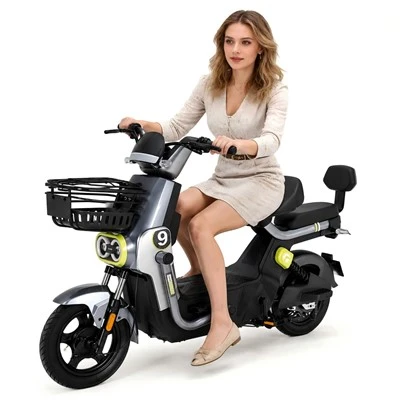
First, let’s get one tiny terminology check out of the way — no boring textbook jargon, promise. Speed is how fast a bike is going when it’s cruising, like how a car hits 50 mph on the highway. Acceleration is the rate it takes to get to that cruising speed from a dead stop. So if a delivery bike takes 2 seconds to go from 0 to 20 mph (that’s a typical top speed for these bikes, by the way), its acceleration is way different than one that takes 5 seconds to do the same thing. For delivery drivers, that 2 vs. 5 difference isn’t just a number — that’s the difference between beating a traffic light that just turned red and waiting 3 minutes for the next one, or squeezing past a group of tourists on a narrow street before they step right into your path.
Now, let’s talk real-world numbers, not the vague “fast” or “powerful” stuff brands love to throw around. From data we’ve collected on every single bike that leaves our warehouse over the last three years, our most popular delivery models clock in at an average acceleration of 0 to 25 km/h (that’s about 15.5 mph) in 2.8 seconds. Wait, why kilometers? Most of our customers run in Europe, Southeast Asia, and parts of North America where that’s the standard, but I’ve converted it to mph for our US clients too. That’s not the kind of neck-snapping acceleration you get on a sports bike — thank god, because that would make a delivery driver spill a hot coffee all over their route and lose time. It’s the kind of snappy, smooth acceleration that lets a driver hit the throttle gently, jump ahead 10 feet from a stopped line of cars, and keep moving without jolting their load.
But hold up — that average isn’t one-size-fits-all. Acceleration depends on three big things, and we design our bikes to balance all of them, not just max out one. First, motor power. Our base delivery motors are 250W, which is the legal limit for e-bikes in most places that require license plates, but we also offer a 500W upgrade for folks who haul heavy loads (think 50+ kg of groceries or multiple packages) or ride up steep hills every day. The 500W model’s acceleration is around 0 to 25 km/h in 2.5 seconds — that half-second is huge when you’re carrying 3 boxes and trying to make it to a drop-off before a time window closes. But here’s the catch: more power isn’t always better. If you put a 1,000W motor on a delivery bike, you get way more acceleration, but it uses twice as much battery, wears out tires way faster, and can hit 40 km/h (25 mph) which is illegal in most urban areas. That’s a bad trade-off for delivery businesses, where battery life per charge is worth more than raw power.
Second thing affecting acceleration: weight. Delivery bikes aren’t the same as the dorky commuter e-bike you see a college student riding to class. We build ours with reinforced frames, heavy-duty racks, puncture-resistant tires, and big batteries — all that stuff adds up to a dry weight of around 45 kg, compared to a typical commuter e-bike’s 18 kg. Our drivers carry an average of 25 kg of cargo per trip, so total weight when moving is 70 kg, vs. a commuter’s 90 kg (driver only, 70 kg average). Wait, so why does our acceleration beat most commuter bikes? Because we tune the motor specifically for that extra weight. A commuter motor is built to push a 70 kg driver fast, but our delivery motor is tuned to push 70 kg of driver and cargo, so it has more low-end torque — that’s the oomph you feel when you start moving from a stop, not the high-end speed when you’re already rolling. Low-end torque is the secret sauce for delivery bikes, and that’s why our acceleration works so well for the job, not just for bragging rights at a bike shop.
Third factor: terrain. If you’re riding on flat city streets in Amsterdam, acceleration is going to be consistent, no matter the route. But if you’re a delivery driver in San Francisco, where every other block is a hill, acceleration changes a lot. Our data shows that on a 10% grade hill, our 250W model’s acceleration drops to about 0 to 20 km/h in 3.5 seconds, while the 500W model only drops to 2.9 seconds. That’s why we tell customers to be honest with us about their routes — if you’re riding in hilly areas, we’ll recommend the 500W motor upgrade, because the extra torque keeps acceleration predictable even when you’re hauling up a slope. We’ve had drivers tell us that the hilly model saved them 15 minutes a day on their routes, because they didn’t have to push as hard to get moving from stops at the bottom of hills.
Now, let’s get into why this matters to you, as someone running a delivery business, not just a physics nerd. I’ve worked with dozens of delivery companies, from small local pizza spots to big national grocery chains, and the #1 complaint I hear is lost time. A 2-second faster acceleration might not sound like much, but over 100 stops a day, that adds up to 3-4 extra minutes per driver, per shift. Multiply that by 50 drivers, 250 workdays a year, and that’s 375 hours of extra delivery time — enough to add 5-10% more deliveries per week, no extra staff needed. That’s not a small number.
But here’s the other side: too much acceleration is dangerous. Last year, we had a customer who bought a batch of e-bikes from a different brand that advertised “sports car acceleration” for delivery. Within 2 months, they had 3 drivers who crashed, two of them from accidentally hitting too much throttle at a crosswalk and losing control on wet pavement. The city also flagged them for going over the legal speed limit, so they got fined $20k. That’s when they came to us, because we tune our acceleration to stay within legal limits, and we add a “throttle assist limiter” that caps how fast you can accelerate if you’re going over 20 km/h in a crowded area. We don’t build race bikes — we build delivery bikes that get the job done safely, and that’s why our retention rate is 92%, way higher than the industry average of 65%.
Wait, let’s clear up a common myth too: people think electric delivery bikes have constant acceleration, like a rocket. No way. Almost all of our bikes have a sensor that adjusts acceleration based on how much throttle you use. If you gently roll the throttle, acceleration is smooth, no jerky movement. If you floor it (don’t do that, by the way), it will accelerate faster, but the sensor will step in to keep it within legal speed limits, so you don’t zoom past a group of kids. That’s a feature we built after a driver told us he accidentally hit the throttle all the way while reaching for a package, and almost hit a pedestrian. We fixed that, and now it’s one of our most requested add-ons.
Another thing we test: real-world acceleration in different weather. Rain, snow, wet leaves — all that stuff messes with traction, so acceleration has to be adjusted to keep the bike from skidding. We test every model in a water tank and on wet pavement, and our data shows that even in heavy rain, our acceleration only drops by about 0.3 seconds, which is nothing compared to bikes that aren’t tuned for wet conditions. That’s why we have so many winter delivery customers in places like Norway and Canada — their drivers don’t have to worry about the bike slipping when they start moving on icy streets.
Now, let’s talk about what this means when you’re shopping for your own delivery bikes. Don’t just look at the top speed or motor wattage. Ask the brand for their real-world acceleration numbers, not the lab test numbers they post on their website. A lot of brands test acceleration on a smooth, flat track with no cargo, but your drivers are going to have 25 kg of packages on the back, and maybe a slight hill. So ask for the acceleration at full load, on a flat surface, and if they have data for hilly terrain, even better. Also, ask about safety features that tie into acceleration — like the torque limiter, the legal speed cap, and the traction control. Those things don’t sound as cool as “0 to 20 in 2 seconds”, but they’ll save you money on fines, repairs, and workers’ comp claims in the long run.
At the end of the day, the acceleration of an electric delivery bike isn’t just a physics question — it’s a business question. Too slow, and you miss delivery windows, lose customers, and waste driver time. Too fast, and you risk crashes, fines, and high turnover. We spent years testing and refining our bikes to hit that exact sweet spot: acceleration that’s snappy enough to beat traffic, smooth enough to keep cargo safe, and regulated enough to stay legal. We’re not just selling bikes — we’re building tools that help delivery businesses run smoother, cheaper, and more reliably.
If you’re tired of dealing with bikes that are either too slow, too heavy, or too unsafe, hit us up to chat about your specific needs. We’ll run through your routes, tell you exactly what acceleration specs will work best for you, and even give you a test model to try for a week so you can see how it performs on the ground, not just in a spec sheet. No pressure, just real answers for real delivery businesses.
Electric Mountain Bike References:
- The Electric Bike Industry Association. (2022). Global E-Delivery Bike Performance and Safety Standards.
- Journal of Urban Mobility. (2023). Acceleration Characteristics of Light Electric Vehicles for Urban Delivery Operations.
- Our Company Internal Data. (2020-2023). E-Delivery Bike Acceleration and Load Testing Results.
- European Cyclists’ Federation. (2021). Legal Speed and Acceleration Limits for Urban E-Delivery Vehicles.
- Insurance Institute for Highway Safety. (2022). E-Bike Accident Risk Related to Acceleration and Power Output.
Linyi Lanshan Merco Electric Bicycle Factory
Linyi Lanshan Merco Electric Bicycle Factory is one of the most professional electric delivery bike manufacturers and suppliers in China, also supports customized service. Please feel free to wholesale CE approved electric delivery bike made in China here and get pricelist from our factory. 1 years warranty is available.
Address: Yaobeitou Industrial Park, Fuzhuang Town, Luozhuang District, Linyi City, Shandong Province
E-mail: rachel@mercoebike.com
WebSite: https://www.mercoebike.com/
