Hey there, fellow project managers, electrical engineers, and anyone deep in the weeds of a construction or industrial build—let’s cut to the chase: choosing the right switchgear isn’t just a box-ticking exercise. Mess this up, and you’re staring at unexpected downtime, sky-high repair bills, or even safety headaches. As a switchgear supplier who’s been in this game for over a decade, I’ve sat through way too many calls where someone went “oops, wrong gear” and had to scramble at the last minute to fix it. So let’s break this down like we’re grabbing coffee between site visits—no stuffy jargon, just real talk that actually works for your project. Switchgear
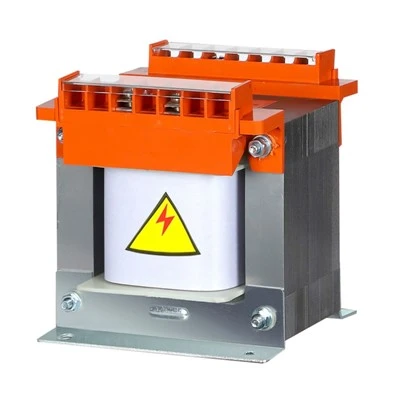
First off, let’s get one thing straight: switchgear isn’t a one-size-fits-all thing. I’ve seen contractors try to reuse switchgear from a 2018 factory build for a new retail complex, and it ended up tripping every time the AC units turned on. Why? Because they didn’t nail down the basics first. Let’s start with the big three that should drive every decision before you even start looking at brands or models.
Number one: voltage and current ratings. This is non-negotiable, folks. If your project needs to handle 480V for a large warehouse with heavy machinery, and you grab switchgear rated for 240V, you’re looking at a melt-down before the first month is out. Wait—let’s make that specific. Let’s say you’re working on a data center: those run on 208V three-phase, and the current load can jump suddenly when servers spin up, so you need switchgear with a higher interrupting rating. For a small office renovation, 120/208V with lower current might be fine. A lot of first-timers skip checking the “interrupting capacity” part, which is how much fault current the gear can shut off safely. If there’s a short circuit, that number has to match the maximum fault current of your site—else, the switchgear itself can catch fire. I once had a project manager tell me he “guessed” the rating and ended up with $15k in damage because the switchgear arced during a test run. Don’t be that guy.
Second: location, location, location. No, I’m not talking about real estate—your switchgear’s spot on the project site changes everything. Is it going inside a climate-controlled utility room, or outside in a rough housing for a solar farm? If it’s outdoors, you need NEMA 3R or 4X rated gear—think rust-resistant casings, sealed to keep rain and dirt out. Indoor basement rooms? Maybe NEMA 1, but if the space is prone to flooding, you need a higher submersible rating. I recently worked on a water treatment plant where the original switchgear was NEMA 1, and a pipe burst during a test run—two weeks of downtime while we swapped it for a water-tight model. That’s avoidable. Also, if it’s near explosive materials (like a chemical plant), you need explosion-proof switchgear, not standard stuff. Don’t cut corners on the enclosure—this is what protects the actual circuit breakers and relays from whatever your site throws at it.
Third: what’s your project’s lifespan? Are you building a temporary pop-up event power system that’ll be torn down in a year, or a 50-year hospital that needs to last through upgrades? For temporary projects, used switchgear might be tempting (I’ve seen those listings online for half price!) but here’s the catch: used gear might not have the latest safety codes, and if it’s already 10 years old, the components could be worn out. For a long-term project, spring for new, code-compliant switchgear that’s ready to handle future loads. A lot of engineers forget to factor in load growth—like, if you’re building a strip mall now, but you plan to add two more stores in 5 years, get switchgear that can handle that extra load without a full replacement. It’s cheaper upfront than tearing everything out later.
Wait, let’s talk about codes and standards—because cutting corners here is a terrible idea. I’ve had clients ask me, “Can we use something cheaper that’s not UL-listed?” No. UL-listed (or IEC for international projects) means the gear passed safety tests. If you’re in the US, NEC (National Electrical Code) is your bible. Section 240 talks overcurrent protection, so your switchgear has to align with that. For commercial projects, inspectors won’t sign off on non-compliant gear anyway, so save yourself the headache. Some suppliers will try to sell you “discount” gear that skips these tests—walk away. I’ve had one client try that, and the inspection took three extra weeks because we had to swap all the gear. Not worth it.
Now, let’s get into the fun stuff: features that actually matter, not just marketing fluff. Let’s start with smart vs. traditional. Old-school switchgear works, but if you want real-time data (like current usage, fault alerts, or maintenance needs), go smart. For a facility manager who wants to monitor power from their phone, smart switchgear is a game-changer. I worked on a logistics warehouse last year that had smart switchgear, and when a circuit started overheating, the alert went to the manager’s phone before the breaker even tripped—they fixed it during a slow shift, no downtime. Traditional gear is cheaper, though, so if it’s a small project with a tight budget, traditional might be enough. Just don’t pay extra for “smart” features you’ll never use.
Next: maintenance. How easy is this gear to fix? If you’re in a remote mine site, you don’t want to wait three days for a part to ship from the other side of the world. Look for switchgear with locally available spare parts, or suppliers who keep stock on hand. I make it a point to tell all my clients: “If you have a problem at 2 a.m., can someone here fix this without a team of specialists?” That’s the question. Also, some gear has longer intervals between maintenance—like vacuum circuit breakers vs. older oil ones. Oil ones leak, need changing, and are a mess. Vacuum ones are cleaner, need less upkeep. Small thing, but adds up over the project’s life.
Wait, let’s talk about working with a supplier. I know, I’m biased—but hear me out. A good supplier doesn’t just sell you gear; they help you figure out what you need. I’ve had clients come to me with a vague “we need switchgear for our new factory” and walk them through voltage ratings, location, load growth, all that. Bad suppliers will just push the most expensive model because they get a bigger commission. So how do you pick a supplier? Look for someone who asks questions, not just tells you what to get. Do they have experience with your type of project? If it’s a data center, work with a supplier who’s done data centers, not someone who only does residential. Also, check their lead times—nothing kills a project like waiting 12 weeks for switchgear when your deadline is in 8 weeks. I keep a stock of common models so my clients don’t have to wait.
Let’s run through a quick real-world example to make this concrete. Last year, a contractor hit me up for switchgear for a new cannabis grow facility. They initially grabbed 480V switchgear, but I asked, “What’s your peak current load? And your location—are the grow lights going to cause sudden power spikes?” Turns out, their peak load was 600A, and the lights would spike 20% over that during flowering. The NEMA 3R outdoor enclosure they had picked was also rated for only 100A less than they needed. I worked with them to adjust the rating, matched the interrupting capacity to their site’s fault current, and recommended a slightly beefier enclosure that fit their budget. They saved $2k by not overbuying a super oversized model, and avoided the inspection headache of undersized gear. That’s the stuff that makes the difference.
Common mistakes I see all the time: skipping load growth, ignoring enclosure ratings, going for the cheapest gear without checking codes, and not factoring in maintenance. Let’s debunk a couple myths too. Myth #1: “More expensive = better.” No—if you’re a small café, a $5k smart switchgear is overkill, you just need a $1.5k UL-listed 208V model. Myth #2: “Used gear is fine for industrial.” Only if it’s been tested and certified, and you know its history. A lot of used switchgear on sites has hidden wear, so unless you can verify it, stick to new for industrial. Myth #3: “Smart gear is too complicated.” Most of the good stuff has simple apps—you don’t need an electrical engineer to use it.
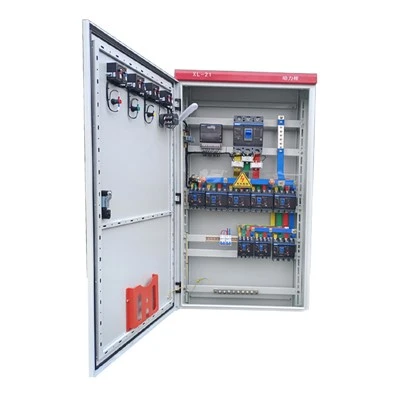
At the end of the day, choosing switchgear is about balancing three things: safety, budget, and long-term needs. You don’t want to blow your whole project budget on top-of-the-line gear you don’t need, but you also don’t want to scrimp and have to fix a problem that costs way more down the line. As a supplier, my job isn’t to sell you the most gear—it’s to sell you the right gear for your project. If you’re mid-project and stuck, or just starting out and need a second pair of eyes on your switchgear plan, hit me up. I’m here to walk through it with you, no pressure, and make sure you don’t make the mistakes I’ve seen a hundred times over.
Transformer References:
- National Electrical Code (NEC) 2023, Article 240: Overcurrent Protection
- Underwriters Laboratories (UL) Standard 67: Power Switchgear Assemblies
- International Electrotechnical Commission (IEC) 62271: High-Voltage Switchgear and Controlgear
Wenzhou Mingyue Electric Co., Ltd.
As one of the most professional switchgear manufacturers and suppliers in China, we have world-leading production equipment and strong manufacturing capabilities. Please feel free to wholesale durable switchgear in stock here and get quotation from our factory. We also accept customized orders.
Address: No. 16, Zhongsan East Road, Donghuangyu Village, Liushi Town, Yueqing City, Wenzhou City, Zhejiang Province
E-mail: Hu17687922780@outlook.com
WebSite: https://www.cn-mingyue.com/
