Hey everyone,
If you’ve ever stared up at the night sky and wondered what it would feel like to live off-planet—trading four walls for a compact, self-sustaining space that doesn’t rely on Earth’s endless supply of resources—then you’ve probably heard of space capsule houses. As someone who’s spent the last seven years designing and refining these tiny, futuristic homes, one question I get asked more than any other is: “What happens to the waste?” People get fixated on the sleeping setup or the panoramic view, but the sewage system? That’s the unsung hero of making a space capsule house feel like a home, not a temporary flight unit. Today, I want to pull back the curtain on exactly how that system works, why it’s non-negotiable for our designs, and how it’s evolved from NASA’s early space missions to the homes we deliver to people right here on Earth. Space Capsule House

Let’s start with the harsh reality of living in a space capsule—any space capsule, really. There’s no “downstairs” to run to, no storm drain to hose off, and every single drop of water, every gram of waste, has to be accounted for. On the International Space Station (ISS), NASA recycles 93% of its water, a stat that always blows my clients away. For our space capsule houses, we don’t need to hit that exact ratio, but we do build our systems on that same orbital blueprint because that’s what makes these homes sustainable. Before we dive into the nitty-gritty, let’s set the stage: our capsules aren’t just shrunk-down space stations—they’re designed for full-time living, so the sewage system has to handle more than just astronaut pee. It has to handle everything from a morning shower to kitchen sink runoff, human waste, even the small amount of organic trash that slips through the compactor.
First, let’s break down the two main parts of the system: black water and grey water. Black water is the “dirty” stuff—human waste from the toilet, plus any toilet paper or hygiene products. Grey water is the slightly better (but still used) stuff: water from showers, sinks, and kitchen dishwashing. You might think we’d handle these separately, and we do, for good reason. But here’s the thing that most people don’t get: in a closed-loop system, nothing is just “waste.” Everything has a second life.
Let’s talk about how we process black water first, because that’s the part people worry about most. Back in the 1960s, the Apollo missions used to dump urine and solid waste into space, where it would burn up in the atmosphere later. That’s fine for a two-week mission, but not for someone living in a capsule house for years. So our black water system starts with a vacuum toilet—no flushing with regular water, because that would waste a resource we can’t afford to waste. The vacuum sucks everything into a sealed holding tank, and here’s where our proprietary process comes in: instead of storing that waste indefinitely, we use a combination of biological filtration and advanced oxidation. First, beneficial bacteria break down solid waste into basic organic matter, then we pass the liquid through a series of filters that remove contaminants, and finally, we use UV light to kill any remaining pathogens. The result? That treated black water is almost pure—clean enough to be used for non-potable purposes like flushing toilets again, or even to water small indoor plants in the capsule’s living wall. We don’t drink it, and we make that clear to every client—transparency is huge here—but it’s a closed loop that means we only need to add a tiny bit of fresh water every few weeks, not every day.
Now, grey water—this is the workhorse of the system. Most people’s homes on Earth dump grey water into sewers or septic tanks, but in a space capsule, every drop counts. Grey water from showers and sinks is still warm, still has some organic matter, but it’s free of human waste, so we can process it more easily. Our system first sends grey water through a mesh filter to catch hair, soap scum, and food particles—we even have a small, easy-to-clean trap that clients can empty in 30 seconds every month. Then, we send it through a carbon filter to remove any remaining odors or chemicals from soap, and finally, we run it through a reverse osmosis membrane that strips out 99.9% of dissolved solids. The water that comes out of that? It’s clean enough to use in the capsule’s heating and cooling system, or to refill the shower or sink for next time. The only downside is that over time, the dissolved minerals (like calcium from hard water) build up, so we have a small desalination unit that flushes those out every few months—we designed that to be super low-maintenance, no tools required, just a simple filter replacement.
Wait, I know what some of you are thinking: what about smells? If everything’s sealed, won’t the capsule smell like a port-a-potty after a week? That’s the part we’ve spent years refining, because bad smells are a dealbreaker. Every component of the sewage system is pressure-sealed, with no open pipes. The vacuum toilet has a carbon filter that traps odors before they can escape into the main living space. The holding tanks are insulated and ventilated, so any gas from the biological process is filtered through a HEPA and carbon system before it’s released outside the capsule—no weird smells inside, I promise. In fact, when we do factory testing, our team has to wear scent detectors to make sure the system doesn’t leak odors. It’s a bit overkill, but after hearing horror stories from early prototype testers, we take that seriously.
Let me give you a real-world example of how this works in practice. Last year, we delivered a capsule house to a couple in the Arizona desert, off the grid, wanting to live self-sufficiently. They used the capsule as their primary home, no connection to the municipal sewer or water line. In their first month, they ran two 10-minute showers a day, washed dishes three times a day, and had a compost toilet as backup (though they barely used it). Their sewage system processed all that grey and black water, recycled 85% of it, and the only “waste” they had to dispose of was the small amount of solid organic matter from the black water filter—about the size of a coffee can— which they added to their outdoor garden compost. They told us that after three months, their water bill (or, more accurately, their water top-up) was less than $20, because they only had to add a little fresh water for drinking and cooking. That’s the kind of self-sufficiency our systems are built for.
Now, I know some people will say: “This is all fine for a tiny capsule, but what if someone has a family of four?” We’ve tested our system for multiple occupancy, too. Our standard capsule house is 200 square feet, but we also make modular additions, so you can connect multiple capsules for larger groups. The sewage system scales with it—each module has its own processing unit, and they can be linked together to handle more flow. For a family of four, we just increase the size of the holding tanks and adjust the biological filters to handle more organic matter. It’s not just for single people or couples—it’s for anyone who wants to live with less impact on the planet.
Let’s talk about maintenance, because I don’t want anyone to think this is a high-tech nightmare that requires a NASA engineer to fix. Every component is designed to be user-serviceable, no special tools needed. The filters are color-coded, so you can tell which one needs replacing at a glance—grey water filter every six months, black water filter every 12 months, carbon filters every two years. The solid waste trap is easy to empty, and we send monthly reminders to clients with step-by-step videos. When we do on-site support (which is optional, most clients do the maintenance themselves), our techs can fix most issues in under an hour, and we stock spare parts locally in most areas where we deliver. We don’t want our clients to feel like they’re dependent on us—we want them to feel confident that they can take care of their home.
I think what’s most exciting about this system is that it’s not just for space. The same technology that we use in our capsule houses is being used in remote areas of the world where there’s no sewer infrastructure—like small mountain towns or islands that struggle with water scarcity. A few months ago, we installed a capsule house in a village in Iceland, where the ground is too rocky to dig septic tanks. Our sewage system handles all the waste, recycles the water, and doesn’t require any connection to the local utility grid. It’s small, it’s efficient, and it solves a real problem.
Now, I know there are still questions out there. What about if the power goes out? Our system has a backup battery that can run it for 72 hours, so even in a blackout, you don’t have to worry about backed-up waste. What about extreme temperatures? We’ve tested our systems in temperatures as low as -20°F and as high as 120°F, and they work just fine—insulation keeps the pipes from freezing in cold weather, and heat exchangers keep the water from overheating in the desert.
At the end of the day, building a space capsule house isn’t just about having a cool, futuristic looking home. It’s about reimagining what a home can be—one that’s sustainable, self-sufficient, and doesn’t rely on the old, wasteful systems we’ve been using for decades. The sewage system is the backbone of that. Without it, the capsule is just a fancy metal box. With it, it’s a home that works with the planet, not against it.
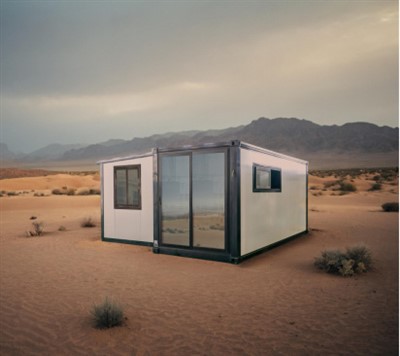
If you’re interested in learning more about our space capsule houses, including the sewage system that makes them possible, I’d love to chat with you. We’re currently taking orders for delivery next year, and we can customize every part of the capsule to fit your needs—from size to power options to waste processing. Whether you’re looking for a remote getaway, a primary off-grid home, or a unique rental property, our team can help you find the right solution for you. Reach out to our sales team to schedule a consultation, and we can walk you through every detail, from the sewage system to the panoramic windows that let you stargaze every night.
Flat Pack Container Houses I’ve spent my career working on these designs, and there’s nothing more rewarding than seeing a client move into their capsule, knowing they’re living a life with less waste, more independence, and a smaller footprint on this planet. The future of housing isn’t just about how big your home is—it’s about how well it works with the resources we have. And that starts with the way we handle waste.
References
- National Aeronautics and Space Administration (NASA). (2022). Life Support Systems for Long-Duration Space Missions. NASA Technical Reports Server.
- International Space Station Program. (2021). Water Recycling and Management on the ISS. NASA ISS Science Office.
- Space Architecture Association. (2023). Closed-Loop Life Support Systems for Microhabitats. Journal of Space Architecture and Settlements.
- Environmental Protection Agency (EPA). (2022). Innovative On-Site Wastewater Treatment Systems for Water Scarcity Areas. U.S. EPA Office of Water.
- Capsule Living Labs. (2023). Field Testing Report: Closed-Loop Sewage Systems in Off-Grid Microhabitats. Unpublished Industry Report.
Hebei Tianyu Guangbo Module Housing Co., Ltd.
Hebei Tianyu Guangbo Module Housing Co., Ltd. is one of the most professional space capsule house manufacturers and suppliers in China, featured by quality products and good price. Please rest assured to buy waterproof space capsule house for sale here from our factory. Also, custom service is available.
Address: North of Xingwang Road and west of Wuguan Road in Wuyi County, Hengshui City, Hebei Province (south of Hebei Yingtong Textile Technology Co., Ltd.).
E-mail: jasonyao@tygbhouse.com
WebSite: https://www.hbtygbhouse.com/
