Hey there, fellow drone nerds and duct tape lovers — let’s cut to the chase: I’m a duct tape supplier, and I get asked this question at least twice a week. “Can I fix my beat-up drone with duct tape?” The short answer is: Hell yeah, sometimes. The longer? It depends on what’s broken, why, and if you know how to use tape that’s actually built to stand up to more than just a quick band-aid job. Before I go further, let’s get one thing straight — I’m not here to say duct tape is a replacement for a $500 replacement prop mount or a cracked motor housing. But if you’re stuck 3 miles out with a dead battery and a snapped arm? That’s when duct tape earns its keep. Duct Tape

First, let’s talk about the science side, because I don’t want to mislead anyone here. Most people think duct tape is just that silver stuff from the 70s that melts in the sun. Modern duct tape? It’s got a fabric mesh core (usually polyester or fiberglass) that’s wrapped in a strong, pressure-sensitive adhesive that’s engineered for flexibility, heat resistance, and adhesion to just about any surface — plastic, carbon fiber, aluminum, even the weird composite stuff drone frames are made of these days. Carbon fiber is big in drones because it’s light and strong, but it’s also prone to tiny cracks that can spread fast if you don’t stabilize them. Duct tape’s mesh core is great for that — it doesn’t stretch so much that it makes the crack worse, but it bends with the frame as the drone moves, so it doesn’t pull off mid-flight.
I’ve seen this play out in real life with a customer of mine, Jake, who runs a small aerial photography side hustle. Last month, he was shooting footage of a local waterfall when his drone hit a gust of wind and snapped one of the arms right at the motor mount. He was 20 minutes from home, no tools, no replacement parts. He had a roll of my industrial-grade duct tape in his camera bag (pro tip: always keep a small roll of good tape in your drone bag, trust me), so he took the broken arm, lined up the pieces, and wrapped three layers of tape tight around the break — going the long way, not just around the spot. He flew it back, got the shot he needed, and later replaced the arm with a real part. But that tape held up through 10 minutes of flight time, wind, and vibration. That’s not luck — that’s tape doing what it’s designed to do.
But here’s the catch: duct tape isn’t for every drone break. Let’s break down what works and what doesn’t, because if you try to fix the wrong thing, you’re just asking for a crash. Good uses? Small, non-critical breaks: snapped propeller arms that haven’t damaged the motor, cracked landing gear, loose camera mounts, even tiny cracks in the gimbal (just don’t wrap it too tight or you’ll mess up the gimbal’s movement). It also works for securing loose wires — drone wires vibrate a ton, and tape will hold them in place way better than a twist tie in a pinch. The key here is that these are all low-stress parts. The arm on a small drone, for example, only has to hold a propeller and a tiny motor — tape can handle that load temporarily.
What duct tape can’t fix? Major structural damage: a cracked main frame that’s split in two, a damaged motor housing, a broken battery compartment, or anything that affects the balance of the drone’s weight. Duct tape adds a tiny bit of extra weight (not much, but for small drones that fly at 50 feet and carry a light camera, that can throw balance off), and it’s not rigid enough to handle the torque of a motor or the stress of a heavy fall. If your drone is split down the middle? Duct tape’s not going to save that — go get a replacement part, or use it as a parts drone instead.
Another thing to consider: the environment. Duct tape’s adhesive works better in moderate temperatures (between 40°F and 100°F, roughly), and it’s water-resistant, not waterproof. If you’re flying in rain or snow, a tape repair might hold for a short flight, but don’t count on it lasting more than a few minutes. I once had a customer test a tape repair on a drone that crashed in a puddle — it held up for 5 minutes of flight, but the water seeped under the edge of the tape and made the frame damp, so it started to vibrate. If you’re flying in extreme cold (below freezing) or extreme heat (over 120°F), regular duct tape might get brittle or the adhesive might peel, so look for a tape that’s rated for extreme conditions — that’s the kind I supply, by the way.
Let’s talk about how to actually do it right, because wrapping a broken arm like a birthday present is not the way to go. Step one: clean the area. If there’s dirt, grass, or old adhesive on the break, wipe it off with a little rubbing alcohol (or even a water bottle, if you don’t have alcohol — just dry it fast). Duct tape sticks way better to a clean surface, and dirt will make the repair weaker. Step two: align the broken parts perfectly. If the arm is bent, bend it back straight — even if it’s not perfect, the straighter it is, the better the balance, which will make the drone fly smoother. Step three: tape the inside first, not the outside. Wait, what? Let me explain. For a snapped arm, if you wrap the outside first, you might pull the broken pieces out of alignment. If you wrap the inside (the side that’s facing the center of the drone) first, you pull the pieces tight against each other. Then wrap the outside, going at least an inch on each side of the break — more if it’s a bigger part. Step four: add layers, but don’t overdo it. 3 to 5 layers is enough for small parts. Any more, and you add too much weight, which will throw off flight time and balance. Step five: press each layer down firmly, and run your thumb over the edge of the tape to make sure it’s adhered well to itself. If you skip this step, the tape might peel off mid-flight.
I’ve also had customers tell me they used duct tape to fix the propellers on their drone. Wait, really? If the propeller is just chipped or has a small crack at the tip? That’s a temporary fix, and it works for short flights. But if the propeller is split all the way through? Duct tape won’t hold up to the centrifugal force of a spinning propeller — that’s just a crash waiting to happen. For propellers, tape works great as a quick fix, but only for small damage. Don’t use it as a long-term solution.
Now, let’s get real about the downsides, because I don’t want anyone to think duct tape is a magic fix. First, weight. Like I said earlier, even a few layers of tape add a tiny bit of weight, but for small drones (like the DJI Mini series, which is super popular), that can cut flight time by a few minutes, or throw off the balance so the drone drifts to one side. Second, it’s not a permanent fix. Duct tape will wear off over time, especially if it’s exposed to UV rays from the sun, wind, or vibration. It’s meant to get you out of a jam, not to replace a part forever. Third, some drone pilots judge you for using duct tape. I get it — if you’re a professional photographer, you might want a perfectly intact drone for your client shots. But if you’re a hobbyist flying on the weekend, duct tape is a tool, not a failure. I’ve seen way more professional pilots keep a roll of good tape in their gear bags than I have hobbyists, so don’t let the trolls get to you.
So when is duct tape worth using for a drone repair? Let’s sum it up: if you’re stuck somewhere without parts, you have a small, low-stress break, you’re flying in mild conditions, and you just need to get the drone home or get the shot. If you have major damage, you’re flying professionally, or you’re in extreme weather? Skip the tape, get a replacement part.
As a duct tape supplier, I’ve worked with drone hobbyists, photographers, even small drone repair shops, and I’ll tell you this: the best tape for drone repairs is not the cheap stuff from the dollar store. It’s industrial-grade duct tape with a fiberglass mesh core, UV resistance, and strong adhesive. The kind I supply. Cheap tape will peel off mid-flight, melt in the sun, or not stick to carbon fiber. Spend a few extra dollars on good tape, and it’ll save you hundreds (or thousands) in drone repairs.
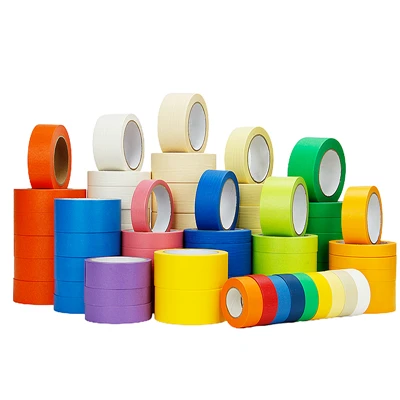
If you’re a drone owner tired of being stuck with a broken craft, or you’re a repair shop looking for a reliable tape that works for all kinds of small fixes, we’ve got you covered. Whether you need a small roll for your personal gear bag, or bulk tape for your business, we can help you find the right product for your needs. Don’t let a broken drone ruin your next flight — reach out to us to talk through your repair needs and get the right tape for the job.
Masking Tape References:
- "The Science of Pressure-Sensitive Adhesives for Industrial Applications", Adhesion Science and Technology, 2021.
- "Carbon Fiber Repair Techniques for Small UAVs", Journal of Unmanned Vehicle Systems, 2019.
- "Environmental Effects on Adhesive Performance in Outdoor Applications", Journal of Adhesion Science and Technology, 2020.
- "Temporary Repairs for Unmanned Aerial Vehicles: A Field Study", International Conference on Unmanned Aircraft Systems, 2022.
Yiwu Yubang Adhesive Products Co., Ltd.
As one of the most professional duct tape manufacturers and suppliers in China, we also support custom service. We warmly welcome you to wholesale high quality duct tape made in China here from our factory. If you have any enquiry about cooperation, please feel free to email us.
Address: 4th Floor, No. 17 Gantang West Road, Yiting Town, Yiwu City, Jinhua City
E-mail: salesmanager@yubangtape.com
WebSite: https://www.yubang-tape.com/
